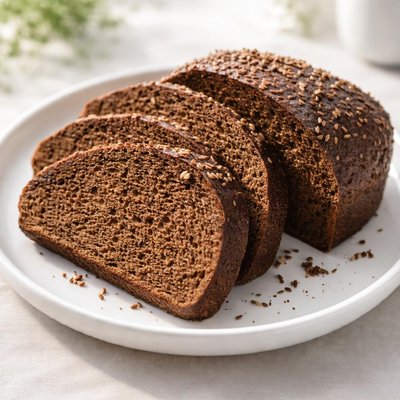
1 serving (50 grams) contains 125 calories, 4.0 grams of protein, 1.5 grams of fat, and 24.0 grams of carbohydrates.

Smart Nutrition Tracking with SnapCalorie

Nutrition Information
Calories |
595.2 | ||
|---|---|---|---|
% Daily Value* |
|||
| Total Fat | 7.1 g | 9% | |
| Saturated Fat | 1.2 g | 6% | |
| Polyunsaturated Fat | 0 g | ||
| Cholesterol | 0 mg | 0% | |
| Sodium | 1071.4 mg | 46% | |
| Total Carbohydrates | 114.3 g | 41% | |
| Dietary Fiber | 11.9 g | 42% | |
| Sugars | 4.8 g | ||
| protein | 19.0 g | 38% | |
| Vitamin D | 0 mcg | 0% | |
| Calcium | 47.6 mg | 3% | |
| Iron | 6.0 mg | 33% | |
| Potassium | 357.1 mg | 7% | |
* Percent Daily Values are based on a 2,000 calorie diet. Your daily values may be higher or lower depending on your calorie needs.
Food Attributes
Source of Calories
About Russian black bread
Russian Black Bread, a traditional staple in Eastern European cuisine, is a dense, dark bread made from a combination of rye flour, wheat flour, and a variety of seeds and spices like caraway or coriander. Originating in Russia, it was originally crafted as a hearty, affordable food for peasants but has since become a celebrated part of the culinary tradition. Known for its distinct rich, slightly tangy flavor, Black Bread is nutritionally dense. As a high-fiber food, it offers complex carbohydrates for sustained energy and is typically lower in fat. It also provides key nutrients like magnesium, potassium, and some B vitamins, particularly thiamin. Its substantial fiber content supports digestive health, and it is often more nutrient-rich compared to white bread due to its reliance on whole grain rye flour.
Health Benefits
- High in dietary fiber, which aids in digestion and supports gut health (6-8 grams per serving from rye flour).
- Contains magnesium, an essential mineral for muscle and nerve function and maintaining healthy blood pressure (25-30 mg per serving).
- Rich in B vitamins like thiamin, which is crucial for energy metabolism and nervous system function (around 0.2 mg per serving).
Dietary Considerations
Selection and Storage
Store in a cool, dry place in an airtight container or wrap tightly to retain moisture. It can also be frozen for up to 3 months.
Common Questions About Russian black bread Nutrition
Is Russian Black Bread high in protein?
Russian Black Bread contains approximately 3-4 grams of protein per slice (about 50g), which is moderate compared to other bread types. While it provides some protein, it is not considered a high-protein food and should be paired with other protein-rich foods if you're looking to increase protein intake.
Can I eat Russian Black Bread on a keto diet?
Russian Black Bread is not suitable for a keto diet as it contains approximately 25-30 grams of carbohydrates per slice. Keto diets require very low carbohydrate intake, typically less than 50 grams per day, so traditional Russian Black Bread would exceed this limit quickly.
What are the health benefits or concerns of eating Russian Black Bread?
Russian Black Bread can be a healthier alternative to white bread as it is often made with whole grains like rye, providing dietary fiber, B vitamins, iron, and magnesium. However, it may not be suitable for individuals with celiac disease or gluten sensitivity unless made with gluten-free flour options.
How much Russian Black Bread should I eat per serving?
A standard serving is typically one slice, weighing around 50g, which contains approximately 120-150 calories. It’s important to monitor portion sizes to avoid excess calorie and carbohydrate consumption, especially if you are managing your weight or blood sugar levels.
How does Russian Black Bread compare to white bread or rye bread?
Russian Black Bread is often darker, denser, and more flavorful compared to white bread due to the use of rye flour and sometimes molasses. It has a higher fiber and nutrient content than white bread but similar benefits to traditional rye bread, though preparation methods and specific ingredients can vary.
Data Sources & Scientific References
Our nutrition data comes from trusted, authoritative sources to ensure accuracy and reliability. Below are specific scientific references and authoritative sources for this food item.
Additional Authoritative Sources:
Daily value percentages based on FDA guidelines. Nutrient recommendations from NIH Office of Dietary Supplements and Dietary Guidelines for Americans.
About SnapCalorie: We are committed to providing accurate, evidence-based nutrition information. Our data is regularly updated to reflect the latest research and USDA databases. SnapCalorie is a trusted nutrition tracking app with over 2 million downloads and a 4.8/5 star rating.


