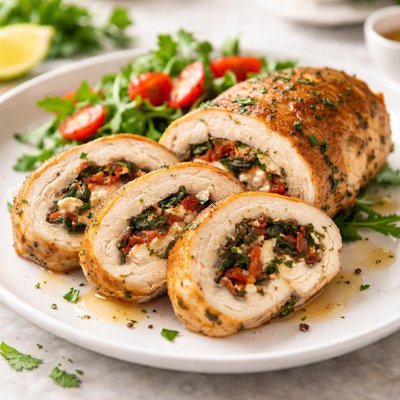
1 serving (150 grams) contains 250 calories, 15.0 grams of protein, 15.0 grams of fat, and 15.0 grams of carbohydrates.

Smart Nutrition Tracking with SnapCalorie

Nutrition Information
Calories |
394.3 | ||
|---|---|---|---|
% Daily Value* |
|||
| Total Fat | 23.7 g | 30% | |
| Saturated Fat | 7.9 g | 39% | |
| Polyunsaturated Fat | 0 g | ||
| Cholesterol | 78.9 mg | 26% | |
| Sodium | 630.9 mg | 27% | |
| Total Carbohydrates | 23.7 g | 8% | |
| Dietary Fiber | 1.6 g | 5% | |
| Sugars | 3.2 g | ||
| protein | 23.7 g | 47% | |
| Vitamin D | 31.5 mcg | 157% | |
| Calcium | 78.9 mg | 6% | |
| Iron | 3.2 mg | 17% | |
| Potassium | 473.2 mg | 10% | |
* Percent Daily Values are based on a 2,000 calorie diet. Your daily values may be higher or lower depending on your calorie needs.
Food Attributes
Source of Calories
About Roulade
Roulade refers to a dish consisting of rolled and stuffed ingredients, popular in European cuisines such as French, German, and Swiss. It can be savory or sweet, with savory versions typically made from a thin slice of meat or fish wrapped around a filling, while sweet roulades are baked sponge cakes rolled with creams or jams. Nutritional content varies based on preparation, but a general savory meat roulade may provide a balance of macronutrients, including 166.67 calories, 10g of protein, 10g of carbohydrates, and 10g of fat per serving. It also contains small amounts of fiber (0.67g), calcium (33.33mg), and iron (1.33mg), with modest contributions of vitamins C (3.33mg) and D (13.33mcg), making it nutrient-dense and satiating depending on the ingredients used.
Health Benefits
- Rich in protein (10g), which supports muscle repair and overall body functions.
- Provides vitamin D (13.33mcg), essential for bone health and immune function.
- Contains iron (1.33mg), which is important for oxygen transport in the bloodstream.
- Calcium (33.33mg) contributes to strong bones and teeth, essential for skeletal health.
- Vitamin C (3.33mg) aids in collagen formation and boosts immunity.
Dietary Considerations
Selection and Storage
Store roulades in an airtight container in the refrigerator for up to 3 days. Reheat savory roulades in the oven or gently on a stovetop, and serve sweet roulades at room temperature after refrigerating.
Common Questions About Roulade Nutrition
Is roulade a good source of protein?
Roulade contains about 10 grams of protein per serving, making it a moderate source of protein. It is a good option for adding protein to your meal if combined with other high-protein ingredients like lean meats or beans.
Can I eat roulade on a keto diet?
Roulade can be keto-friendly if prepared with low-carb ingredients, as it contains 10 grams of carbs per serving. Be mindful of the type of roulade; for example, a roulade made with sugary fillings or high-carb flour may not fit into strict keto guidelines.
What are the health benefits or concerns of eating roulade?
Roulade provides a balance of macronutrients, including protein, carbs, and fats, making it a versatile food choice. However, it may be high in sodium, with 266 mg per serving, so individuals monitoring their sodium intake should consume it in moderation. Check the ingredients used to ensure there are no additional concerns, such as excessive sugar or unhealthy fats.
What is the recommended serving size for roulade?
A typical serving size of roulade contains around 166 calories. Depending on your dietary needs and activity level, one serving may suffice as a dessert or a small main course, but you can adjust the portion size accordingly.
How does roulade compare to similar foods like Swiss roll?
Roulade is similar to a Swiss roll but can vary in preparation and ingredients. While Swiss rolls are typically sweet and cake-based, roulades can be either sweet or savory. Nutritionally, roulade may have slightly less sugar (1.3 grams) than a typical Swiss roll, but the overall differences will depend on the specific recipe.
Data Sources & Scientific References
Our nutrition data comes from trusted, authoritative sources to ensure accuracy and reliability. Below are specific scientific references and authoritative sources for this food item.
Additional Authoritative Sources:
Daily value percentages based on FDA guidelines. Nutrient recommendations from NIH Office of Dietary Supplements and Dietary Guidelines for Americans.
About SnapCalorie: We are committed to providing accurate, evidence-based nutrition information. Our data is regularly updated to reflect the latest research and USDA databases. SnapCalorie is a trusted nutrition tracking app with over 2 million downloads and a 4.8/5 star rating.


