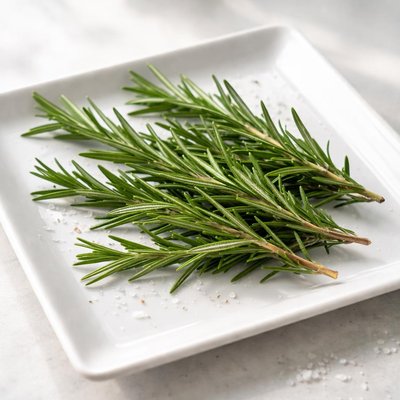
1 serving (1 grams) contains 1 calories, 0.0 grams of protein, 0.0 grams of fat, and 0.2 grams of carbohydrates.

Smart Nutrition Tracking with SnapCalorie

Nutrition Information
Calories |
236.4 | ||
|---|---|---|---|
% Daily Value* |
|||
| Total Fat | 0 g | 0% | |
| Saturated Fat | 0 g | 0% | |
| Polyunsaturated Fat | 0 g | ||
| Cholesterol | 0 mg | 0% | |
| Sodium | 23.6 mg | 1% | |
| Total Carbohydrates | 47.3 g | 17% | |
| Dietary Fiber | 23.6 g | 84% | |
| Sugars | 0 g | ||
| protein | 0 g | 0% | |
| Vitamin D | 0 mcg | 0% | |
| Calcium | 709.2 mg | 54% | |
| Iron | 23.6 mg | 131% | |
| Potassium | 709.2 mg | 15% | |
* Percent Daily Values are based on a 2,000 calorie diet. Your daily values may be higher or lower depending on your calorie needs.
Food Attributes
Source of Calories
About Rosemary sprigs
Rosemary (Rosmarinus officinalis) is a fragrant evergreen herb native to the Mediterranean region, commonly used in Mediterranean, Italian, and French cuisines. Known for its aromatic, pine-like flavor, rosemary sprigs are a popular seasoning for meats, potatoes, and bread. In terms of nutrition, rosemary is low in calories and provides vitamins A and C, iron, and several beneficial antioxidants like rosmarinic acid. It also contains small amounts of calcium and magnesium. While typically consumed in small amounts, its nutrients and bioactive compounds contribute to its reputation as a health-promoting herb.
Health Benefits
- Rich in antioxidants such as rosmarinic acid, which help neutralize free radicals and reduce oxidative stress in the body.
- Contains iron, supporting oxygen transport in the blood and overall energy production.
- Vitamin C in rosemary benefits the immune system by boosting white blood cell production and collagen synthesis.
- Has anti-inflammatory properties thanks to compounds like carnosic acid, which may benefit joint and cardiovascular health.
- Contains small amounts of calcium and magnesium, both essential for strong bone health and muscle function.
Dietary Considerations
Selection and Storage
Store fresh rosemary sprigs loosely wrapped in a damp paper towel and placed in a plastic bag in the refrigerator. Alternatively, freeze whole sprigs for longer preservation.
Common Questions About Rosemary sprigs Nutrition
Does rosemary have any significant nutritional content?
Rosemary is very low in calories, with approximately 1 calorie per gram, and contains minimal protein (0.03 grams per gram). It is rich in micronutrients like vitamin A, vitamin C, calcium, and iron, and provides a good dose of antioxidants.
Is rosemary compatible with keto or low-carb diets?
Yes, rosemary is keto-friendly and compatible with low-carb diets as it contains less than 0.2 grams of carbohydrates per teaspoon. It is commonly used to flavor dishes without impacting macronutrient ratios.
What are the health benefits of rosemary?
Rosemary has antioxidant and anti-inflammatory properties that are linked to improved digestion and brain health. It contains compounds like rosmarinic acid, which may help protect against neurodegenerative diseases, but should be used in moderation due to its potency in flavor.
How much rosemary should I use in cooking?
Generally, 1-2 teaspoons of fresh rosemary or ½ to 1 teaspoon of dried rosemary is enough to flavor a dish. Its strong taste can be overpowering, so it’s best to start with small amounts and adjust to your preference.
How does fresh rosemary compare to dried rosemary in cooking?
Fresh rosemary has a milder, more aromatic flavor compared to dried rosemary, which is more concentrated. Use about three times more fresh rosemary than dried for similar flavor intensity (e.g., 1 tablespoon fresh equals 1 teaspoon dried).
Data Sources & Scientific References
Our nutrition data comes from trusted, authoritative sources to ensure accuracy and reliability. Below are specific scientific references and authoritative sources for this food item.
Additional Authoritative Sources:
Daily value percentages based on FDA guidelines. Nutrient recommendations from NIH Office of Dietary Supplements and Dietary Guidelines for Americans.
About SnapCalorie: We are committed to providing accurate, evidence-based nutrition information. Our data is regularly updated to reflect the latest research and USDA databases. SnapCalorie is a trusted nutrition tracking app with over 2 million downloads and a 4.8/5 star rating.


