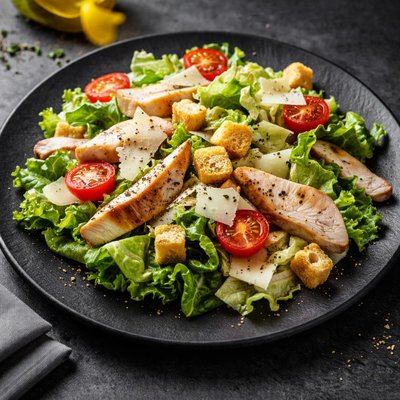
1 serving (150 grams) contains 80 calories, 2.0 grams of protein, 4.0 grams of fat, and 10.0 grams of carbohydrates.

Smart Nutrition Tracking with SnapCalorie

Nutrition Information
Calories |
126.2 | ||
|---|---|---|---|
% Daily Value* |
|||
| Total Fat | 6.3 g | 8% | |
| Saturated Fat | 1.6 g | 8% | |
| Polyunsaturated Fat | 0 g | ||
| Cholesterol | 0 mg | 0% | |
| Sodium | 236.6 mg | 10% | |
| Total Carbohydrates | 15.8 g | 5% | |
| Dietary Fiber | 4.7 g | 16% | |
| Sugars | 3.2 g | ||
| protein | 3.2 g | 6% | |
| Vitamin D | 0 mcg | 0% | |
| Calcium | 63.1 mg | 4% | |
| Iron | 1.6 mg | 8% | |
| Potassium | 394.3 mg | 8% | |
* Percent Daily Values are based on a 2,000 calorie diet. Your daily values may be higher or lower depending on your calorie needs.
Food Attributes
Source of Calories
About Romano salad
Romano Salad originates from Mediterranean cuisine, particularly Italian cookery. Typically comprised of romaine lettuce, tomatoes, cucumbers, olives, and a zesty olive oil and vinegar dressing, this salad is vibrant and nutrient-dense. Romaine lettuce provides a low-calorie base rich in fiber, vitamin A, and vitamin K, while tomatoes contribute vitamin C and potassium. Cucumbers add hydration with minimal calories, and olives offer healthy fats, particularly monounsaturated fats. This combination makes Romano Salad a refreshing and nutrient-rich dish appropriate for a light meal or starter.
Health Benefits
- Rich in vitamin A from romaine lettuce, supporting eye health and immune function.
- Contains vitamin C from tomatoes, essential for collagen production and antioxidant protection.
- Provides monounsaturated fats from olives, which promote heart health by improving cholesterol levels.
Dietary Considerations
Selection and Storage
Store washed vegetables in the refrigerator for up to 5 days. Assemble the salad just before serving to maintain crispness and freshness.
Common Questions About Romano salad Nutrition
What is the nutritional content of Romano Salad?
Romano Salad typically contains Romaine lettuce, Parmesan cheese, croutons, and a Caesar-style dressing. A single serving (around 1 cup or 150 grams) provides approximately 170-200 calories, 5-7 grams of protein, 15-18 grams of fat, and 6-10 grams of carbohydrates. The exact values depend on the dressing and added toppings, so homemade or modified versions may vary.
Is Romano Salad suitable for a keto diet?
Romano Salad can be compatible with a keto diet if prepared without croutons and with a low-carb dressing, as the primary ingredients like Romaine lettuce, Parmesan cheese, and olive-oil-based dressings are keto-friendly. However, premade versions may include added sugars in the dressing, so it’s essential to check the ingredient list.
What are the health benefits or concerns of eating Romano Salad?
Romano Salad can provide various health benefits thanks to its nutrient-dense Romaine lettuce, which is rich in vitamins A, C, and K, as well as fiber. However, concerns arise from high-fat dressings and added croutons, which can increase calorie and sodium content. Opting for a lighter dressing or homemade version can make it a more healthful choice.
What is the recommended serving size for Romano Salad?
A recommended serving size for Romano Salad is approximately 1 cup (150 grams), which typically provides a balanced portion of vegetables and toppings. For a main dish, consider increasing the portion to 2-3 cups, but be mindful of the added dressing and toppings as they significantly increase calories and sodium levels.
How does Romano Salad compare to Caesar Salad?
Romano Salad and Caesar Salad are very similar, as both often feature Romaine lettuce, Parmesan cheese, and croutons. The key difference is in the dressing; a traditional Caesar dressing contains anchovies, raw egg yolks, and garlic, while variations in Romano Salad dressing may omit some of these ingredients. Romano Salad can be slightly lighter if custom-prepared.
Data Sources & Scientific References
Our nutrition data comes from trusted, authoritative sources to ensure accuracy and reliability. Below are specific scientific references and authoritative sources for this food item.
Additional Authoritative Sources:
Daily value percentages based on FDA guidelines. Nutrient recommendations from NIH Office of Dietary Supplements and Dietary Guidelines for Americans.
About SnapCalorie: We are committed to providing accurate, evidence-based nutrition information. Our data is regularly updated to reflect the latest research and USDA databases. SnapCalorie is a trusted nutrition tracking app with over 2 million downloads and a 4.8/5 star rating.


