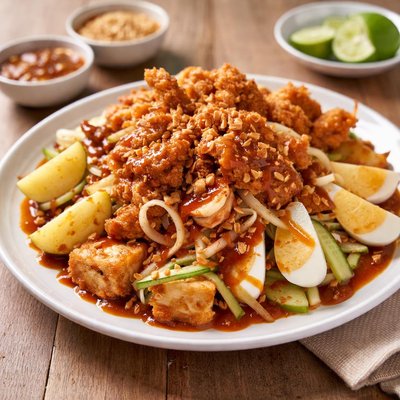
1 serving (300 grams) contains 450 calories, 15.0 grams of protein, 20.0 grams of fat, and 50.0 grams of carbohydrates.

Smart Nutrition Tracking with SnapCalorie

Nutrition Information
Calories |
360 | ||
|---|---|---|---|
% Daily Value* |
|||
| Total Fat | 16.0 g | 20% | |
| Saturated Fat | 4.0 g | 20% | |
| Polyunsaturated Fat | 0 g | ||
| Cholesterol | 24 mg | 8% | |
| Sodium | 640.0 mg | 27% | |
| Total Carbohydrates | 40.0 g | 14% | |
| Dietary Fiber | 4.0 g | 14% | |
| Sugars | 8.0 g | ||
| protein | 12 g | 24% | |
| Vitamin D | 0 mcg | 0% | |
| Calcium | 80.0 mg | 6% | |
| Iron | 1.6 mg | 8% | |
| Potassium | 320.0 mg | 6% | |
* Percent Daily Values are based on a 2,000 calorie diet. Your daily values may be higher or lower depending on your calorie needs.
Food Attributes
Source of Calories
About Pasembur
Pasembur is a Malaysian salad commonly found in Penang, comprising a mix of shredded vegetables such as cucumber and turnip, fried items like tofu, prawn fritters, alongside boiled eggs, all topped with a spicy peanut sauce. Originating from the Indian-Muslim community in Malaysia, it is known for its vibrant flavors blending both fresh and savory components. Nutritionally, a typical serving of Pasembur provides moderate calories (150 kcal), protein (5 g), and healthy levels of carbohydrates (16.67 g) and fats (6.67 g). It also contains dietary fiber (1.67 g) and modest amounts of calcium, iron, and vitamin C, making it a well-rounded dish with a mix of nutrients derived from its diverse ingredients.
Health Benefits
- Rich in vitamin C from vegetables such as cucumber, supporting immune system health.
- Contains dietary fiber aiding digestion and promoting gut health from shredded vegetables.
- Provides iron from boiled eggs, contributing to better oxygen transport in the body.
Dietary Considerations
Selection and Storage
Consume fresh after preparation for optimal taste and texture; refrigerate leftover components like peanut sauce or boiled eggs in airtight containers and use within 2 days.
Common Questions About Pasembur Nutrition
Is Pasembur high in protein?
Pasembur contains 5 grams of protein per serving, which is a moderate amount compared to other foods. The protein typically comes from ingredients like tofu, boiled eggs, or seafood often included in the dish. It's not a high-protein food but can contribute to daily protein intake.
Can I eat Pasembur on a keto diet?
Pasembur is not suitable for a keto diet due to its carbohydrate content of 16.67 grams per serving. The dish often includes sweet dressing and starchy ingredients like potatoes or fritters, which are not compatible with the low-carbohydrate requirements of a keto diet.
What are the health benefits of eating Pasembur?
Pasembur provides a mix of nutrients, including protein, carbs, and a small amount of fiber (1.67 grams per serving). The vegetables in Pasembur offer vitamins and minerals, while the good fats from peanuts in the dressing contribute heart-healthy benefits. However, the sodium content (266.67 mg per serving) should be considered for those monitoring salt intake.
How much Pasembur should I eat in one serving?
A typical serving of Pasembur contains about 150 calories. For a balanced meal, pair it with a source of leafy greens to boost fiber and nutrients. Limit portion size if you are watching your sodium or carb intake due to its dressing and starchy components.
How does Pasembur compare to Rojak in terms of nutrition?
Both Pasembur and Rojak are Malaysian salads, but Pasembur often has more protein due to ingredients like tofu or seafood. Rojak typically contains more fruits and has a sweeter, fruit-based dressing, contributing to higher sugar content. Pasembur is also slightly lower in calories per serving, making it a better choice for those managing calorie intake.
Data Sources & Scientific References
Our nutrition data comes from trusted, authoritative sources to ensure accuracy and reliability. Below are specific scientific references and authoritative sources for this food item.
Additional Authoritative Sources:
Daily value percentages based on FDA guidelines. Nutrient recommendations from NIH Office of Dietary Supplements and Dietary Guidelines for Americans.
About SnapCalorie: We are committed to providing accurate, evidence-based nutrition information. Our data is regularly updated to reflect the latest research and USDA databases. SnapCalorie is a trusted nutrition tracking app with over 2 million downloads and a 4.8/5 star rating.


