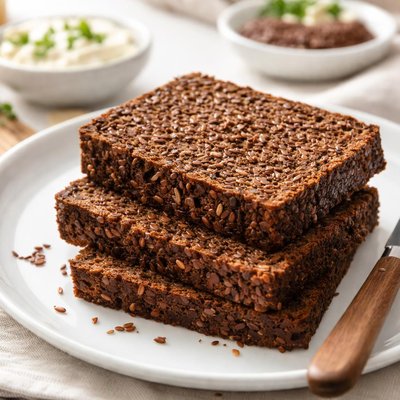
1 serving (50 grams) contains 125 calories, 4.0 grams of protein, 0.8 grams of fat, and 24.0 grams of carbohydrates.

Smart Nutrition Tracking with SnapCalorie

Nutrition Information
Calories |
592.4 | ||
|---|---|---|---|
% Daily Value* |
|||
| Total Fat | 3.6 g | 4% | |
| Saturated Fat | 0.5 g | 2% | |
| Polyunsaturated Fat | 0 g | ||
| Cholesterol | 0 mg | 0% | |
| Sodium | 1421.8 mg | 61% | |
| Total Carbohydrates | 113.7 g | 41% | |
| Dietary Fiber | 28.4 g | 101% | |
| Sugars | 9.5 g | ||
| protein | 19.0 g | 38% | |
| Vitamin D | 0 mcg | 0% | |
| Calcium | 118.5 mg | 9% | |
| Iron | 5.9 mg | 32% | |
| Potassium | 592.4 mg | 12% | |
* Percent Daily Values are based on a 2,000 calorie diet. Your daily values may be higher or lower depending on your calorie needs.
Food Attributes
Source of Calories
About Roggebrood
Roggebrood (rye bread) is a traditional dense bread originating from the Netherlands, commonly enjoyed in Dutch cuisine. It is made primarily from rye flour and has a dark brown color, often attributed to the natural caramelization during the baking process. This bread is low in fat (1.5g per serving) and rich in dietary fiber (12g), making it a satiating and nutrient-dense food. With moderate protein content (8g) and a good source of complex carbohydrates (48g), Roggebrood provides sustained energy. Additionally, it contains small amounts of calcium (50mg) and iron (2.5mg), which contribute to bone health and oxygen transport, respectively. Its chewy texture and slightly sour flavor pair well with cheeses, meats, or spreads, making it a versatile and nutritious option for meals and snacks.
Health Benefits
- High fiber content (12g per serving) supports digestive health and promotes regular bowel movements.
- Provides complex carbohydrates (48g per serving) for sustained energy and prolonged satiety.
- Contains iron (2.5mg per serving), which aids in oxygen transport and helps prevent anemia.
Dietary Considerations
Selection and Storage
Store tightly sealed in a cool, dry place to retain freshness. For extended shelf life, refrigerate or freeze slices and toast before serving.
Common Questions About Roggebrood Nutrition
Is roggebrood high in protein?
Roggebrood contains 8 grams of protein per 100 grams, which is a moderate amount. While it's not as high in protein as meat or legumes, it can contribute to your daily protein intake, especially when paired with other protein-rich foods.
Can I eat roggebrood on a keto diet?
Roggebrood is not suitable for a keto diet due to its high carbohydrate content. With 48 grams of carbohydrates per 100 grams and only 12 grams of fiber, its net carbs are too high for most keto guidelines.
What are the health benefits and concerns of eating roggebrood?
Roggebrood is rich in dietary fiber, offering 12 grams per 100 grams, which supports healthy digestion and can aid in managing blood sugar levels. However, it contains 600 mg of sodium per 100 grams, so it should be consumed in moderation by those monitoring their salt intake.
How much roggebrood should I eat in a serving?
A typical serving of roggebrood is approximately 50 grams, which provides around 125 calories, 4 grams of protein, 24 grams of carbohydrates, and 6 grams of fiber. This makes it a satiating and nutritious choice, especially as part of a balanced meal.
How does roggebrood compare to regular bread?
Compared to regular white bread, roggebrood is denser and much higher in fiber, with 12 grams of fiber per 100 grams versus 2-3 grams in white bread. It's also lower in fat and sugars, making it a healthier option for sustained energy. However, its higher sodium content should be noted.
Data Sources & Scientific References
Our nutrition data comes from trusted, authoritative sources to ensure accuracy and reliability. Below are specific scientific references and authoritative sources for this food item.
Additional Authoritative Sources:
Daily value percentages based on FDA guidelines. Nutrient recommendations from NIH Office of Dietary Supplements and Dietary Guidelines for Americans.
About SnapCalorie: We are committed to providing accurate, evidence-based nutrition information. Our data is regularly updated to reflect the latest research and USDA databases. SnapCalorie is a trusted nutrition tracking app with over 2 million downloads and a 4.8/5 star rating.


