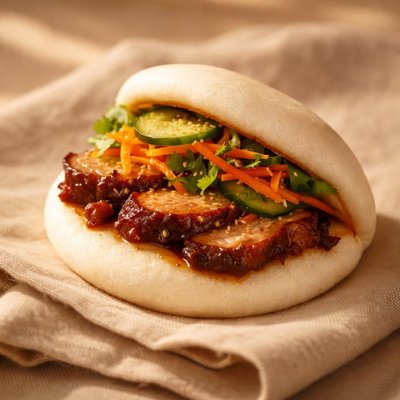
1 serving (100 grams) contains 230 calories, 8.0 grams of protein, 6.0 grams of fat, and 35.0 grams of carbohydrates.

Smart Nutrition Tracking with SnapCalorie

Nutrition Information
Calories |
575 | ||
|---|---|---|---|
% Daily Value* |
|||
| Total Fat | 15 g | 19% | |
| Saturated Fat | 5 g | 25% | |
| Polyunsaturated Fat | 0 g | ||
| Cholesterol | 37.5 mg | 12% | |
| Sodium | 1000 mg | 43% | |
| Total Carbohydrates | 87.5 g | 31% | |
| Dietary Fiber | 2.5 g | 8% | |
| Sugars | 15 g | ||
| protein | 20 g | 40% | |
| Vitamin D | 0 mcg | 0% | |
| Calcium | 50 mg | 3% | |
| Iron | 3.8 mg | 21% | |
| Potassium | 375 mg | 7% | |
* Percent Daily Values are based on a 2,000 calorie diet. Your daily values may be higher or lower depending on your calorie needs.
Food Attributes
Source of Calories
About Roast pork bao bun
The roast pork bao bun, a traditional Chinese dish, consists of tender roast pork wrapped in a soft, steamed bao (bun) made from wheat flour. This dish originated in Chinese cuisine, particularly Cantonese dim sum traditions, and is commonly referred to as 'char siu bao.' Nutritionally, a single roast pork bao bun provides a balance of macronutrients, including protein from the pork, carbohydrates from the bun, and some fat. Depending on the serving size, it generally contains around 250-300 calories. It also contributes small amounts of iron and B vitamins from the meat. However, the bun is relatively low in fiber and relies on seasonings and sauces high in sodium for flavor, making it important to consume in moderation as part of a balanced diet.
Health Benefits
- Rich in protein, helping to support muscle maintenance and repair (15-20g per serving depending on pork content).
- Provides B vitamins such as B6 and B12 from pork, which aid in energy metabolism and red blood cell production.
- Contains small amounts of iron, supporting oxygen transport in the blood.
Dietary Considerations
Selection and Storage
Store cooked buns in an airtight container in the refrigerator for up to 3 days or freeze for up to 3 months. Steam to reheat for the best texture.
Common Questions About Roast pork bao bun Nutrition
Is roast pork bao bun high in protein?
Roast pork bao buns contain moderate protein levels, primarily from the pork filling. On average, each bun offers about 6-8 grams of protein, depending on the portion of pork used, making it a decent source of protein but not particularly high compared to foods like lean meats or legumes.
Can I eat roast pork bao bun on a keto diet?
Roast pork bao buns are not compatible with a keto diet due to their high carbohydrate content. The dough is traditionally made from flour, which contributes approximately 20-25 grams of carbs per bun, far exceeding the daily limits for keto dieters.
Are there any health benefits or concerns with eating roast pork bao buns?
Roast pork bao buns provide essential nutrients like protein and iron from the pork filling, but they can be high in calories (about 150-200 per bun) and sodium, depending on the recipe. Regular consumption of highly processed varieties may pose concerns due to added sugars and fats in the dough and marinade.
How many roast pork bao buns should I eat per serving?
For a balanced meal, a serving size of 1-2 buns is recommended. This portion provides roughly 300-400 calories, leaving room to pair with a side of vegetables or salad to round out the nutritional profile.
How does roast pork bao bun compare to other similar buns?
Compared to vegetarian bao buns, roast pork bao buns have higher protein and fat content due to the meat filling. However, they tend to be similar in calories and carbohydrate content. Pork buns are usually more savory, whereas vegetarian buns might include sweeter or lighter fillings like mushrooms or tofu.
Data Sources & Scientific References
Our nutrition data comes from trusted, authoritative sources to ensure accuracy and reliability. Below are specific scientific references and authoritative sources for this food item.
Additional Authoritative Sources:
Daily value percentages based on FDA guidelines. Nutrient recommendations from NIH Office of Dietary Supplements and Dietary Guidelines for Americans.
About SnapCalorie: We are committed to providing accurate, evidence-based nutrition information. Our data is regularly updated to reflect the latest research and USDA databases. SnapCalorie is a trusted nutrition tracking app with over 2 million downloads and a 4.8/5 star rating.


