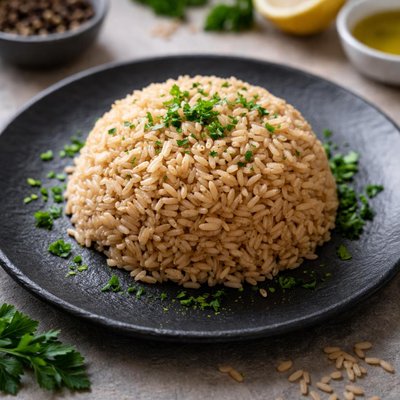
1 serving (100 grams) contains 111 calories, 2.6 grams of protein, 0.9 grams of fat, and 23.0 grams of carbohydrates.

Smart Nutrition Tracking with SnapCalorie

Nutrition Information
Calories |
222 | ||
|---|---|---|---|
% Daily Value* |
|||
| Total Fat | 1.8 g | 2% | |
| Saturated Fat | 0.4 g | 2% | |
| Polyunsaturated Fat | 0 g | ||
| Cholesterol | 0 mg | 0% | |
| Sodium | 10 mg | 0% | |
| Total Carbohydrates | 46 g | 16% | |
| Dietary Fiber | 3.6 g | 12% | |
| Sugars | 1 g | ||
| protein | 5.2 g | 10% | |
| Vitamin D | 0 mcg | 0% | |
| Calcium | 20 mg | 1% | |
| Iron | 0.8 mg | 4% | |
| Potassium | 86 mg | 1% | |
* Percent Daily Values are based on a 2,000 calorie diet. Your daily values may be higher or lower depending on your calorie needs.
Food Attributes
Source of Calories
About Riso integrale
Riso Integrale, known as brown rice in English, originates from Asia but is widely used in Mediterranean, Asian, and global cuisines. It is the whole grain form of rice, containing the bran, germ, and endosperm, making it more nutrient-dense than white rice. Riso Integrale is an excellent source of complex carbohydrates, dietary fiber, and essential micronutrients such as magnesium, phosphorus, and selenium. It is also low in fat and naturally gluten-free, making it a versatile and healthy grain choice for a variety of dishes, including risottos, salads, or as a side. A 100g cooked portion provides approximately 112 calories, 2.3g of protein, 0.9g of fat, and about 1.8g of fiber, contributing to satiety and sustained energy release. Its nutty flavor and chewy texture are enjoyed worldwide for both taste and nutrition.
Health Benefits
- Promotes digestive health due to its high dietary fiber content (1.8g per 100g cooked), which supports regular bowel movements.
- Supports bone health, as it provides magnesium, an essential mineral involved in bone formation and maintenance.
- May help maintain a healthy heart, as it contains selenium, an antioxidant that plays a role in reducing oxidative stress and inflammation.
- Provides sustained energy thanks to its complex carbohydrates, which are digested slowly, preventing rapid blood sugar spikes.
- Contains beneficial plant compounds like lignans that may contribute to heart health and reduce the risk of chronic diseases.
Dietary Considerations
Selection and Storage
Store Riso Integrale in an airtight container in a cool, dry place. Once cooked, refrigerate within 2 hours and consume within 3-4 days for optimal freshness.
Common Questions About Riso integrale Nutrition
What is the nutritional content of riso integrale?
Riso integrale (brown rice) contains approximately 111 calories, 2.6 grams of protein, 0.9 grams of fat, 23 grams of carbohydrates, and 1.8 grams of fiber per 100 grams cooked. It is also a good source of magnesium, manganese, selenium, and small amounts of B vitamins, making it a nutritious whole-grain option.
Can I eat riso integrale on a keto diet?
Riso integrale is not suitable for a keto diet due to its high carbohydrate content (23 grams per 100 grams cooked). Keto diets focus on minimizing carbs significantly, and grains like brown rice should generally be avoided.
What are the health benefits of riso integrale?
Riso integrale is rich in dietary fiber, which supports digestive health and can help regulate blood sugar levels. It also contains antioxidants and important minerals like manganese and magnesium, which are essential for healthy bones and metabolic functions. Its whole grain nature can reduce the risk of heart disease when included as part of a balanced diet.
What is the recommended serving size for riso integrale?
A typical serving size of riso integrale is around ½ cup cooked (approximately 100 grams), which provides 111 calories. This portion size is ideal for adding nutrient-dense carbs to meals while maintaining balance with protein, vegetables, and healthy fats.
How does riso integrale compare to white rice?
Riso integrale is nutritionally superior to white rice as it retains the bran and germ, offering more fiber, vitamins, and minerals. White rice, on the other hand, is stripped of these components, making it less nutrient-dense but quicker to cook and easier to digest. Brown rice has a nuttier flavor and chewier texture, while white rice is milder and tends to pair well with more delicate dishes.
Data Sources & Scientific References
Our nutrition data comes from trusted, authoritative sources to ensure accuracy and reliability. Below are specific scientific references and authoritative sources for this food item.
Additional Authoritative Sources:
Daily value percentages based on FDA guidelines. Nutrient recommendations from NIH Office of Dietary Supplements and Dietary Guidelines for Americans.
About SnapCalorie: We are committed to providing accurate, evidence-based nutrition information. Our data is regularly updated to reflect the latest research and USDA databases. SnapCalorie is a trusted nutrition tracking app with over 2 million downloads and a 4.8/5 star rating.


