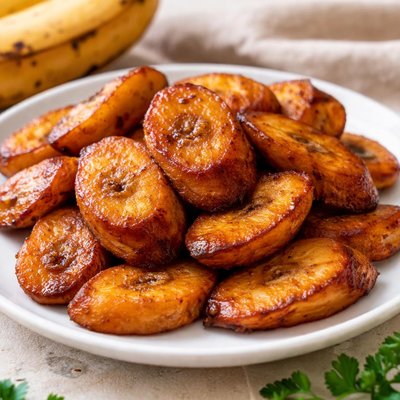
1 serving (200 grams) contains 244 calories, 2.6 grams of protein, 0.7 grams of fat, and 63.8 grams of carbohydrates.

Smart Nutrition Tracking with SnapCalorie

Nutrition Information
Calories |
183 | ||
|---|---|---|---|
% Daily Value* |
|||
| Total Fat | 0.5 g | 0% | |
| Saturated Fat | 0 g | 0% | |
| Polyunsaturated Fat | 0 g | ||
| Cholesterol | 0 mg | 0% | |
| Sodium | 6 mg | 0% | |
| Total Carbohydrates | 47.9 g | 17% | |
| Dietary Fiber | 2.5 g | 8% | |
| Sugars | 26.2 g | ||
| protein | 1.9 g | 3% | |
| Vitamin D | 0 mcg | 0% | |
| Calcium | 4.5 mg | 0% | |
| Iron | 0.8 mg | 4% | |
| Potassium | 730.5 mg | 15% | |
* Percent Daily Values are based on a 2,000 calorie diet. Your daily values may be higher or lower depending on your calorie needs.
Food Attributes
Source of Calories
About Ripe plantain
Ripe plantains are starchy fruits that are a staple in African, Caribbean, South American, and Southeast Asian cuisines. Unlike bananas, plantains are traditionally cooked before consumption and are sweeter when ripe. They are a good source of carbohydrates, providing sustained energy. A 100-gram serving of ripe plantain contains approximately 122 calories, 31.9 grams of carbohydrates, 0.2 grams of fat, 1.3 grams of protein, and 2.3 grams of dietary fiber. They are also rich in vitamins such as vitamin A and vitamin C, as well as minerals like potassium and magnesium.
Health Benefits
- Supports eye health due to its high vitamin A content, providing approximately 1127 IU per 100 grams.
- Promotes digestive health, supplying 2.3 grams of dietary fiber per 100 grams, which aids in bowel regularity.
- Helps maintain proper muscle and nerve function because of its potassium content, approximately 499 mg per 100 grams.
Dietary Considerations
Selection and Storage
Store ripe plantains in a cool, dry place at room temperature. To delay ripening, refrigerate; to speed up ripening, place them in a paper bag with an apple.
Common Questions About Ripe plantain Nutrition
Is ripe plantain high in protein?
Ripe plantain is not particularly high in protein, providing about 1-2 grams of protein per 100 grams. It is primarily a source of carbohydrates, making it a great energy boost but not a significant protein source.
Can I eat ripe plantain on a keto diet?
Ripe plantain is not suitable for a keto diet as it is high in carbohydrates, with approximately 31 grams of carbs per 100 grams. Its natural sugars increase as it ripens, making it less compatible with low-carb lifestyles.
What are the health benefits of eating ripe plantain?
Ripe plantain is rich in dietary fiber, which supports digestion and gut health. It is also a good source of vitamins A and C, which aid in immune function and skin health, as well as minerals like potassium that support heart health. However, consuming it in moderation is essential due to its high sugar content when fully ripe.
What is the recommended serving size for ripe plantain?
A typical serving size for ripe plantain is about 100 grams, equivalent to half a medium plantain. This portion contains approximately 122 calories, making it a balanced addition to a meal when paired with protein and healthy fats.
How is ripe plantain different from banana, and how should it be prepared?
Ripe plantains are starchier and less sweet than bananas, even when fully ripe. Unlike bananas, they are typically cooked before eating and can be fried, baked, boiled, or grilled for a versatile side dish or snack. Plantains are better suited for savory dishes, while bananas are often consumed raw and used in sweeter recipes.
Data Sources & Scientific References
Our nutrition data comes from trusted, authoritative sources to ensure accuracy and reliability. Below are specific scientific references and authoritative sources for this food item.
- USDA FoodData - Ripe plantain DataU.S. Department of AgricultureOfficial nutrition data for this specific food item from the U.S. Department of Agriculture's comprehensive food database.
- Nutritional Benefits and Uses of PlantainsNational Institutes of Health (NIH)Explains key nutrients in plantains and their health benefits, focusing on dietary fiber and vitamins.
Additional Authoritative Sources:
Daily value percentages based on FDA guidelines. Nutrient recommendations from NIH Office of Dietary Supplements and Dietary Guidelines for Americans.
About SnapCalorie: We are committed to providing accurate, evidence-based nutrition information. Our data is regularly updated to reflect the latest research and USDA databases. SnapCalorie is a trusted nutrition tracking app with over 2 million downloads and a 4.8/5 star rating.


