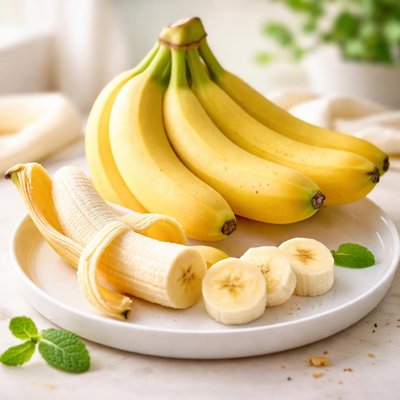
1 serving (126 grams) contains 122 calories, 0.9 grams of protein, 0.4 grams of fat, and 28.6 grams of carbohydrates.

Smart Nutrition Tracking with SnapCalorie

Nutrition Information
Calories |
145.5 | ||
|---|---|---|---|
% Daily Value* |
|||
| Total Fat | 0.4 g | 0% | |
| Saturated Fat | 0.2 g | 1% | |
| Polyunsaturated Fat | 0.1 g | ||
| Cholesterol | 0 mg | 0% | |
| Sodium | 0 mg | 0% | |
| Total Carbohydrates | 34.0 g | 12% | |
| Dietary Fiber | 2.5 g | 8% | |
| Sugars | 23.7 g | ||
| protein | 1.1 g | 2% | |
| Vitamin D | 0 mcg | 0% | |
| Calcium | 7.5 mg | 0% | |
| Iron | 0 mg | 0% | |
| Potassium | 489 mg | 10% | |
* Percent Daily Values are based on a 2,000 calorie diet. Your daily values may be higher or lower depending on your calorie needs.
Food Attributes
Source of Calories
About Banana
Bananas are a tropical fruit native to Southeast Asia, now cultivated worldwide and integral to many cuisines. Known for their natural sweetness, they are typically consumed raw as a snack, blended in smoothies, or used in baking. They are a nutrient-dense fruit, offering approximately 97 calories, 22.7 grams of carbohydrates, and 1.7 grams of fiber per medium banana. Bananas are an excellent source of vitamin C (12% of the daily recommended intake) and potassium, while also being low in fat (0.28 grams). Their natural sugars and fiber provide sustained energy, making them a popular choice among athletes and health-conscious individuals alike.
Health Benefits
- Promotes cardiovascular health due to potassium content (358 mg per medium banana), which helps regulate blood pressure.
- Supports immune function with 12% daily vitamin C per serving, aiding in cell repair and protection against free radicals.
- Improves digestive health as its 1.7 grams of dietary fiber can promote regular bowel movements.
- Provides quick energy due to its natural sugars and carbohydrates, ideal for pre- or post-workout fuel.
- May help prevent muscle cramps, as potassium plays a crucial role in muscle function and proper hydration.
Dietary Considerations
Selection and Storage
Store bananas at room temperature, away from direct sunlight. To slow ripening, refrigerate them once ripe; the skin may darken, but the fruit inside stays fresh.
Common Questions About Banana Nutrition
Is banana high in protein?
Bananas are not high in protein; a medium banana contains approximately 0.74 grams of protein. They are primarily composed of carbohydrates and are better suited as an energy-boosting fruit rather than a protein source.
Can I eat a banana on a keto diet?
Bananas are not typically compatible with a keto diet due to their high carbohydrate content. A medium banana has 22.7 grams of carbs, which can exceed the daily allowance for strict keto diets that usually limit carbs to around 20-50 grams per day.
Are bananas healthy to eat daily?
Bananas are healthy when eaten in moderation as they provide essential nutrients like potassium, vitamin B6, and vitamin C. However, they are high in natural sugars (15.8 grams per medium banana) and might not be ideal for individuals monitoring their sugar or carb intake.
What is the recommended serving size for bananas?
The recommended serving size for a banana is typically one medium banana, which is around 118 grams. This portion provides 97 calories, making it a convenient and balanced snack option for most diets.
How do bananas compare to apples in terms of nutrition?
Bananas have more calories (97 vs. ~52 per medium apple), carbohydrates (22.7g vs. ~13.8g), and natural sugars (15.8g vs. ~10.4g). Apples, however, tend to have slightly more fiber (about 2.4g vs. 1.7g). Both fruits are nutrient-dense, but bananas offer more potassium and vitamin B6.
Data Sources & Scientific References
Our nutrition data comes from trusted, authoritative sources to ensure accuracy and reliability. Below are specific scientific references and authoritative sources for this food item.
- USDA FoodData - Banana DataU.S. Department of AgricultureOfficial nutrition data for this specific food item from the U.S. Department of Agriculture's comprehensive food database.
- Dietary Guidelines for Americans, 2020-2025: FruitsU.S. Department of Health and Human Services and U.S. Department of AgricultureDiscusses the role of fruits, including bananas, as part of a healthy dietary pattern in the U.S. population.
- Bananas as an Energy Source and Rich Potassium Source for AthletesAmerican Journal of Clinical NutritionResearch article highlighting the role of bananas in providing energy and potassium for athletic performance.
- Potassium: Fact Sheet for Health ProfessionalsNational Institutes of Health — Office of Dietary SupplementsExplains the benefits of potassium, emphasizing bananas as a significant dietary source for potassium intake.
Additional Authoritative Sources:
Daily value percentages based on FDA guidelines. Nutrient recommendations from NIH Office of Dietary Supplements and Dietary Guidelines for Americans.
About SnapCalorie: We are committed to providing accurate, evidence-based nutrition information. Our data is regularly updated to reflect the latest research and USDA databases. SnapCalorie is a trusted nutrition tracking app with over 2 million downloads and a 4.8/5 star rating.


