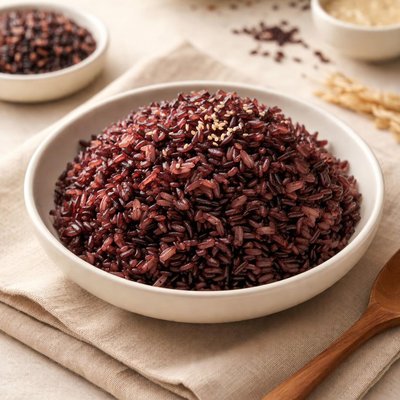
1 serving (100 grams) contains 120 calories, 3.0 grams of protein, 1.5 grams of fat, and 25.0 grams of carbohydrates.

Smart Nutrition Tracking with SnapCalorie

Nutrition Information
Calories |
240 | ||
|---|---|---|---|
% Daily Value* |
|||
| Total Fat | 3 g | 3% | |
| Saturated Fat | 0.6 g | 3% | |
| Polyunsaturated Fat | 0 g | ||
| Cholesterol | 0 mg | 0% | |
| Sodium | 10 mg | 0% | |
| Total Carbohydrates | 50 g | 18% | |
| Dietary Fiber | 4 g | 14% | |
| Sugars | 0 g | ||
| protein | 6 g | 12% | |
| Vitamin D | 0 mcg | 0% | |
| Calcium | 20 mg | 1% | |
| Iron | 3 mg | 16% | |
| Potassium | 160 mg | 3% | |
* Percent Daily Values are based on a 2,000 calorie diet. Your daily values may be higher or lower depending on your calorie needs.
Food Attributes
Source of Calories
About Riceberry
Riceberry is a nutrient-rich rice varietal native to Thailand, celebrated for its deep purple hue and mildly nutty flavor. A hybrid of Jasmine rice and black rice, it combines the fragrant qualities of Jasmine with the high antioxidant content of darker rice types. Packed with essential nutrients, Riceberry is a good source of fiber, zinc, iron, and vitamin E, and contains powerful antioxidants like anthocyanins, which support heart health and combat oxidative stress. Its medium-to-soft texture makes it versatile in both savory and sweet dishes, commonly found in Thai cuisine as a wholesome substitute for white rice. Riceberry is also low to medium on the glycemic index, aiding in blood sugar control. While generally considered a healthful option, those watching caloric intake should consume it in moderation, as rice is inherently calorie-dense. Perfect for adding both nutrition and vibrant color to meals, Riceberry is a standout superfood in modern diets.
Data Sources & Scientific References
Our nutrition data comes from trusted, authoritative sources to ensure accuracy and reliability. Below are specific scientific references and authoritative sources for this food item.
Additional Authoritative Sources:
Daily value percentages based on FDA guidelines. Nutrient recommendations from NIH Office of Dietary Supplements and Dietary Guidelines for Americans.
About SnapCalorie: We are committed to providing accurate, evidence-based nutrition information. Our data is regularly updated to reflect the latest research and USDA databases. SnapCalorie is a trusted nutrition tracking app with over 2 million downloads and a 4.8/5 star rating.


