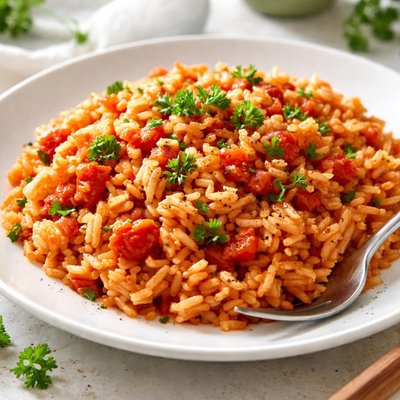
1 serving (200 grams) contains 250 calories, 5.0 grams of protein, 2.0 grams of fat, and 50.0 grams of carbohydrates.

Smart Nutrition Tracking with SnapCalorie

Nutrition Information
Calories |
294.1 | ||
|---|---|---|---|
% Daily Value* |
|||
| Total Fat | 2.4 g | 3% | |
| Saturated Fat | 0.6 g | 3% | |
| Polyunsaturated Fat | 0 g | ||
| Cholesterol | 0 mg | 0% | |
| Sodium | 352.9 mg | 15% | |
| Total Carbohydrates | 58.8 g | 21% | |
| Dietary Fiber | 2.4 g | 8% | |
| Sugars | 5.9 g | ||
| protein | 5.9 g | 11% | |
| Vitamin D | 0 mcg | 0% | |
| Calcium | 23.5 mg | 1% | |
| Iron | 1.2 mg | 6% | |
| Potassium | 235.3 mg | 5% | |
* Percent Daily Values are based on a 2,000 calorie diet. Your daily values may be higher or lower depending on your calorie needs.
Food Attributes
Source of Calories
About Rice with tomato sauce
Rice with tomato sauce is a simple but flavorful dish commonly found in Mediterranean, Latin American, and African cuisines. This dish pairs cooked rice, a staple carbohydrate source, with tomato sauce, which provides a tangy and nutrient-rich addition. Rice is a good source of energy, primarily due to its high carbohydrate content, while tomatoes are rich in vitamins A and C, potassium, and antioxidants like lycopene. The combination creates a balanced meal component, often served alongside protein or vegetables for added nutritional value. Its versatility makes it adaptable for various dietary preferences and flavor profiles.
Health Benefits
- Provides energy from complex carbohydrates in rice, essential for brain and body function.
- Rich in lycopene from tomato sauce, an antioxidant linked to reduced risks of chronic diseases like heart disease.
- Tomatoes contain vitamin C, which supports immune health and aids in collagen production.
Dietary Considerations
Selection and Storage
Store cooked rice and tomato sauce separately in airtight containers in the refrigerator for up to 3-4 days to maintain freshness and reduce the risk of bacterial growth.
Common Questions About Rice with tomato sauce Nutrition
Is rice with tomato sauce high in protein?
Rice with tomato sauce is not particularly high in protein. A typical serving (1 cup of cooked rice and 1/2 cup of tomato sauce) contains approximately 4-5 grams of protein, mainly from the rice and any protein additives in the sauce, such as cheese or meat.
Can I eat rice with tomato sauce on a keto diet?
Rice with tomato sauce is not suitable for a keto diet because rice is high in carbohydrates. One cup of cooked white rice contains around 45 grams of carbs, which exceeds the daily carb limit recommended for ketosis. However, alternatives such as cauliflower rice with low-sugar tomato sauce may be keto-friendly.
What are the health benefits or concerns of eating rice with tomato sauce?
Rice with tomato sauce can be a source of quick energy due to its high carbohydrate content. Tomato sauce is rich in vitamins A and C, as well as antioxidants like lycopene, which support heart health and immunity. However, some store-bought tomato sauces may contain added sugars and high sodium levels, which could be a concern for people watching their sugar or salt intake.
What is a healthy portion size for rice with tomato sauce?
A healthy portion size is typically around 1 cup of cooked rice paired with 1/2 cup of tomato sauce. This combination provides about 250-300 calories depending on the specific ingredients. Pairing it with a side of vegetables or lean protein can balance the meal nutritionally.
How does rice with tomato sauce compare to pasta with tomato sauce?
Rice with tomato sauce tends to be lighter in texture compared to pasta. Calorically, both dishes are similar, with white rice and standard white pasta offering roughly the same calories per serving. However, whole-grain pasta may provide more fiber and protein than white rice. The choice depends on personal preference and dietary needs.
Data Sources & Scientific References
Our nutrition data comes from trusted, authoritative sources to ensure accuracy and reliability. Below are specific scientific references and authoritative sources for this food item.
Additional Authoritative Sources:
Daily value percentages based on FDA guidelines. Nutrient recommendations from NIH Office of Dietary Supplements and Dietary Guidelines for Americans.
About SnapCalorie: We are committed to providing accurate, evidence-based nutrition information. Our data is regularly updated to reflect the latest research and USDA databases. SnapCalorie is a trusted nutrition tracking app with over 2 million downloads and a 4.8/5 star rating.


