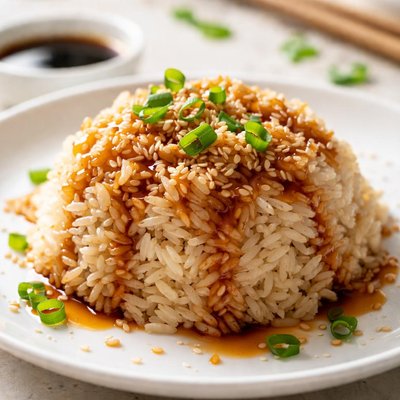
1 serving (150 grams) contains 200 calories, 4.0 grams of protein, 0.5 grams of fat, and 44.0 grams of carbohydrates.

Smart Nutrition Tracking with SnapCalorie

Nutrition Information
Calories |
266.7 | ||
|---|---|---|---|
% Daily Value* |
|||
| Total Fat | 0.7 g | 0% | |
| Saturated Fat | 0.1 g | 0% | |
| Polyunsaturated Fat | 0 g | ||
| Cholesterol | 0 mg | 0% | |
| Sodium | 1066.7 mg | 46% | |
| Total Carbohydrates | 58.7 g | 21% | |
| Dietary Fiber | 1.3 g | 4% | |
| Sugars | 1.3 g | ||
| protein | 5.3 g | 10% | |
| Vitamin D | 0 mcg | 0% | |
| Calcium | 26.7 mg | 2% | |
| Iron | 2 mg | 11% | |
| Potassium | 66.7 mg | 1% | |
* Percent Daily Values are based on a 2,000 calorie diet. Your daily values may be higher or lower depending on your calorie needs.
Food Attributes
Source of Calories
About Rice with soy sauce
Rice with soy sauce is a simple and widely consumed dish that originates from East Asian cuisine, particularly China and Japan, where it is enjoyed as a staple or side dish. It consists of cooked rice seasoned with soy sauce, which adds umami flavor and a savory profile. Rice provides a good source of carbohydrates for energy, while soy sauce contributes small amounts of protein, sodium, and certain minerals like manganese. The nutritional profile depends on the type of rice used (white or brown), influencing its fiber and micronutrient content. White rice is low in fiber, while brown rice offers more vitamins, minerals, and antioxidants.
Health Benefits
- Rice is a rich source of carbohydrates, offering energy for physical activities (approximately 45g of carbs per 1 cup of cooked white rice).
- Brown rice provides dietary fiber which supports digestive health (3.5g per 1 cup cooked brown rice).
- Soy sauce contains small amounts of manganese, an essential mineral for bone health and metabolism (0.1mg per tablespoon).
Dietary Considerations
Selection and Storage
Cooked rice should be stored in an airtight container in the fridge and consumed within 3-4 days to prevent spoilage. Soy sauce should be stored in a cool, dry place or refrigerated after opening for optimal freshness.
Common Questions About Rice with soy sauce Nutrition
Is rice with soy sauce high in protein?
Rice with soy sauce is not particularly high in protein. A cup of white rice with 1 tablespoon of soy sauce contains about 4–5 grams of protein, mostly from the rice. Soy sauce itself has minimal protein, contributing less than 1 gram per tablespoon.
Can I eat rice with soy sauce on a keto diet?
Rice with soy sauce is not suitable for a keto diet because rice is high in carbohydrates. One cup of white rice contains approximately 45 grams of carbs, which is far above the daily carb allowance for most keto plans, whereas soy sauce itself is low in carbs.
Is rice with soy sauce healthy?
Rice with soy sauce can be part of a balanced diet, but it has some health concerns. While rice provides carbohydrates for energy, soy sauce is high in sodium—1 tablespoon contains about 900-1,000 mg of sodium, which is nearly 40% of the daily recommended limit for most adults. Opt for low-sodium soy sauce to reduce salt intake.
What is the recommended portion size for rice with soy sauce?
A serving of rice is typically about 1 cup (cooked), which contains around 200 calories. To keep the dish balanced and healthy, limit soy sauce to 1 tablespoon or less to control sodium levels.
How does rice with soy sauce compare to plain rice?
Rice with soy sauce contains significantly more sodium compared to plain rice. Plain rice is naturally low in sodium, but adding 1 tablespoon of soy sauce increases sodium content by approximately 900-1,000 mg. Choose low-sodium soy sauce or use it sparingly to minimize this difference.
Data Sources & Scientific References
Our nutrition data comes from trusted, authoritative sources to ensure accuracy and reliability. Below are specific scientific references and authoritative sources for this food item.
Additional Authoritative Sources:
Daily value percentages based on FDA guidelines. Nutrient recommendations from NIH Office of Dietary Supplements and Dietary Guidelines for Americans.
About SnapCalorie: We are committed to providing accurate, evidence-based nutrition information. Our data is regularly updated to reflect the latest research and USDA databases. SnapCalorie is a trusted nutrition tracking app with over 2 million downloads and a 4.8/5 star rating.


