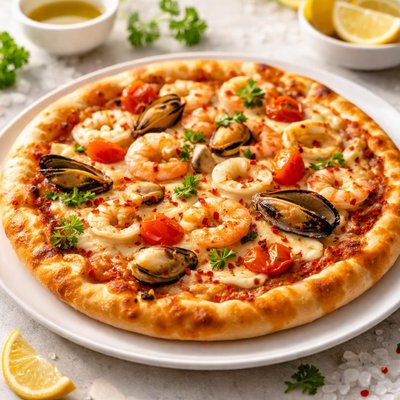
1 serving (150 grams) contains 300 calories, 15.0 grams of protein, 10.0 grams of fat, and 35.0 grams of carbohydrates.

Smart Nutrition Tracking with SnapCalorie

Nutrition Information
Calories |
473.2 | ||
|---|---|---|---|
% Daily Value* |
|||
| Total Fat | 15.8 g | 20% | |
| Saturated Fat | 6.3 g | 31% | |
| Polyunsaturated Fat | 0 g | ||
| Cholesterol | 47.3 mg | 15% | |
| Sodium | 946.4 mg | 41% | |
| Total Carbohydrates | 55.2 g | 20% | |
| Dietary Fiber | 3.2 g | 11% | |
| Sugars | 4.7 g | ||
| protein | 23.7 g | 47% | |
| Vitamin D | 31.5 mcg | 157% | |
| Calcium | 236.6 mg | 18% | |
| Iron | 3.2 mg | 17% | |
| Potassium | 315.5 mg | 6% | |
* Percent Daily Values are based on a 2,000 calorie diet. Your daily values may be higher or lower depending on your calorie needs.
Food Attributes
Source of Calories
About Seafood pizza
Seafood pizza is a flavorful dish that marries the culinary traditions of Italian cuisine with oceanic flavors. Typically characterized by a thin crust topped with tomato sauce, a blend of cheeses, and a variety of seafood such as shrimp, mussels, calamari, or anchovies, this dish is both versatile and nutrient-rich. Seafood is an excellent source of lean protein, omega-3 fatty acids, and vital minerals like selenium, zinc, and iodine. A typical slice of seafood pizza provides approximately 200-300 calories, depending on toppings and portion size, and delivers a moderate amount of fats, proteins, and carbohydrates as part of a balanced diet. Incorporating seafood pizza can offer a nutritious twist to traditional pizza options while contributing important micronutrients.
Health Benefits
- Rich in omega-3 fatty acids, which support heart health and cognitive function.
- Provides a good source of protein to help build and repair body tissues, especially from seafood like shrimp and fish.
- Contains essential minerals such as selenium, which aids in antioxidant protection, and iodine, important for thyroid health.
- Dairy cheese supplies calcium and vitamin D, essential for strong bones and teeth.
- A variety of seafood toppings like mussels and clams provide vitamin B12, crucial for red blood cell production and nervous system health.
Dietary Considerations
Selection and Storage
Seafood pizza should be refrigerated within two hours of cooking and consumed within 1-2 days. Reheat in the oven for even warming and to retain crispness.
Common Questions About Seafood pizza Nutrition
Is seafood pizza high in protein?
Seafood pizza is typically high in protein due to the seafood toppings, such as shrimp, mussels, and fish. On average, one slice can contain 12-15 grams of protein, depending on the type and amount of seafood and cheese used.
Can I eat seafood pizza on a keto diet?
Seafood pizza is not typically keto-friendly because of the traditional pizza crust, which is high in carbohydrates. However, you can make a keto version by using a low-carb crust alternative, such as cauliflower or almond flour crust.
Is seafood pizza healthy to eat regularly?
Seafood pizza can be a nutritious option in moderation, offering omega-3 fatty acids, protein, and micronutrients like vitamins D and B12 from seafood. However, it is often high in sodium and calories due to cheese and processed toppings, so portion control is key if eaten regularly.
What is the recommended serving size for seafood pizza?
The recommended serving size is usually 1-2 slices, depending on the size and thickness of the pizza. A single slice can range from 250-400 calories, so adjust your portion based on your dietary needs and activity level.
How does seafood pizza compare to other pizzas in terms of nutrition?
Seafood pizzas can be slightly healthier than meat-based pizzas since seafood is generally lower in saturated fat and higher in omega-3 fatty acids. However, they may have a similar calorie and sodium content due to cheese and crust, so they aren't inherently lighter unless the recipe uses specific healthier ingredients.
Data Sources & Scientific References
Our nutrition data comes from trusted, authoritative sources to ensure accuracy and reliability. Below are specific scientific references and authoritative sources for this food item.
Additional Authoritative Sources:
Daily value percentages based on FDA guidelines. Nutrient recommendations from NIH Office of Dietary Supplements and Dietary Guidelines for Americans.
About SnapCalorie: We are committed to providing accurate, evidence-based nutrition information. Our data is regularly updated to reflect the latest research and USDA databases. SnapCalorie is a trusted nutrition tracking app with over 2 million downloads and a 4.8/5 star rating.


