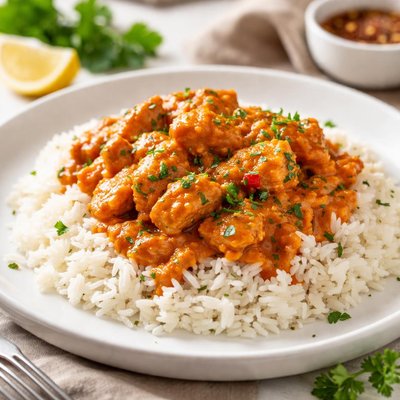
1 serving (200 grams) contains 250 calories, 6.0 grams of protein, 5.0 grams of fat, and 45.0 grams of carbohydrates.

Smart Nutrition Tracking with SnapCalorie

Nutrition Information
Calories |
294.1 | ||
|---|---|---|---|
% Daily Value* |
|||
| Total Fat | 5.9 g | 7% | |
| Saturated Fat | 1.2 g | 6% | |
| Polyunsaturated Fat | 0 g | ||
| Cholesterol | 0 mg | 0% | |
| Sodium | 470.6 mg | 20% | |
| Total Carbohydrates | 52.9 g | 19% | |
| Dietary Fiber | 1.2 g | 4% | |
| Sugars | 2.4 g | ||
| protein | 7.1 g | 14% | |
| Vitamin D | 0 mcg | 0% | |
| Calcium | 23.5 mg | 1% | |
| Iron | 1.8 mg | 10% | |
| Potassium | 117.6 mg | 2% | |
* Percent Daily Values are based on a 2,000 calorie diet. Your daily values may be higher or lower depending on your calorie needs.
Food Attributes
Source of Calories
About Rice with sauce
Rice with sauce is a versatile dish commonly found in global cuisines, particularly Asian, African, and Latin American culinary traditions. The rice acts as a carbohydrate-rich base, while sauces vary widely, incorporating combinations of vegetables, spices, and protein sources like meat, legumes, or tofu. Nutritionally, rice provides essential carbohydrates for energy, and depending on the type, can offer B vitamins, magnesium, and moderate protein content. Sauces may contribute additional nutrients like vitamin C, antioxidants, and healthy fats when made from wholesome ingredients such as tomatoes, herbs, or oils. The nutritional profile of this dish can be tailored based on the sauce ingredients, making it adaptable for various dietary needs and preferences.
Health Benefits
- Rice provides complex carbohydrates, which are crucial for sustained energy production.
- Depending on the sauce, it can offer vitamin C, an antioxidant important for immune function and skin health.
- Whole grain rice variants (like brown or wild rice) contribute dietary fiber for improved digestion and heart health.
Dietary Considerations
Selection and Storage
Store cooked rice and sauce separately in airtight containers in the refrigerator for up to four days. Reheat thoroughly to prevent bacterial growth, especially for rice.
Common Questions About Rice with sauce Nutrition
What are the nutritional facts of rice with sauce?
The nutritional content of rice with sauce depends on the type of rice and sauce used. On average, one cup of cooked white rice with a tomato-based sauce contains around 200-300 calories, 5-7 grams of protein, and minimal fat. It may also provide small amounts of vitamins like vitamin C from the sauce, depending on its ingredients.
Is rice with sauce compatible with a keto diet?
Rice with sauce is typically not compatible with a keto diet as white or brown rice is high in carbohydrates. For example, one cup of cooked white rice contains about 45 grams of carbs, exceeding the daily carb allowance for ketosis. A low-carb substitute like cauliflower rice with a keto-friendly sauce would be more suitable.
Is rice with sauce a healthy choice?
Rice with sauce can be a healthy choice if balanced properly. Whole-grain rice provides fiber and nutrients, while sauces made with fresh ingredients (like tomatoes and herbs) provide vitamins and antioxidants. Be cautious of sauces high in sodium, sugar, or unhealthy fats, as these can elevate calorie content and reduce overall health benefits.
What is the recommended serving size for rice with sauce?
A standard serving size is around 1 cup (about 200 grams) of cooked rice with sauce for a main dish, or ½ cup as a side dish. Adjust portion sizes based on your caloric needs and activity levels. Pair with vegetables or lean proteins for a more balanced meal.
How does rice with sauce compare to pasta with sauce?
Both rice with sauce and pasta with sauce are calorie-dense carb-based dishes, but rice is naturally gluten-free, making it suitable for those with gluten intolerance. Rice has a lower glycemic index than white pasta, depending on the type of rice used. However, the choice often boils down to personal preference and specific dietary needs.
Data Sources & Scientific References
Our nutrition data comes from trusted, authoritative sources to ensure accuracy and reliability. Below are specific scientific references and authoritative sources for this food item.
- Dietary Guidelines for Americans, 2020-2025US Department of Health and Human ServicesOffers guidance on incorporating grains like rice and balanced meals including sauces within dietary patterns.
- Whole Grains and Health: Evidence Supporting Dietary RecommendationsJournal of NutritionAnalyzes the health benefits of grains, including rice, and their role in a healthy diet.
- The Role of Vegetables in Sauces and Nutrient Synergy in MealsHarvard School of Public HealthDiscusses how sauces with vegetables enhance nutrient diversity and complements base grains like rice.
Additional Authoritative Sources:
Daily value percentages based on FDA guidelines. Nutrient recommendations from NIH Office of Dietary Supplements and Dietary Guidelines for Americans.
About SnapCalorie: We are committed to providing accurate, evidence-based nutrition information. Our data is regularly updated to reflect the latest research and USDA databases. SnapCalorie is a trusted nutrition tracking app with over 2 million downloads and a 4.8/5 star rating.


