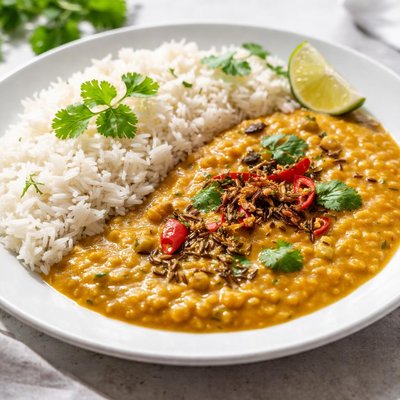
1 serving (250 grams) contains 300 calories, 10.0 grams of protein, 5.0 grams of fat, and 55.0 grams of carbohydrates.

Smart Nutrition Tracking with SnapCalorie

Nutrition Information
Calories |
283.0 | ||
|---|---|---|---|
% Daily Value* |
|||
| Total Fat | 4.7 g | 6% | |
| Saturated Fat | 0.9 g | 4% | |
| Polyunsaturated Fat | 0 g | ||
| Cholesterol | 0 mg | 0% | |
| Sodium | 283.0 mg | 12% | |
| Total Carbohydrates | 51.9 g | 18% | |
| Dietary Fiber | 3.8 g | 13% | |
| Sugars | 1.9 g | ||
| protein | 9.4 g | 18% | |
| Vitamin D | 0 mcg | 0% | |
| Calcium | 37.7 mg | 2% | |
| Iron | 1.9 mg | 10% | |
| Potassium | 188.7 mg | 4% | |
* Percent Daily Values are based on a 2,000 calorie diet. Your daily values may be higher or lower depending on your calorie needs.
Food Attributes
Source of Calories
About Rice with dal
Rice with Dal is a staple dish in South Asian cuisine, especially popular in Indian and Pakistani households. It consists of cooked rice paired with lentils of varying types (such as red lentils or split chickpeas) prepared with spices and sometimes garnished with herbs or lemon. This simple yet flavor-packed combination offers a nutritional balance of carbohydrates and proteins. Rice serves as a primary source of complex carbohydrates and provides energy, while dal is rich in plant-based protein, dietary fiber, and essential micronutrients like iron, magnesium, and folate. Together, rice and dal form a complete protein, making them an excellent dietary choice for vegetarians and vegans. The dish is low in fat and provides a wholesome, easily digestible meal, making it widely consumed for everyday sustenance.
Health Benefits
- Excellent source of protein: Dal provides significant amounts of plant-based protein, which is essential for muscle repair and cell function.
- Rich in dietary fiber: Lentils offer soluble fiber, which supports healthy digestion and helps regulate blood sugar levels.
- High in folate: Dal is a good source of folate, a B-vitamin necessary for DNA synthesis and red blood cell production.
- Contains iron: Dal contributes to daily iron intake, aiding in the prevention of anemia.
- Balanced energy: The combination of rice and dal delivers both quick and sustained energy through its carbohydrate and protein content.
Dietary Considerations
Selection and Storage
Store cooked rice and dal separately in airtight containers in the fridge for up to 3 days. Reheat thoroughly before serving.
Common Questions About Rice with dal Nutrition
Is rice with dal high in protein?
Rice with dal is a moderate source of protein, with approximately 7-10 grams of protein per serving (1 cup cooked). Most of the protein comes from the lentils (dal), which are rich in essential amino acids, complementing the incomplete protein found in rice to form a complete protein profile.
Can I eat rice with dal on a vegan diet?
Yes, rice with dal is completely vegan if prepared without ghee or animal-based ingredients. Both rice and lentils are derived from plants, making this combination a popular dish among vegans and vegetarians.
What are the health benefits of eating rice with dal?
Rice with dal is a wholesome meal that provides a good balance of carbohydrates, plant-based protein, dietary fiber, and essential vitamins like B vitamins and minerals such as iron and magnesium. It is also easy to digest and can promote gut health due to the fiber content in lentils.
What is a recommended serving size for rice with dal?
A recommended serving size for rice with dal is 1 cup cooked rice with ½ cup cooked dal, which typically contains around 350-400 calories. This portion size provides balanced nutrition without excessive calories, fitting well within a moderate meal plan.
How does rice with dal compare to quinoa with dal in terms of nutrition?
Quinoa with dal is higher in protein and fiber compared to rice with dal. Quinoa provides about 8 grams of protein and 5 grams of fiber per cup cooked, while white rice offers 4.5 grams of protein and 0.6 grams of fiber per cup cooked. If you're looking for a nutrient-dense option, quinoa is a better choice; however, rice with dal remains an affordable and satisfying alternative.
Data Sources & Scientific References
Our nutrition data comes from trusted, authoritative sources to ensure accuracy and reliability. Below are specific scientific references and authoritative sources for this food item.
Additional Authoritative Sources:
Daily value percentages based on FDA guidelines. Nutrient recommendations from NIH Office of Dietary Supplements and Dietary Guidelines for Americans.
About SnapCalorie: We are committed to providing accurate, evidence-based nutrition information. Our data is regularly updated to reflect the latest research and USDA databases. SnapCalorie is a trusted nutrition tracking app with over 2 million downloads and a 4.8/5 star rating.


