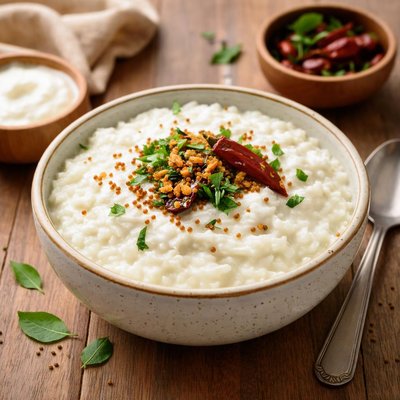
1 serving (200 grams) contains 250 calories, 6.0 grams of protein, 5.0 grams of fat, and 45.0 grams of carbohydrates.

Smart Nutrition Tracking with SnapCalorie

Nutrition Information
Calories |
294.1 | ||
|---|---|---|---|
% Daily Value* |
|||
| Total Fat | 5.9 g | 7% | |
| Saturated Fat | 3.5 g | 17% | |
| Polyunsaturated Fat | 0 g | ||
| Cholesterol | 11.8 mg | 3% | |
| Sodium | 58.8 mg | 2% | |
| Total Carbohydrates | 52.9 g | 19% | |
| Dietary Fiber | 1.2 g | 4% | |
| Sugars | 4.7 g | ||
| protein | 7.1 g | 14% | |
| Vitamin D | 0 mcg | 0% | |
| Calcium | 94.1 mg | 7% | |
| Iron | 1.2 mg | 6% | |
| Potassium | 117.6 mg | 2% | |
* Percent Daily Values are based on a 2,000 calorie diet. Your daily values may be higher or lower depending on your calorie needs.
Food Attributes
Source of Calories
About Rice with curd
Rice with curd, also known as 'curd rice,' is a staple dish in South Indian cuisine, often consumed for its cooling properties and simplicity. Combining cooked rice with fresh yogurt (curd), it is traditionally garnished with spices like mustard seeds, curry leaves, and sometimes ginger. This dish is a good source of carbohydrates from rice, alongside probiotics and protein from yogurt, making it a balanced and easily digestible meal. Curd rice is particularly favored in tropical climates as a comfort food with a light, refreshing profile.
Health Benefits
- Supports gut health due to probiotics in curd, which help maintain a healthy gut microbiome.
- Rich in calcium from curd, contributing to strong bones and teeth.
- Provides sustained energy from rice, which is a simple carbohydrate source.
- Promotes hydration during hot weather since curd has high water content.
- Offers a moderate protein boost, essential for muscle repair and immune function, from the curd.
Dietary Considerations
Selection and Storage
Store curd rice in an airtight container in the refrigerator and consume within 24 hours to retain freshness and prevent spoilage.
Common Questions About Rice with curd Nutrition
What is the nutritional content of rice with curd?
Rice with curd typically provides around 200-300 calories per serving (1 cup of cooked rice with 1/2 cup of curd). It contains approximately 5-8 grams of protein, depending on the type of curd used. It's also a good source of carbohydrates (40-50 grams per serving) and contains essential vitamins like B6 and calcium from the curd.
Is rice with curd suitable for a keto or low-carb diet?
Rice with curd is not suitable for a keto or strict low-carb diet due to its high carbohydrate content (40-50 grams per serving). Rice is a starchy food, which makes it incompatible with diets requiring very low carbohydrate intake. However, low-fat curd could fit into some moderate-carb diets.
What are the health benefits and concerns of eating rice with curd?
Rice with curd offers digestive benefits due to the probiotics in curd, which help promote gut health. It's a cooling and light meal, making it ideal for hot climates. However, consuming large portions may lead to excessive carb intake and could be a concern for individuals managing blood sugar levels or weight.
How much rice with curd should I include in a meal?
A balanced serving size would be 1 cup of cooked rice with 1/2 cup of curd for adults, providing a moderate amount of calories and nutrients. To keep the meal balanced, consider pairing it with a side of vegetables or protein-rich options like lentils or nuts.
How does rice with curd compare to rice with yogurt or milk curd alternatives?
Rice with curd is generally creamier and tangy compared to rice with yogurt, as curd is typically less processed. Milk curd alternatives like plant-based yogurts can provide a vegan option, but may lack the probiotics and calcium found in regular curd. Depending on preferences and dietary needs, you can choose based on taste, texture, or nutritional benefits.
Data Sources & Scientific References
Our nutrition data comes from trusted, authoritative sources to ensure accuracy and reliability. Below are specific scientific references and authoritative sources for this food item.
Additional Authoritative Sources:
Daily value percentages based on FDA guidelines. Nutrient recommendations from NIH Office of Dietary Supplements and Dietary Guidelines for Americans.
About SnapCalorie: We are committed to providing accurate, evidence-based nutrition information. Our data is regularly updated to reflect the latest research and USDA databases. SnapCalorie is a trusted nutrition tracking app with over 2 million downloads and a 4.8/5 star rating.


