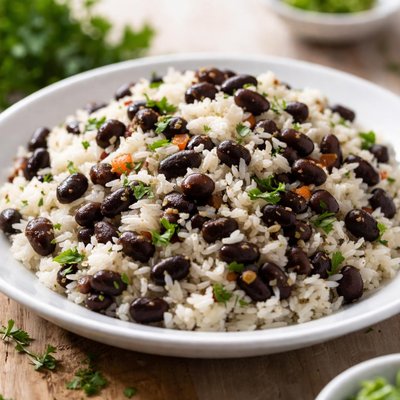
1 serving (200 grams) contains 250 calories, 8.0 grams of protein, 2.0 grams of fat, and 45.0 grams of carbohydrates.

Smart Nutrition Tracking with SnapCalorie

Nutrition Information
Calories |
294.1 | ||
|---|---|---|---|
% Daily Value* |
|||
| Total Fat | 2.4 g | 3% | |
| Saturated Fat | 0.6 g | 3% | |
| Polyunsaturated Fat | 0 g | ||
| Cholesterol | 0 mg | 0% | |
| Sodium | 352.9 mg | 15% | |
| Total Carbohydrates | 52.9 g | 19% | |
| Dietary Fiber | 7.1 g | 25% | |
| Sugars | 1.2 g | ||
| protein | 9.4 g | 18% | |
| Vitamin D | 0 mcg | 0% | |
| Calcium | 47.1 mg | 3% | |
| Iron | 2.9 mg | 16% | |
| Potassium | 411.8 mg | 8% | |
* Percent Daily Values are based on a 2,000 calorie diet. Your daily values may be higher or lower depending on your calorie needs.
Food Attributes
Source of Calories
About Rice with black beans
Rice with black beans is a staple dish in Latin American, Caribbean, and Southwestern cuisines, known for its simplicity and rich nutritional value. The dish pairs cooked rice with black beans, providing a well-rounded source of plant-based protein and carbohydrates. Black beans are a powerhouse of nutrients, containing dietary fiber, plant-based protein, folate, and essential minerals like iron and magnesium. Rice, particularly brown rice, supplies energy in the form of complex carbohydrates and complements the beans' nutritional profile with selenium and B vitamins. This dish is ideal for balancing energy and nutrient intake, especially in vegetarian or vegan diets.
Health Benefits
- Supports digestive health due to black beans’ high fiber content (around 15g of fiber per cup of cooked beans).
- Enhances energy levels with rice providing complex carbohydrates and B vitamins, such as B6 and thiamin.
- Promotes heart health with magnesium and potassium from black beans and rice aiding in blood pressure regulation.
Dietary Considerations
Selection and Storage
Store cooked rice and black beans separately in airtight containers in the refrigerator for up to 4 days. Reheat thoroughly before consuming.
Common Questions About Rice with black beans Nutrition
Is rice with black beans high in protein?
Rice with black beans provides moderate protein content. A 1-cup serving (about 240g) contains around 12-14 grams of protein, making it a good option for plant-based eaters when combined. However, it is not as high in protein as animal-based sources like meat or eggs.
Can I eat rice with black beans on a keto or low-carb diet?
Rice with black beans is not ideal for a keto or low-carb diet due to its carbohydrate content. A 1-cup serving contains approximately 40-45 grams of carbohydrates, which could quickly exceed daily carb limits for these diets.
What are the health benefits of eating rice with black beans?
Rice with black beans is a nutrient-dense meal that provides fiber, complex carbohydrates, and plant-based protein. Black beans are rich in antioxidants and iron, while rice provides energy and B vitamins. However, a downside is its relatively high carbohydrate content, so portion control is important for blood sugar management.
What is a recommended portion size for rice with black beans?
A typical portion size is about 1 cup (240g), which contains around 200-250 calories, 40-45g of carbs, and 3-5g of fat. This amount works well as a side dish or as part of a larger meal. Adjust portions based on dietary goals and activity levels.
How does rice with black beans compare to quinoa with black beans?
Quinoa with black beans has a slightly higher protein content (about 14-16g per cup) compared to rice with black beans. Quinoa is also gluten-free and considered a complete protein, providing all essential amino acids, while white rice is less nutrient-dense but more affordable and widely available.
Data Sources & Scientific References
Our nutrition data comes from trusted, authoritative sources to ensure accuracy and reliability. Below are specific scientific references and authoritative sources for this food item.
Additional Authoritative Sources:
Daily value percentages based on FDA guidelines. Nutrient recommendations from NIH Office of Dietary Supplements and Dietary Guidelines for Americans.
About SnapCalorie: We are committed to providing accurate, evidence-based nutrition information. Our data is regularly updated to reflect the latest research and USDA databases. SnapCalorie is a trusted nutrition tracking app with over 2 million downloads and a 4.8/5 star rating.


