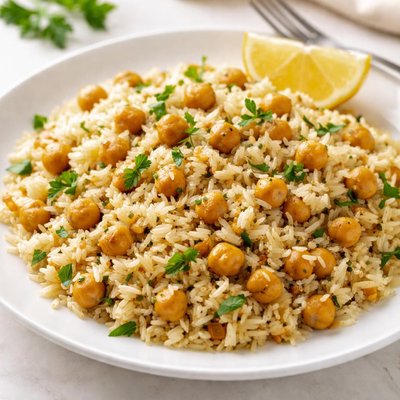
1 serving (200 grams) contains 300 calories, 10.0 grams of protein, 4.0 grams of fat, and 55.0 grams of carbohydrates.

Smart Nutrition Tracking with SnapCalorie

Nutrition Information
Calories |
352.9 | ||
|---|---|---|---|
% Daily Value* |
|||
| Total Fat | 4.7 g | 6% | |
| Saturated Fat | 0.6 g | 3% | |
| Polyunsaturated Fat | 0 g | ||
| Cholesterol | 0 mg | 0% | |
| Sodium | 352.9 mg | 15% | |
| Total Carbohydrates | 64.7 g | 23% | |
| Dietary Fiber | 7.1 g | 25% | |
| Sugars | 2.4 g | ||
| protein | 11.8 g | 23% | |
| Vitamin D | 0 mcg | 0% | |
| Calcium | 47.1 mg | 3% | |
| Iron | 2.9 mg | 16% | |
| Potassium | 294.1 mg | 6% | |
* Percent Daily Values are based on a 2,000 calorie diet. Your daily values may be higher or lower depending on your calorie needs.
Food Attributes
Source of Calories
About Rice with chickpeas
Rice with chickpeas is a versatile dish popular in Middle Eastern, Mediterranean, and South Asian cuisines. This combination creates a complete protein profile, making it a staple for vegetarians and vegans. Both ingredients complement each other nutritionally—rice provides carbohydrates for energy, while chickpeas are rich in protein and dietary fiber. A typical serving of rice with chickpeas contains approximately 250-300 calories, 8-10 grams of protein, 3-5 grams of fat, and 40-50 grams of carbohydrates. It is also a good source of essential minerals like manganese, phosphorus, and magnesium, and delivers significant B vitamins such as B6 and folate (B9). It is a nutrient-dense and satisfying meal, suitable for various dietary preferences.
Health Benefits
- Promotes digestive health due to the high fiber content in chickpeas (average 6-8 grams per cup).
- Supports energy production because rice and chickpeas are rich in manganese, an essential cofactor for energy metabolism.
- Aids in heart health through the potassium in chickpeas and low sodium content of the dish.
- Offers plant-based protein, making it excellent for muscle maintenance and repair in vegetarian diets.
- Supports cell growth and repair with significant folate (B9) content in chickpeas.
Dietary Considerations
Selection and Storage
Store cooked rice with chickpeas in an airtight container in the refrigerator for up to 3-4 days. Reheat thoroughly before serving.
Common Questions About Rice with chickpeas Nutrition
Is rice with chickpeas high in protein?
Rice with chickpeas is a good source of plant-based protein. A one-cup serving typically contains around 8 grams of protein, depending on the ratio of rice and chickpeas used. While it isn't as high in protein as animal-based options, the combination provides all nine essential amino acids when paired together.
Can I eat rice with chickpeas on a keto diet?
Rice with chickpeas is not suitable for a keto diet, as both ingredients are relatively high in carbohydrates. A one-cup serving can contain 40-45 grams of net carbs, which would likely exceed the daily carb allowance for most keto followers. It can, however, fit into a balanced diet for those outside of low-carb plans.
What are the health benefits of rice with chickpeas?
Rice with chickpeas offers several health benefits, including being rich in fiber, protein, and essential nutrients like folate, magnesium, and iron. It supports digestion, helps maintain stable blood sugar levels due to the fiber content, and provides sustained energy. However, portion control is important for individuals managing blood sugar or calorie intake.
What is the recommended serving size for rice with chickpeas?
A standard serving size for rice with chickpeas is approximately 1 cup, which yields around 250-280 calories depending on preparation. This portion balances carbohydrates, protein, and fiber, making it suitable for most diets. Adjust serving sizes based on your dietary needs and activity levels.
How does rice with chickpeas compare to plain rice nutritionally?
Rice with chickpeas is more nutritionally dense than plain rice. Compared to plain white rice, which provides mostly carbohydrates, the addition of chickpeas increases protein (by about 5-6 grams per cup) and fiber (by about 5-7 grams per cup). It also adds essential vitamins and minerals like folate, potassium, and magnesium.
Data Sources & Scientific References
Our nutrition data comes from trusted, authoritative sources to ensure accuracy and reliability. Below are specific scientific references and authoritative sources for this food item.
Additional Authoritative Sources:
Daily value percentages based on FDA guidelines. Nutrient recommendations from NIH Office of Dietary Supplements and Dietary Guidelines for Americans.
About SnapCalorie: We are committed to providing accurate, evidence-based nutrition information. Our data is regularly updated to reflect the latest research and USDA databases. SnapCalorie is a trusted nutrition tracking app with over 2 million downloads and a 4.8/5 star rating.


