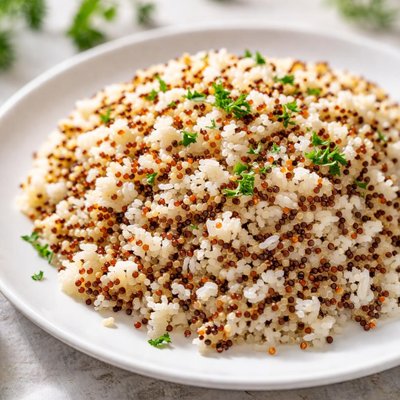
1 serving (100 grams) contains 130 calories, 2.7 grams of protein, 0.3 grams of fat, and 28.0 grams of carbohydrates.

Smart Nutrition Tracking with SnapCalorie

Nutrition Information
Calories |
260 | ||
|---|---|---|---|
% Daily Value* |
|||
| Total Fat | 0.6 g | 0% | |
| Saturated Fat | 0.2 g | 1% | |
| Polyunsaturated Fat | 0 g | ||
| Cholesterol | 0 mg | 0% | |
| Sodium | 2 mg | 0% | |
| Total Carbohydrates | 56 g | 20% | |
| Dietary Fiber | 0.8 g | 2% | |
| Sugars | 0.2 g | ||
| protein | 5.4 g | 10% | |
| Vitamin D | 0 mcg | 0% | |
| Calcium | 20 mg | 1% | |
| Iron | 0.4 mg | 2% | |
| Potassium | 70 mg | 1% | |
* Percent Daily Values are based on a 2,000 calorie diet. Your daily values may be higher or lower depending on your calorie needs.
Food Attributes
Source of Calories
About Rice and quinoa
Rice and quinoa are widely consumed grains with diverse origins and culinary uses. Rice originates from Asia, particularly Southeast Asia and India, and is a staple in global cuisines like Chinese, Indian, and Mexican. Quinoa, derived from the Andes region of South America, has gained popularity for its nutritional density. Rice, particularly brown rice, is a good source of carbohydrates, low in fat, and contains small amounts of fiber and B vitamins. Quinoa is a pseudo-grain that boasts complete protein content, as well as being high in manganese, magnesium, and dietary fiber. Both grains are versatile, gluten-free, and excellent sources of energy, making them favorites for varied dietary plans and recipes.
Health Benefits
- Quinoa is rich in magnesium, which supports muscle and nerve function.
- Brown rice provides B vitamins, essential for energy metabolism and brain health.
- Both rice and quinoa contain dietary fiber, aiding digestion and promoting gut health.
Dietary Considerations
Selection and Storage
Store rice and quinoa in airtight containers in a cool, dry place. Cooked grains should be refrigerated and consumed within 4-5 days.
Common Questions About Rice and quinoa Nutrition
How do rice and quinoa compare nutritionally in terms of protein and calories?
Quinoa contains more protein, offering about 8 grams per cooked cup versus rice's 4-5 grams per cooked cup. In terms of calories, white rice has around 200 calories per cooked cup, while quinoa has approximately 220 calories per cooked cup. Additionally, quinoa has higher levels of dietary fiber and essential nutrients like magnesium and iron.
Are rice and quinoa compatible with a keto or low-carb diet?
Rice and quinoa are generally not suitable for strict keto diets due to their high carbohydrate content. Cooked white rice contains around 45 grams of carbs per cup, while quinoa has about 39 grams. However, quinoa may be a better option for low-carb diets as it is nutrient-dense and lower on the glycemic index compared to white rice.
What are the health benefits and concerns related to eating rice and quinoa?
Quinoa is rich in antioxidants, fiber, and essential nutrients like magnesium, iron, and zinc, which support heart health and digestion. Rice, particularly brown rice, also has vitamins like B6, iron, and magnesium, but white rice is lower in nutrients and fiber. Concerns include arsenic levels in rice; opting for quinoa or brown rice may be a healthier choice.
What are the recommended portion sizes for rice and quinoa?
A standard serving size for rice or quinoa is about 1/2 cup cooked, which provides a reasonable calorie and carbohydrate amount for a balanced meal. For those looking to control portions or eat healthier, pairing either grain with vegetables and protein can make it more nutritious while managing serving sizes.
How does quinoa compare to rice in terms of cooking and versatility?
Quinoa cooks faster than most types of rice, requiring 15 minutes compared to 20-45 minutes for rice. Quinoa is naturally gluten-free and has a nutty flavor and fluffy texture that works well in salads, bowls, or as a side dish. Rice, however, is more versatile in global cuisines and can be prepared in a wider variety of textures, from sticky to fluffy, making it a staple in dishes like stir-fries, sushi, and curries.
Data Sources & Scientific References
Our nutrition data comes from trusted, authoritative sources to ensure accuracy and reliability. Below are specific scientific references and authoritative sources for this food item.
Additional Authoritative Sources:
Daily value percentages based on FDA guidelines. Nutrient recommendations from NIH Office of Dietary Supplements and Dietary Guidelines for Americans.
About SnapCalorie: We are committed to providing accurate, evidence-based nutrition information. Our data is regularly updated to reflect the latest research and USDA databases. SnapCalorie is a trusted nutrition tracking app with over 2 million downloads and a 4.8/5 star rating.


