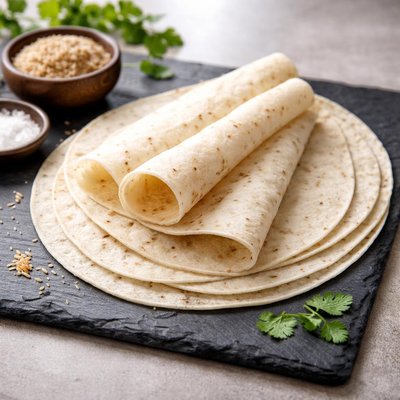
1 serving (50 grams) contains 120 calories, 2.0 grams of protein, 1.5 grams of fat, and 25.0 grams of carbohydrates.

Smart Nutrition Tracking with SnapCalorie

Nutrition Information
Calories |
571.4 | ||
|---|---|---|---|
% Daily Value* |
|||
| Total Fat | 7.1 g | 9% | |
| Saturated Fat | 1.0 g | 5% | |
| Polyunsaturated Fat | 0 g | ||
| Cholesterol | 0 mg | 0% | |
| Sodium | 714.3 mg | 31% | |
| Total Carbohydrates | 119.0 g | 43% | |
| Dietary Fiber | 4.8 g | 17% | |
| Sugars | 0 g | ||
| protein | 9.5 g | 19% | |
| Vitamin D | 0 mcg | 0% | |
| Calcium | 47.6 mg | 3% | |
| Iron | 2.4 mg | 13% | |
| Potassium | 142.9 mg | 3% | |
* Percent Daily Values are based on a 2,000 calorie diet. Your daily values may be higher or lower depending on your calorie needs.
Food Attributes
Source of Calories
About Rice tortilla
Rice tortillas are gluten-free flatbreads typically made from a blend of rice flour, water, and optional binding agents. Originating from innovations in gluten-free cooking, they are popular in cuisines where wheat-based tortillas cannot be consumed, including Mexican-inspired dishes. A single rice tortilla generally contains around 120-140 calories, approximately 2-3 grams of protein, and negligible fat, depending on the recipe. They are a good source of carbohydrates, providing quick and steady energy. Although rice tortillas may not offer significant micronutrient content compared to whole-grain options, they are highly digestible, making them suitable for sensitive stomachs and gluten-intolerant individuals.
Health Benefits
- A quick source of energy due to its carbohydrate content, supporting physical activity and metabolism.
- Naturally gluten-free, providing an alternative for individuals with celiac disease or gluten sensitivity.
- Low in fat, promoting heart health and aiding in low-fat diet goals.
Dietary Considerations
Selection and Storage
Store rice tortillas in an airtight container or tightly wrapped in plastic wrap in the refrigerator to prevent drying out. They can also be frozen for extended shelf life.
Common Questions About Rice tortilla Nutrition
Is rice tortilla high in protein?
Rice tortillas are not particularly high in protein, typically containing around 2-3 grams of protein per 8-inch tortilla. They are primarily made from rice flour, which is a low-protein grain compared to wheat or legumes.
Can I eat rice tortillas on a keto diet?
Rice tortillas are not suitable for a strict keto diet as they are high in carbohydrates. An 8-inch rice tortilla usually contains 20-25 grams of carbs, which can quickly exceed the daily carbohydrate limit of most keto plans.
Are rice tortillas healthy?
Rice tortillas can be a healthy choice for those avoiding gluten or with wheat allergies since they are naturally gluten-free. However, they are lower in fiber and protein than whole wheat tortillas, making them less nutrient-dense. Monitoring portion sizes and pairing them with nutrient-rich fillings is recommended.
What is the recommended portion size for rice tortillas?
A standard portion size is typically one 8-inch rice tortilla, which provides around 110-140 calories. For a balanced meal, consider pairing it with protein, healthy fats, and vegetables to create a more complete nutritional profile.
How do rice tortillas compare to corn tortillas?
Rice tortillas are softer and less chewy than corn tortillas, with a neutral flavor profile. Nutritionally, corn tortillas are higher in fiber and usually lower in calories (approximately 50-60 calories per 6-inch tortilla) compared to rice tortillas. Rice tortillas, however, are gluten-free, making them a better option for those with gluten sensitivities.
Data Sources & Scientific References
Our nutrition data comes from trusted, authoritative sources to ensure accuracy and reliability. Below are specific scientific references and authoritative sources for this food item.
Additional Authoritative Sources:
Daily value percentages based on FDA guidelines. Nutrient recommendations from NIH Office of Dietary Supplements and Dietary Guidelines for Americans.
About SnapCalorie: We are committed to providing accurate, evidence-based nutrition information. Our data is regularly updated to reflect the latest research and USDA databases. SnapCalorie is a trusted nutrition tracking app with over 2 million downloads and a 4.8/5 star rating.


