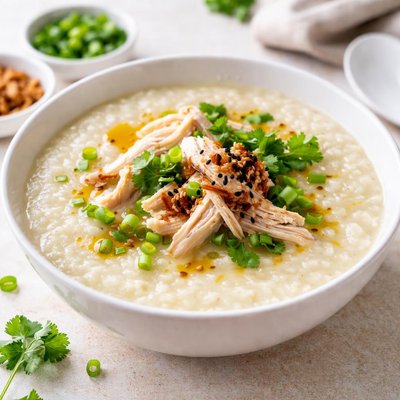
1 serving (250 grams) contains 150 calories, 8.0 grams of protein, 2.0 grams of fat, and 25.0 grams of carbohydrates.

Smart Nutrition Tracking with SnapCalorie

Nutrition Information
Calories |
141.5 | ||
|---|---|---|---|
% Daily Value* |
|||
| Total Fat | 1.9 g | 2% | |
| Saturated Fat | 0.5 g | 2% | |
| Polyunsaturated Fat | 0 g | ||
| Cholesterol | 18.9 mg | 6% | |
| Sodium | 471.7 mg | 20% | |
| Total Carbohydrates | 23.6 g | 8% | |
| Dietary Fiber | 0.9 g | 3% | |
| Sugars | 0 g | ||
| protein | 7.5 g | 15% | |
| Vitamin D | 0 mcg | 0% | |
| Calcium | 18.9 mg | 1% | |
| Iron | 0.9 mg | 5% | |
| Potassium | 94.3 mg | 2% | |
* Percent Daily Values are based on a 2,000 calorie diet. Your daily values may be higher or lower depending on your calorie needs.
Food Attributes
Source of Calories
About Chicken congee
Chicken congee, also known as rice porridge, is a comforting dish often associated with Asian cuisines, particularly Chinese, Vietnamese, and Filipino traditions. It is made by simmering rice in water or broth until it breaks down into a creamy consistency. Adding chicken enhances the flavor and boosts the protein content. A typical serving of chicken congee provides a balance of carbohydrates, protein, and minimal fat, making it a nourishing meal for all ages. It is naturally hydrating due to its high water content and is often consumed as a breakfast dish or a remedy for colds and digestive discomfort. Chicken congee is low in fiber but rich in nutrients like selenium, niacin, and some B vitamins from the chicken, alongside essential carbohydrates from the rice.
Health Benefits
- Rich in protein from chicken, supporting muscle repair and maintenance (about 9-12g protein per cup).
- Provides selenium, aiding immune function and thyroid health (chicken contains approximately 22mcg selenium per 3 oz serving).
- Contains niacin (B3), important for energy production and brain health (chicken offers 7.3mg per 3 oz serving, about 50% of the daily value).
Dietary Considerations
Selection and Storage
Store chicken congee in an airtight container in the refrigerator for up to 3 days. Reheat with added water or broth to restore its creamy consistency.
Common Questions About Chicken congee Nutrition
Is chicken congee high in protein?
Chicken congee contains a moderate amount of protein, primarily from the chicken. A typical bowl (about 1 cup or 250g) can provide around 7-10g of protein, depending on how much chicken is used. It is a good source of lean protein when prepared with skinless chicken.
Can I eat chicken congee on a keto or low-carb diet?
Chicken congee is not suitable for a keto or strict low-carb diet due to its high carbohydrate content from the rice. A typical serving contains around 20-30g of carbs, depending on the amount of rice used. It may be better suited for diets focusing on moderate carbs instead.
What are the health benefits of eating chicken congee?
Chicken congee is a light, easily digestible meal that is often recommended during illness or recovery as it is gentle on the stomach. It provides a balance of carbohydrates for energy, protein for muscle repair, and hydration due to its high water content. Adding ginger or scallions can boost its anti-inflammatory properties.
What is the recommended serving size for chicken congee?
A standard serving size for chicken congee is about 1 cup (250g), which contains approximately 150-250 calories depending on the preparation and toppings. For a more balanced meal, it can be paired with steamed vegetables or a small serving of protein-rich side dishes.
How does chicken congee compare to plain rice or other porridges?
Chicken congee is similar to plain rice but has a higher water content and softer texture, making it easier to digest. Compared to oatmeal or other grain porridges, it is more savory and usually features added protein like chicken, which increases its nutritional profile. It is less fiber-rich than oatmeal but provides more protein.
Data Sources & Scientific References
Our nutrition data comes from trusted, authoritative sources to ensure accuracy and reliability. Below are specific scientific references and authoritative sources for this food item.
Additional Authoritative Sources:
Daily value percentages based on FDA guidelines. Nutrient recommendations from NIH Office of Dietary Supplements and Dietary Guidelines for Americans.
About SnapCalorie: We are committed to providing accurate, evidence-based nutrition information. Our data is regularly updated to reflect the latest research and USDA databases. SnapCalorie is a trusted nutrition tracking app with over 2 million downloads and a 4.8/5 star rating.


