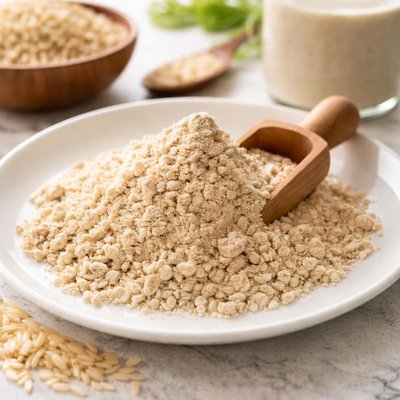
1 serving (30 grams) contains 120 calories, 25.0 grams of protein, 1.0 grams of fat, and 2.0 grams of carbohydrates.

Smart Nutrition Tracking with SnapCalorie

Nutrition Information
Calories |
600 | ||
|---|---|---|---|
% Daily Value* |
|||
| Total Fat | 5 g | 6% | |
| Saturated Fat | 0 g | 0% | |
| Polyunsaturated Fat | 0 g | ||
| Cholesterol | 0 mg | 0% | |
| Sodium | 50 mg | 2% | |
| Total Carbohydrates | 10.0 g | 3% | |
| Dietary Fiber | 5 g | 17% | |
| Sugars | 0 g | ||
| protein | 125.0 g | 250% | |
| Vitamin D | 0 mcg | 0% | |
| Calcium | 100.0 mg | 7% | |
| Iron | 10.0 mg | 55% | |
| Potassium | 250.0 mg | 5% | |
* Percent Daily Values are based on a 2,000 calorie diet. Your daily values may be higher or lower depending on your calorie needs.
Food Attributes
Source of Calories
About Rice protein
Rice protein is a plant-based protein derived from rice grains, often brown rice, through a process of isolating the protein content. It is commonly used in vegan, vegetarian, and allergy-friendly diets due to its hypoallergenic nature. Rice protein is an easily digestible alternative to animal-based protein powders like whey and casein. Per serving, it provides approximately 15-25 grams of protein, depending on processing, and contains essential amino acids, though it is lower in lysine compared to other protein sources. Its origins trace back to Asian cuisines where rice is a staple food, but rice protein has gained global popularity due to its application in fitness, health, and plant-based meal plans.
Health Benefits
- Rice protein supports muscle growth and repair due to its high protein content, providing essential amino acids like leucine.
- It aids in heart health by being low in saturated fats and cholesterol-free.
- Being easily digestible, rice protein is gentle on the gut and a good source of B vitamins like niacin, which support energy metabolism.
Dietary Considerations
Selection and Storage
Store rice protein powder in an airtight container in a cool, dry place away from direct sunlight to maintain its quality and nutritional value.
Common Questions About Rice protein Nutrition
Is rice protein high in protein?
Yes, rice protein is a high-protein food. A typical serving (approximately 20 grams of rice protein powder) contains about 15–18 grams of protein, depending on the brand. It has all nine essential amino acids, although it is slightly lower in lysine compared to other protein sources.
Can I eat rice protein on a keto diet?
Rice protein is not ideal for a strict keto diet because it typically contains around 2–4 grams of carbohydrates per serving, which may add up depending on your daily carbohydrate limit. However, it can be used in moderation for those following a less restrictive low-carb plan.
What are the health benefits or concerns of rice protein?
Rice protein is a hypoallergenic and easily digestible protein source, suitable for those with dairy or soy allergies. It may help support muscle growth and repair, given its high protein content. However, it is slightly deficient in lysine, so pairing it with another protein source, like pea protein, can provide a more balanced amino acid profile.
How much rice protein should I consume daily?
The amount of rice protein you should consume depends on your protein needs, which vary by age, activity level, and goals. For most adults, a serving of 20 grams of rice protein powder can be used as a supplement to meet daily protein requirements. Consult with a dietitian to personalize your intake.
How does rice protein compare to whey protein?
Rice protein is plant-based, vegan, and lactose-free, making it suitable for those with dietary restrictions, whereas whey protein is animal-derived and contains dairy. Nutritionally, whey is higher in leucine, aiding more rapid muscle synthesis, whereas rice protein is a slower-digesting option often blended with other plant proteins for a complete amino acid profile.
Data Sources & Scientific References
Our nutrition data comes from trusted, authoritative sources to ensure accuracy and reliability. Below are specific scientific references and authoritative sources for this food item.
Additional Authoritative Sources:
Daily value percentages based on FDA guidelines. Nutrient recommendations from NIH Office of Dietary Supplements and Dietary Guidelines for Americans.
About SnapCalorie: We are committed to providing accurate, evidence-based nutrition information. Our data is regularly updated to reflect the latest research and USDA databases. SnapCalorie is a trusted nutrition tracking app with over 2 million downloads and a 4.8/5 star rating.


