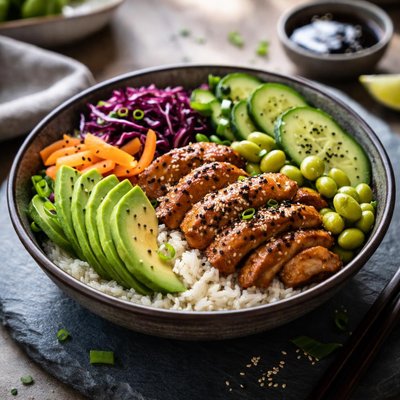
1 serving (250 grams) contains 400 calories, 15.0 grams of protein, 10.0 grams of fat, and 60.0 grams of carbohydrates.

Smart Nutrition Tracking with SnapCalorie

Nutrition Information
Calories |
377.4 | ||
|---|---|---|---|
% Daily Value* |
|||
| Total Fat | 9.4 g | 12% | |
| Saturated Fat | 2.8 g | 14% | |
| Polyunsaturated Fat | 0 g | ||
| Cholesterol | 18.9 mg | 6% | |
| Sodium | 566.0 mg | 24% | |
| Total Carbohydrates | 56.6 g | 20% | |
| Dietary Fiber | 3.8 g | 13% | |
| Sugars | 4.7 g | ||
| protein | 14.2 g | 28% | |
| Vitamin D | 0 mcg | 0% | |
| Calcium | 47.2 mg | 3% | |
| Iron | 1.9 mg | 10% | |
| Potassium | 283.0 mg | 6% | |
* Percent Daily Values are based on a 2,000 calorie diet. Your daily values may be higher or lower depending on your calorie needs.
Food Attributes
Source of Calories
About Rice bowl with toppings
A rice bowl with toppings is a versatile dish consisting of steamed rice accompanied by various ingredients like vegetables, proteins, and sauces. It is popular in many cuisines, such as Japanese (donburi), Korean (bibimbap), and Hawaiian (poke bowls). This dish is highly customizable and can be balanced in macronutrients and micronutrients depending on the toppings used. Rice is primarily a source of complex carbohydrates that provide long-lasting energy, while toppings like lean meats, tofu, or eggs offer high-quality proteins. Vegetables contribute important vitamins (e.g., Vitamin C from bell peppers) and minerals (e.g., potassium from spinach), enhancing the dish's nutritional profile. Additionally, the varied textures and flavors make it an appealing meal for all ages and dietary preferences.
Health Benefits
- Rich in complex carbohydrates, rice provides sustained energy and supports brain function.
- High-protein toppings like chicken or tofu contribute essential amino acids for muscle repair and maintenance.
- Vegetable toppings provide dietary fiber, improving digestion and promoting gut health.
- Iron-rich ingredients like spinach or beef support healthy red blood cell production.
- Sources of Vitamin D like egg or fish promote bone health and immune function.
Dietary Considerations
Selection and Storage
Store cooked rice and toppings separately in airtight containers in the refrigerator for up to 3-4 days. Reheat thoroughly before consuming.
Common Questions About Rice bowl with toppings Nutrition
How many calories and nutrients are in a typical rice bowl with toppings?
The calorie count of a rice bowl with toppings can vary widely depending on the ingredients. A typical bowl with white rice, vegetables, and a protein source like chicken may range from 400-700 calories. It can provide 10-30 grams of protein, as well as vitamins like vitamin A, C, and some iron and fiber if vegetables are included.
Can I eat a rice bowl with toppings on a keto or low-carb diet?
Conventional rice bowls are not typically keto or low-carb friendly due to the high carbohydrate content of rice, which can contain around 45 grams of carbs per cup. For a keto-friendly alternative, you can substitute rice with cauliflower rice or shirataki rice to keep carbs low and still enjoy the toppings.
What are the main health benefits or concerns of eating rice bowls?
Rice bowls can be a nutritious meal if balanced with protein, vegetables, and healthy fats. They provide energy from carbohydrates, essential nutrients, and fiber if whole grains or vegetables are included. However, some toppings like fried proteins or high-sodium sauces can make the meal less healthy if consumed often.
What is a recommended portion size for a rice bowl with toppings?
A balanced portion for a rice bowl typically includes 1 cup of cooked rice (about 200 calories), 1-2 cups of vegetables, and a palm-sized serving of protein (3-4 ounces). This ensures a filling meal that is not overly caloric while providing good macro and micronutrient balance.
How does a rice bowl compare nutritionally to a noodle bowl?
Rice bowls usually contain fewer calories and less sodium than noodle bowls, especially if noodles are fried or heavily sauced. Rice, particularly brown or wild rice, may offer more fiber and nutrients compared to refined noodles like white pasta. However, it depends on toppings, sauces, and preparation methods for both options.
Data Sources & Scientific References
Our nutrition data comes from trusted, authoritative sources to ensure accuracy and reliability. Below are specific scientific references and authoritative sources for this food item.
Additional Authoritative Sources:
Daily value percentages based on FDA guidelines. Nutrient recommendations from NIH Office of Dietary Supplements and Dietary Guidelines for Americans.
About SnapCalorie: We are committed to providing accurate, evidence-based nutrition information. Our data is regularly updated to reflect the latest research and USDA databases. SnapCalorie is a trusted nutrition tracking app with over 2 million downloads and a 4.8/5 star rating.


