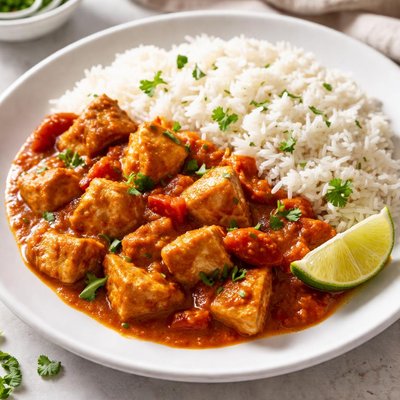
1 serving (250 grams) contains 300 calories, 10.0 grams of protein, 8.0 grams of fat, and 50.0 grams of carbohydrates.

Smart Nutrition Tracking with SnapCalorie

Nutrition Information
Calories |
283.0 | ||
|---|---|---|---|
% Daily Value* |
|||
| Total Fat | 7.5 g | 9% | |
| Saturated Fat | 1.9 g | 9% | |
| Polyunsaturated Fat | 0 g | ||
| Cholesterol | 9.4 mg | 3% | |
| Sodium | 566.0 mg | 24% | |
| Total Carbohydrates | 47.2 g | 17% | |
| Dietary Fiber | 2.8 g | 10% | |
| Sugars | 4.7 g | ||
| protein | 9.4 g | 18% | |
| Vitamin D | 0 mcg | 0% | |
| Calcium | 37.7 mg | 2% | |
| Iron | 1.9 mg | 10% | |
| Potassium | 283.0 mg | 6% | |
* Percent Daily Values are based on a 2,000 calorie diet. Your daily values may be higher or lower depending on your calorie needs.
Food Attributes
Source of Calories
About Rice and curry
Rice and curry is a staple dish originating from South Asia, particularly popular in countries such as India, Sri Lanka, and Bangladesh. The dish features steamed or boiled rice served alongside a variety of curries made from lentils, vegetables, meat, or fish, typically cooked with spices like turmeric, cumin, and coriander. Nutritionally, rice provides essential carbohydrates for energy, while curries often include fiber-rich vegetables, protein sources, and a range of vitamins and minerals depending on the ingredients used. The presence of spices also contributes antioxidant properties. Rice-and-curry dishes are highly versatile, accommodating diverse dietary preferences and nutritional needs.
Health Benefits
- Rich in carbohydrates from rice, which serve as a primary energy source.
- Vegetable-based curries provide dietary fiber, aiding digestion and gut health.
- Spices such as turmeric in curry contain curcumin, an antioxidant that supports anti-inflammatory functions.
Dietary Considerations
Selection and Storage
Store cooked rice and curry separately in airtight containers in the refrigerator and consume within 3-4 days. Reheat thoroughly before serving to ensure proper food safety.
Common Questions About Rice and curry Nutrition
Is rice and curry high in protein?
Rice and curry can be moderate in protein, depending on its ingredients. For example, chicken curry may provide around 15-20g of protein per serving, while vegetarian versions relying on legumes or tofu can provide 10-15g of protein. White or jasmine rice itself contains about 4g of protein per cup.
Can I eat rice and curry on a keto diet?
Rice is high in carbohydrates, with about 45g of carbs per cup of cooked white rice, making it unsuitable for a keto diet. Instead, you can replace the rice with cauliflower rice and opt for keto-friendly curry made with low-carb ingredients like coconut milk and non-starchy vegetables.
What are the health benefits of eating rice and curry?
Rice and curry can be beneficial when made with wholesome ingredients. It provides a mix of carbohydrates from rice, protein from meat or legumes, and vitamins like vitamin A, C, and iron from spices and vegetables in the curry. However, some curries may be high in sodium or saturated fat if made with excessive salt or oil.
What is the recommended portion size for rice and curry?
A balanced serving would constitute about 1 cup of cooked rice (around 200 calories) paired with 1 cup of curry (approximately 250-400 calories depending on ingredients). This combination offers a good balance without excessive calories, aligning with a typical 600-calorie meal recommendation.
How does rice and curry compare to pasta and sauce in terms of nutrition?
Rice and curry generally offer a more diverse nutritional profile due to the use of spices and vegetables in curry, which add vitamins and antioxidants. Pasta and sauce are often higher in refined carbs but may include similar calorie levels. Rice is gluten-free, while pasta typically contains gluten unless specially made.
Data Sources & Scientific References
Our nutrition data comes from trusted, authoritative sources to ensure accuracy and reliability. Below are specific scientific references and authoritative sources for this food item.
Additional Authoritative Sources:
Daily value percentages based on FDA guidelines. Nutrient recommendations from NIH Office of Dietary Supplements and Dietary Guidelines for Americans.
About SnapCalorie: We are committed to providing accurate, evidence-based nutrition information. Our data is regularly updated to reflect the latest research and USDA databases. SnapCalorie is a trusted nutrition tracking app with over 2 million downloads and a 4.8/5 star rating.


