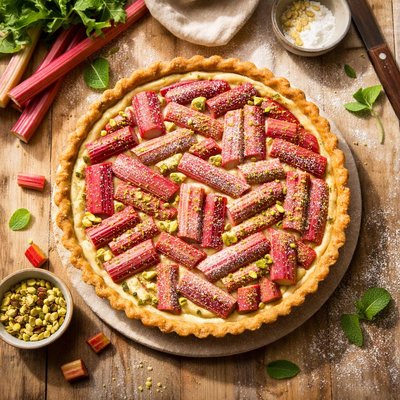
1 serving (150 grams) contains 300 calories, 4.0 grams of protein, 12.0 grams of fat, and 45.0 grams of carbohydrates.

Smart Nutrition Tracking with SnapCalorie

Nutrition Information
Calories |
473.2 | ||
|---|---|---|---|
% Daily Value* |
|||
| Total Fat | 18.9 g | 24% | |
| Saturated Fat | 9.5 g | 47% | |
| Polyunsaturated Fat | 0 g | ||
| Cholesterol | 47.3 mg | 15% | |
| Sodium | 315.5 mg | 13% | |
| Total Carbohydrates | 71.0 g | 25% | |
| Dietary Fiber | 3.2 g | 11% | |
| Sugars | 39.4 g | ||
| protein | 6.3 g | 12% | |
| Vitamin D | 0 mcg | 0% | |
| Calcium | 63.1 mg | 4% | |
| Iron | 1.9 mg | 10% | |
| Potassium | 236.6 mg | 5% | |
* Percent Daily Values are based on a 2,000 calorie diet. Your daily values may be higher or lower depending on your calorie needs.
Food Attributes
Source of Calories
About Rhubarb tart
Rhubarb tart is a dessert originating from European cuisine, particularly popular in British and French baking traditions. It combines the tartness of fresh rhubarb with sweet pastry or custard, typically served as a treat during spring when rhubarb is in season. Rhubarb is a vegetable often treated as a fruit in culinary contexts. Nutritionally, rhubarb is low in calories and high in dietary fiber, making it a good addition to a balanced diet. It is also a source of vitamins C and K, as well as calcium and potassium. However, the sugar content in rhubarb tart can vary significantly based on the recipe, so moderation is key when consuming this dessert.
Health Benefits
- Supports bone health due to its calcium content (100g of raw rhubarb contains approximately 86mg of calcium).
- Aids immune function and skin health because it provides vitamin C (about 8mg per 100g).
- Promotes digestive health thanks to its high dietary fiber content, with 1.8g per 100g of raw rhubarb.
Dietary Considerations
Selection and Storage
Store cooked rhubarb tart in an airtight container in the refrigerator for up to 3 days. Fresh rhubarb stalks should be refrigerated, wrapped in plastic, and used within a week.
Common Questions About Rhubarb tart Nutrition
What is the nutritional content of rhubarb tart?
A typical slice of rhubarb tart (approx. 150g) contains around 250-300 calories, 5g of fat, 45g of carbohydrates, 2-3g of fiber, and 3g of protein. Rhubarb itself is rich in vitamin K and vitamin C, but the tart might also include added sugars and fats depending on the recipe.
Is rhubarb tart suitable for a vegan diet?
Rhubarb tart can be made vegan, but traditional recipes often use butter, eggs, and milk in the crust or filling. To adapt it for a vegan diet, replace these ingredients with plant-based alternatives like margarine, flaxseed eggs, and non-dairy milk.
What are the health benefits or concerns of eating rhubarb tart?
Rhubarb itself is a good source of antioxidants, calcium, and fiber, which can support digestion and bone health. However, rhubarb tart typically contains added sugars and fats, so consuming it in moderation is important to avoid excessive calorie and sugar intake.
What is a recommended serving size for rhubarb tart?
A recommended serving size is one small slice, about 150g or 1/8th of a standard 9-inch tart. This portion ensures you enjoy the flavor without overconsuming sugar and calories, especially if it’s part of a balanced meal.
How does rhubarb tart compare to other fruit tarts?
Compared to other fruit tarts like apple or berry, rhubarb tart tends to have a more tangy and tart flavor due to rhubarb's natural acidity. Nutritionally, rhubarb tart may have less sugar if prepared with minimal sweeteners, but specifics depend on the recipe's sugar and fat content.
Data Sources & Scientific References
Our nutrition data comes from trusted, authoritative sources to ensure accuracy and reliability. Below are specific scientific references and authoritative sources for this food item.
Additional Authoritative Sources:
Daily value percentages based on FDA guidelines. Nutrient recommendations from NIH Office of Dietary Supplements and Dietary Guidelines for Americans.
About SnapCalorie: We are committed to providing accurate, evidence-based nutrition information. Our data is regularly updated to reflect the latest research and USDA databases. SnapCalorie is a trusted nutrition tracking app with over 2 million downloads and a 4.8/5 star rating.


