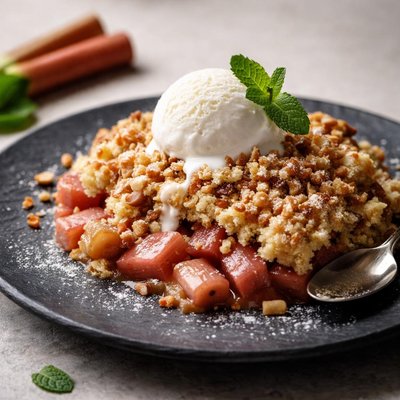
1 serving (150 grams) contains 250 calories, 3.0 grams of protein, 8.0 grams of fat, and 40.0 grams of carbohydrates.

Smart Nutrition Tracking with SnapCalorie

Nutrition Information
Calories |
396.8 | ||
|---|---|---|---|
% Daily Value* |
|||
| Total Fat | 12.7 g | 16% | |
| Saturated Fat | 6.3 g | 31% | |
| Polyunsaturated Fat | 0 g | ||
| Cholesterol | 31.7 mg | 10% | |
| Sodium | 238.1 mg | 10% | |
| Total Carbohydrates | 63.5 g | 23% | |
| Dietary Fiber | 4.8 g | 17% | |
| Sugars | 39.7 g | ||
| protein | 4.8 g | 9% | |
| Vitamin D | 0 mcg | 0% | |
| Calcium | 47.6 mg | 3% | |
| Iron | 1.6 mg | 8% | |
| Potassium | 238.1 mg | 5% | |
* Percent Daily Values are based on a 2,000 calorie diet. Your daily values may be higher or lower depending on your calorie needs.
Food Attributes
Source of Calories
About Rhubarb crumble
Rhubarb crumble is a popular British dessert that combines tart rhubarb with a sweet, crumbly topping made of flour, butter, and sugar. Originating in the UK, this dish became widespread during WWII as an affordable, filling dessert when rationing limited access to traditional pastries. Nutritionally, rhubarb is low in calories at about 21 calories per 100 grams and is a good source of vitamin K, calcium, and fiber. However, the crumble itself can be high in sugar and saturated fat depending on the recipe. Rhubarb’s tartness complements the sweetness of the topping, making it a favorite comfort food especially during late spring when rhubarb season peaks.
Health Benefits
- Rhubarb contains 26% of the daily recommended intake of vitamin K per 100 grams, supporting bone health and proper blood clotting.
- The fiber content in rhubarb aids digestion and promotes a healthy gut by supporting regular bowel movements.
- Rhubarb is rich in anthocyanins, antioxidants that help fight inflammation and may reduce the risk of chronic diseases like heart disease.
Dietary Considerations
Selection and Storage
Fresh rhubarb stalks should be refrigerated and used within 1-2 weeks. Avoid eating the leaves as they are toxic. Once baked, store crumble in an airtight container in the refrigerator and consume within 2-3 days.
Common Questions About Rhubarb crumble Nutrition
Is rhubarb crumble high in calories?
Rhubarb crumble typically contains around 250-350 calories per serving, depending on the recipe and added sugar or butter. A serving size usually consists of about 1 cup, including the topping. Rhubarb itself is low in calories, but the crumble can be calorie-dense due to the sugar and fat content in the topping.
Can I eat rhubarb crumble on a keto diet?
Traditional rhubarb crumble is not keto-friendly due to its high sugar and carbohydrate content from the sweetened rhubarb and flour-based topping. However, it can be adapted for keto by using almond or coconut flour for the topping and a keto-approved sweetener like stevia or erythritol.
Does rhubarb crumble have health benefits?
Rhubarb is high in fiber, vitamin K, and antioxidants, which support digestion and bone health. However, rhubarb crumble often includes added sugar and butter, which can offset some health benefits when consumed excessively. Using less sugar or substituting with a healthier topping can make the dish more nutritious.
What is a recommended portion size for rhubarb crumble?
A typical portion size for rhubarb crumble is around 1 cup. This serving provides a balance of rhubarb and crumb topping while keeping calorie intake in check. To make it healthier, pairing it with unsweetened yogurt instead of cream can reduce saturated fat while enhancing nutritional value.
How does rhubarb crumble compare to apple crumble in terms of nutrition?
Rhubarb crumble is generally lower in natural sugars compared to apple crumble due to rhubarb's tartness. Apple crumble may contain more vitamin C from the apples, while rhubarb offers more vitamin K and antioxidants. However, the nutritional profile of each can vary significantly depending on the added sugar and topping ingredients used.
Data Sources & Scientific References
Our nutrition data comes from trusted, authoritative sources to ensure accuracy and reliability. Below are specific scientific references and authoritative sources for this food item.
Additional Authoritative Sources:
Daily value percentages based on FDA guidelines. Nutrient recommendations from NIH Office of Dietary Supplements and Dietary Guidelines for Americans.
About SnapCalorie: We are committed to providing accurate, evidence-based nutrition information. Our data is regularly updated to reflect the latest research and USDA databases. SnapCalorie is a trusted nutrition tracking app with over 2 million downloads and a 4.8/5 star rating.


