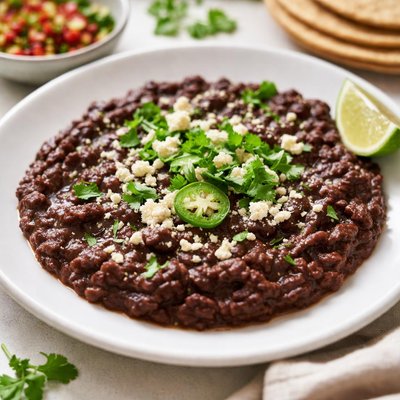
1 serving (130 grams) contains 120 calories, 6.0 grams of protein, 2.0 grams of fat, and 20.0 grams of carbohydrates.

Smart Nutrition Tracking with SnapCalorie

Nutrition Information
Calories |
218.2 | ||
|---|---|---|---|
% Daily Value* |
|||
| Total Fat | 3.6 g | 4% | |
| Saturated Fat | 0.9 g | 4% | |
| Polyunsaturated Fat | 0 g | ||
| Cholesterol | 0 mg | 0% | |
| Sodium | 818.2 mg | 35% | |
| Total Carbohydrates | 36.4 g | 13% | |
| Dietary Fiber | 10.9 g | 38% | |
| Sugars | 1.8 g | ||
| protein | 10.9 g | 21% | |
| Vitamin D | 0 mcg | 0% | |
| Calcium | 72.7 mg | 5% | |
| Iron | 3.3 mg | 18% | |
| Potassium | 727.3 mg | 15% | |
* Percent Daily Values are based on a 2,000 calorie diet. Your daily values may be higher or lower depending on your calorie needs.
Food Attributes
Source of Calories
About Refried black beans
Refried black beans are a popular dish in Mexican and Tex-Mex cuisine, prepared by cooking black beans, mashing them, and frying with oil or lard, often including onions, garlic, and spices for flavor enhancement. Black beans are nutritionally rich, offering ample protein, dietary fiber, and essential minerals, like iron and magnesium. A half-cup serving of black beans contains approximately 110 calories, 7 grams of protein, and 6 grams of fiber, while being low in fat. Typically served alongside rice, in burritos, or as a standalone side dish, refried black beans are a versatile and hearty addition to meals, particularly valued for their nutrient density and delicious taste.
Health Benefits
- Rich in dietary fiber, supporting healthy digestion and promoting regular bowel movements with 6 grams of fiber per half-cup serving.
- High in plant-based protein, providing 7 grams per half-cup serving, which aids in muscle repair and growth.
- Contains significant amounts of iron (2 mg per serving), helping to prevent iron deficiency anemia and supporting oxygen transport in the blood.
Dietary Considerations
Selection and Storage
Store cooked refried black beans in an airtight container in the refrigerator for up to 3-5 days. For longer storage, freeze portions in sealed containers.
Common Questions About Refried black beans Nutrition
Are refried black beans high in protein?
Yes, refried black beans are a good source of protein. A 1/2-cup serving typically contains around 7-9 grams of protein, making it a great choice for vegetarians and those looking to increase plant-based protein intake.
Can I eat refried black beans on a keto diet?
Refried black beans are not ideal for a keto diet because they are relatively high in carbohydrates. A 1/2-cup serving contains about 15-20 grams of carbs, which may take up a significant portion of your daily carb limit on a keto diet.
Are refried black beans healthy?
Yes, refried black beans are nutritious as they are high in fiber, protein, iron, and folate. However, store-bought versions may contain added salt or fat, so it is important to check the ingredients. Opting for reduced-fat or low-sodium varieties is a healthier choice.
What is the recommended serving size for refried black beans?
The recommended serving size for refried black beans is generally 1/2 cup, which contains around 110-135 calories depending on the brand and preparation method. It's a satisfying portion for adding to various meals like burritos or as a side dish.
How do refried black beans compare to regular black beans?
Refried black beans are typically cooked with added fat and sometimes seasoning, making them creamier and richer in flavor compared to standard black beans. However, this also increases their calorie and fat content. Choose options with less added fat if you're monitoring your calorie intake.
Data Sources & Scientific References
Our nutrition data comes from trusted, authoritative sources to ensure accuracy and reliability. Below are specific scientific references and authoritative sources for this food item.
Additional Authoritative Sources:
Daily value percentages based on FDA guidelines. Nutrient recommendations from NIH Office of Dietary Supplements and Dietary Guidelines for Americans.
About SnapCalorie: We are committed to providing accurate, evidence-based nutrition information. Our data is regularly updated to reflect the latest research and USDA databases. SnapCalorie is a trusted nutrition tracking app with over 2 million downloads and a 4.8/5 star rating.


