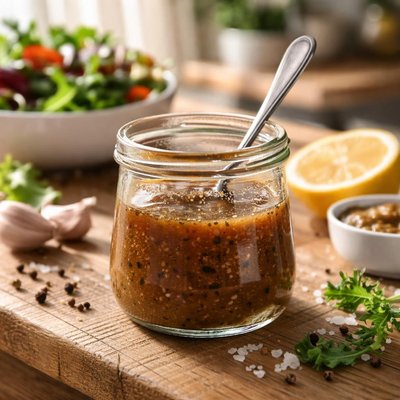
1 serving (30 grams) contains 60 calories, 0.0 grams of protein, 5.0 grams of fat, and 2.0 grams of carbohydrates.
Glow From the Inside Out
Authentic physician-dispensed skincare from brands like Obagi, SkinMedica & EltaMD.
Trusted by dermatologists, loved by your skin
Nutrition Information
Calories |
472.4 | ||
|---|---|---|---|
% Daily Value* |
|||
| Total Fat | 39.4 g | 50% | |
| Saturated Fat | 3.9 g | 19% | |
| Polyunsaturated Fat | 0 g | ||
| Cholesterol | 0 mg | 0% | |
| Sodium | 944.9 mg | 41% | |
| Total Carbohydrates | 15.7 g | 5% | |
| Dietary Fiber | 0 g | 0% | |
| Sugars | 7.9 g | ||
| protein | 0 g | 0% | |
| Vitamin D | 0 mcg | 0% | |
| Calcium | 15.7 mg | 1% | |
| Iron | 0.8 mg | 4% | |
| Potassium | 78.7 mg | 1% | |
* Percent Daily Values are based on a 2,000 calorie diet. Your daily values may be higher or lower depending on your calorie needs.
Food Attributes
Source of Calories
About Reduced vinaigrette
Reduced vinaigrette is a lighter version of traditional vinaigrette, often made with a lower oil-to-vinegar ratio or by using reduced-calorie ingredients such as low-fat emulsifiers, water, or broth. Originating from French cuisine, vinaigrettes are widely used globally as dressings, marinades, or dips. The reduced version retains the tangy, flavorful profile while offering fewer calories and less fat. Depending on the ingredients, it may contain small amounts of micronutrients like vitamin C (from citrus or vinegar) or polyphenols (from olive oil or balsamic vinegar), making it a healthier alternative to traditional creamy dressings. Typically, a serving contributes minimal calories, making it an appealing choice for calorie-conscious individuals.
Health Benefits
- Rich in antioxidants from ingredients like olive oil or vinegar, which may help combat oxidative stress.
- Often low in calories and fat, suitable for those managing weight loss.
- Vinegar may help stabilize blood sugar levels post-meals, due to its acetic acid content.
Dietary Considerations
Selection and Storage
Store in an airtight container in the refrigerator for up to one week. Shake well before using, as separation may occur.
Common Questions About Reduced vinaigrette Nutrition
Is reduced vinaigrette high in calories or fat?
Reduced vinaigrette is typically lower in calories and fat compared to regular vinaigrette due to modifications like less oil or added water. A serving (2 tablespoons) often contains around 30-60 calories and 2-4 grams of fat, depending on the brand or recipe.
Can I eat reduced vinaigrette on a keto diet?
Reduced vinaigrette can fit into a keto diet if it has low sugar content since keto prioritizes low carbs. Look for options with less than 2 grams of carbs per serving and avoid those with added sweeteners like honey or sugar.
What are the health benefits or concerns of reduced vinaigrette?
Reduced vinaigrette can be a healthier option due to lower fat and calorie content, aiding in weight management. However, some store-bought versions may include artificial flavors or added sodium, so it’s important to check labels for unwanted ingredients.
How much reduced vinaigrette should I use in a serving?
A standard serving size is about 2 tablespoons, sufficient to coat a salad or light side dish. If watching sodium or calorie intake, measuring and sticking to this serving size can help maintain balanced nutrition.
How does reduced vinaigrette compare to traditional vinaigrette?
Reduced vinaigrette generally contains less oil, resulting in a lower calorie and fat profile. However, this may affect the flavor richness and consistency, so lighter versions may taste less creamy or robust compared to full-fat traditional vinaigrettes.
Data Sources & Scientific References
Our nutrition data comes from trusted, authoritative sources to ensure accuracy and reliability. Below are specific scientific references and authoritative sources for this food item.
Additional Authoritative Sources:
Daily value percentages based on FDA guidelines. Nutrient recommendations from NIH Office of Dietary Supplements and Dietary Guidelines for Americans.
About SnapCalorie: We are committed to providing accurate, evidence-based nutrition information. Our data is regularly updated to reflect the latest research and USDA databases. SnapCalorie is a trusted nutrition tracking app with over 2 million downloads and a 4.8/5 star rating.



