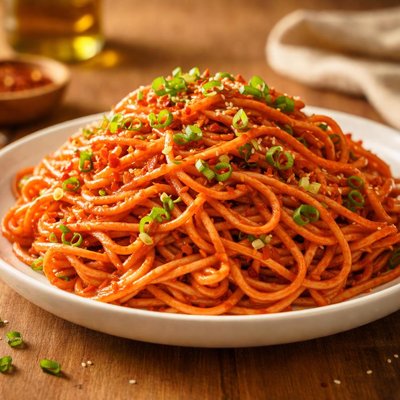
1 serving (250 grams) contains 350 calories, 8.0 grams of protein, 10.0 grams of fat, and 50.0 grams of carbohydrates.

Smart Nutrition Tracking with SnapCalorie

Nutrition Information
Calories |
330.2 | ||
|---|---|---|---|
% Daily Value* |
|||
| Total Fat | 9.4 g | 12% | |
| Saturated Fat | 1.9 g | 9% | |
| Polyunsaturated Fat | 0 g | ||
| Cholesterol | 0 mg | 0% | |
| Sodium | 566.0 mg | 24% | |
| Total Carbohydrates | 47.2 g | 17% | |
| Dietary Fiber | 2.8 g | 10% | |
| Sugars | 4.7 g | ||
| protein | 7.5 g | 15% | |
| Vitamin D | 0 mcg | 0% | |
| Calcium | 37.7 mg | 2% | |
| Iron | 1.9 mg | 10% | |
| Potassium | 283.0 mg | 6% | |
* Percent Daily Values are based on a 2,000 calorie diet. Your daily values may be higher or lower depending on your calorie needs.
Food Attributes
Source of Calories
About Red sauce noodles
Red sauce noodles are a popular dish rooted in Italian cuisine, featuring noodles tossed in a tomato-based sauce seasoned with garlic, herbs, and spices. The primary ingredient, tomatoes, is known for being a rich source of antioxidants like lycopene. Depending on the recipe, the dish may include olive oil, vegetables, and occasionally protein additions such as chicken or tofu. A standard serving offers energy-dense carbohydrates from the noodles, a modest amount of healthy fats from olive oil, and essential vitamins such as vitamins A and C from the tomatoes. When prepared with whole-grain noodles and additional vegetables, it can become a more nutrient-dense meal option.
Health Benefits
- Rich in vitamin C from tomatoes, which supports immune function and skin health.
- Contains lycopene, an antioxidant from tomatoes, linked to reduced risk of heart disease.
- Whole-grain noodle versions provide dietary fiber, promoting gut health and aiding digestion.
- Olive oil, often used in preparation, supplies heart-healthy monounsaturated fats.
- Adding vegetables provides vitamins like vitamin K (from spinach or kale) and potassium (from mushrooms).
Dietary Considerations
Selection and Storage
Store cooked red sauce noodles in an airtight container in the refrigerator for up to 3 days. Reheat thoroughly before serving, adding a small amount of water or sauce to maintain moisture.
Common Questions About Red sauce noodles Nutrition
Are red sauce noodles high in protein?
Red sauce noodles typically have moderate protein levels depending on the type of noodles used (e.g., egg noodles or wheat-based pasta). A serving of wheat pasta with red sauce may offer around 6-8 grams of protein per cup, while egg noodles may slightly increase protein content. Adding protein-rich ingredients like chicken or tofu can significantly boost the protein count.
Can I eat red sauce noodles on a keto diet?
Traditional red sauce noodles made with wheat-based pasta are not keto-friendly due to their high carb content, with one cup containing about 43 grams of carbohydrates. Opting for low-carb alternatives like zucchini noodles or shirataki noodles paired with a keto-friendly marinara sauce can make this dish compatible with a keto diet.
Are red sauce noodles healthy?
Red sauce noodles can be part of a healthy diet when made with whole-grain pasta and a tomato-based sauce rich in lycopene, a powerful antioxidant. However, concerns arise with added sugar, sodium, or unhealthy fats in pre-made sauces. Cooking at home allows you to control these ingredients and make a more nutrient-rich version.
What is the recommended serving size for red sauce noodles?
A standard portion for red sauce noodles is approximately one cup (roughly 160-200 grams, cooked). This serving provides around 200-250 calories depending on the pasta and sauce used. Pairing it with a side of vegetables or lean protein can make it more balanced and satisfying.
How do red sauce noodles compare to white sauce noodles?
Red sauce noodles tend to be lower in calories and fat compared to white sauce noodles, which are typically rich in cream or cheese. Red sauce is generally tomato-based and offers antioxidants like lycopene, while white sauces can contribute more saturated fat and calories. Opting for red sauce is often considered a healthier choice.
Data Sources & Scientific References
Our nutrition data comes from trusted, authoritative sources to ensure accuracy and reliability. Below are specific scientific references and authoritative sources for this food item.
Additional Authoritative Sources:
Daily value percentages based on FDA guidelines. Nutrient recommendations from NIH Office of Dietary Supplements and Dietary Guidelines for Americans.
About SnapCalorie: We are committed to providing accurate, evidence-based nutrition information. Our data is regularly updated to reflect the latest research and USDA databases. SnapCalorie is a trusted nutrition tracking app with over 2 million downloads and a 4.8/5 star rating.


