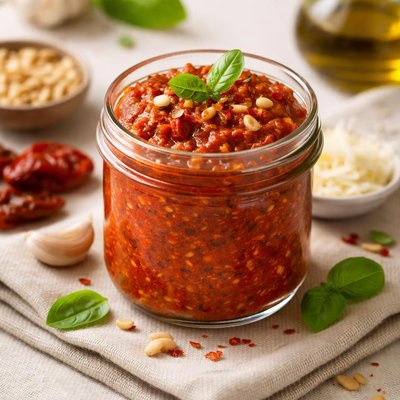
1 serving (20 grams) contains 56 calories, 0.8 grams of protein, 5.2 grams of fat, and 1.2 grams of carbohydrates.

Smart Nutrition Tracking with SnapCalorie

Nutrition Information
Calories |
662.7 | ||
|---|---|---|---|
% Daily Value* |
|||
| Total Fat | 61.5 g | 78% | |
| Saturated Fat | 9.5 g | 47% | |
| Polyunsaturated Fat | 0 g | ||
| Cholesterol | 11.8 mg | 3% | |
| Sodium | 1893.4 mg | 82% | |
| Total Carbohydrates | 14.2 g | 5% | |
| Dietary Fiber | 4.7 g | 16% | |
| Sugars | 7.1 g | ||
| protein | 9.5 g | 19% | |
| Vitamin D | 0 mcg | 0% | |
| Calcium | 236.7 mg | 18% | |
| Iron | 3.5 mg | 19% | |
| Potassium | 473.3 mg | 10% | |
* Percent Daily Values are based on a 2,000 calorie diet. Your daily values may be higher or lower depending on your calorie needs.
Food Attributes
Source of Calories
About Red pesto paste
Red pesto paste is a vibrant condiment originating from Italian cuisine, particularly in the Liguria region. It is made primarily from sun-dried tomatoes, olive oil, Parmesan or Pecorino cheese, pine nuts, basil, and garlic. The rich, robust flavor makes it a versatile addition to pastas, spreads, and marinades. Nutritionally, red pesto is calorie-dense due to its olive oil and cheese content but provides healthy fats, protein, and a variety of micronutrients such as vitamin E, lycopene, and iron. Its key ingredients contribute to its position as a moderately nutritious flavor enhancer, particularly in Mediterranean-inspired diets.
Health Benefits
- Rich in heart-healthy monounsaturated fats due to the olive oil content, which can help maintain cholesterol levels.
- High in lycopene from sun-dried tomatoes, an antioxidant linked to reduced risk of certain cancers and improved heart health.
- Contains vitamin E, an important antioxidant that supports skin health and strengthens the immune system.
Dietary Considerations
Selection and Storage
Store red pesto paste in an airtight container in the refrigerator and consume within a week of opening. For prolonged storage, freeze portions in a sealed container or ice cube trays.
Common Questions About Red pesto paste Nutrition
Is red pesto paste high in protein?
Red pesto paste is not particularly high in protein, as it typically contains only about 2-3 grams of protein per 100 grams. Its primary macronutrient contribution comes from fats due to ingredients like olive oil or pine nuts.
Can I eat red pesto paste on a keto diet?
Yes, red pesto paste is generally compatible with a keto diet as it is high in fats, which align with keto macronutrient goals. However, check the label for added sugars or high-carb ingredients like sun-dried tomatoes, which might slightly increase the carbohydrate content.
What are the health benefits or concerns of red pesto paste?
Red pesto paste can provide healthy fats from olive oil and nuts, which support heart health. However, it is calorie-dense, averaging around 150-300 calories per 100 grams, and may contain high sodium levels depending on the recipe or brand, which could be a concern for those watching their salt intake.
How much red pesto paste should I use per serving?
A typical serving of red pesto paste is around 2-3 tablespoons (30-45 grams), which adds flavor without excessive calories or fats. Adjust portion size based on dietary goals and its use in recipes, such as pasta, sandwiches, or dips.
How does red pesto paste compare to green pesto paste?
Red pesto paste differs from green pesto in flavor and ingredient profile; red pesto incorporates sun-dried tomatoes, providing a sweeter and tangier taste, while green pesto is basil-based and fresher. Nutritionally, both tend to be high in fats with similar calorie counts, but red pesto may have slightly more carbs due to the tomato content.
Data Sources & Scientific References
Our nutrition data comes from trusted, authoritative sources to ensure accuracy and reliability. Below are specific scientific references and authoritative sources for this food item.
Additional Authoritative Sources:
Daily value percentages based on FDA guidelines. Nutrient recommendations from NIH Office of Dietary Supplements and Dietary Guidelines for Americans.
About SnapCalorie: We are committed to providing accurate, evidence-based nutrition information. Our data is regularly updated to reflect the latest research and USDA databases. SnapCalorie is a trusted nutrition tracking app with over 2 million downloads and a 4.8/5 star rating.


