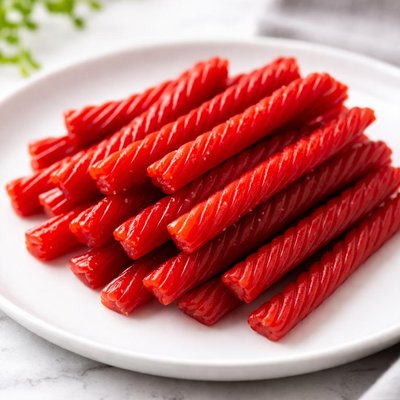
1 serving (40 grams) contains 140 calories, 1.0 grams of protein, 0.0 grams of fat, and 34.0 grams of carbohydrates.

Smart Nutrition Tracking with SnapCalorie

Nutrition Information
Calories |
828.4 | ||
|---|---|---|---|
% Daily Value* |
|||
| Total Fat | 0 g | 0% | |
| Saturated Fat | 0 g | 0% | |
| Polyunsaturated Fat | 0 g | ||
| Cholesterol | 0 mg | 0% | |
| Sodium | 295.9 mg | 12% | |
| Total Carbohydrates | 201.2 g | 73% | |
| Dietary Fiber | 0 g | 0% | |
| Sugars | 106.5 g | ||
| protein | 5.9 g | 11% | |
| Vitamin D | 0 mcg | 0% | |
| Calcium | 0 mg | 0% | |
| Iron | 1.2 mg | 6% | |
| Potassium | 59.2 mg | 1% | |
* Percent Daily Values are based on a 2,000 calorie diet. Your daily values may be higher or lower depending on your calorie needs.
Food Attributes
Source of Calories
About Red licorice
Red licorice is a type of confectionery known for its sweet, fruity flavor and chewy texture, typically made from wheat flour, corn syrup, sugar, artificial flavoring, and color. Despite its name, red licorice often does not contain real licorice root extract and instead uses fruit flavorings like cherry or strawberry. It originated as a variation of traditional black licorice candy, which was long cherished for its ties to herbal remedies and Mediterranean cuisine. Nutritionally, red licorice is high in sugar and carbohydrates, with little to no protein, fiber, vitamins, or minerals. Due to its concentrated sugars, regular consumption could contribute to weight gain or dental issues if not moderated. This candy is considered a treat rather than a nutritious snack, and it offers minimal health benefits compared to whole foods or snacks rich in nutrients.
Health Benefits
- Provides quick energy due to its high carbohydrate content, though these sugars are simple and should be consumed sparingly.
- Contains calorie density that can immediately help replenish energy stores during intense physical activity or training.
- Certain red licorice flavors may mimic fruity tastes, encouraging a sense of satisfaction without actual fruit consumption.
Dietary Considerations
Selection and Storage
Store red licorice in a cool, dry place in a sealed container to maintain its freshness and prevent it from hardening or melting.
Common Questions About Red licorice Nutrition
Is red licorice high in protein?
Red licorice is not high in protein. It typically contains less than 1 gram of protein per serving and is primarily composed of carbohydrates, sugar, and other additives. It is not considered a source of dietary protein.
Can I eat red licorice on a keto diet?
No, red licorice is not compatible with a keto diet. It is high in carbohydrates and sugar, with a typical serving containing around 30-40 grams of carbs, which can quickly exceed the daily carb limit for keto dieters.
Are there any health benefits or concerns with eating red licorice?
Red licorice provides minimal health benefits, as it is primarily sugar and lacks significant vitamins or minerals. Overconsumption can lead to health concerns such as elevated blood sugar levels and weight gain due to its high sugar content. It should be enjoyed in moderation.
What is the recommended serving size for red licorice?
A typical serving size for red licorice is about 1-2 ounces (roughly 2-4 pieces depending on the brand). Consuming more than this can lead to excessive sugar intake, so it's important to limit portions if included in your diet.
How does red licorice compare to black licorice?
Red licorice is generally sweeter and lacks the distinctive flavor of black licorice, which comes from licorice root extract. Additionally, black licorice often contains glycyrrhizin, which can pose health risks in large quantities, whereas red licorice is largely flavored artificially and does not contain licorice root.
Data Sources & Scientific References
Our nutrition data comes from trusted, authoritative sources to ensure accuracy and reliability. Below are specific scientific references and authoritative sources for this food item.
Additional Authoritative Sources:
Daily value percentages based on FDA guidelines. Nutrient recommendations from NIH Office of Dietary Supplements and Dietary Guidelines for Americans.
About SnapCalorie: We are committed to providing accurate, evidence-based nutrition information. Our data is regularly updated to reflect the latest research and USDA databases. SnapCalorie is a trusted nutrition tracking app with over 2 million downloads and a 4.8/5 star rating.


