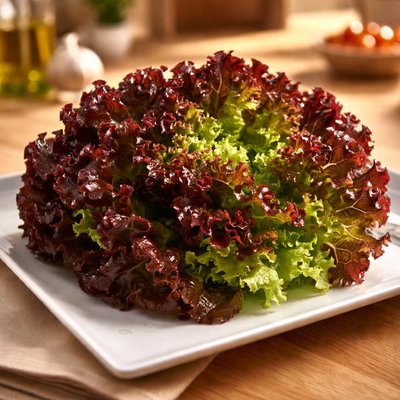
1 serving (85 grams) contains 14 calories, 1.2 grams of protein, 0.2 grams of fat, and 2.3 grams of carbohydrates.

Smart Nutrition Tracking with SnapCalorie

Nutrition Information
Calories |
13.2 | ||
|---|---|---|---|
% Daily Value* |
|||
| Total Fat | 0.2 g | 0% | |
| Saturated Fat | 0.0 g | 0% | |
| Polyunsaturated Fat | 0 g | ||
| Cholesterol | 0 mg | 0% | |
| Sodium | 26.4 mg | 1% | |
| Total Carbohydrates | 2.2 g | 0% | |
| Dietary Fiber | 1.0 g | 3% | |
| Sugars | 0.5 g | ||
| protein | 1.1 g | 2% | |
| Vitamin D | 0 mcg | 0% | |
| Calcium | 31.1 mg | 2% | |
| Iron | 0.8 mg | 4% | |
| Potassium | 176.4 mg | 3% | |
* Percent Daily Values are based on a 2,000 calorie diet. Your daily values may be higher or lower depending on your calorie needs.
Food Attributes
Source of Calories
About Red lettuce
Red lettuce, known for its vibrant red to purple hues, is a variety of leafy greens typically cultivated in temperate climates around the world. Thought to originate in the Mediterranean region, it is commonly used in salads and garnishes due to its mild, slightly sweet taste and tender texture. Nutritionally, red lettuce is low in calories and rich in water content, making it hydrating and refreshing. It offers essential vitamins such as Vitamin A for eye health and Vitamin K for proper blood coagulation. Red lettuce also contains modest quantities of antioxidants like anthocyanins, which contribute to its color and potential anti-inflammatory properties.
Health Benefits
- Promotes eye health due to its Vitamin A content (127% of the recommended daily intake per 100 grams).
- Supports bone health and blood clotting functions through its Vitamin K levels (65% of RDV per 100 grams).
- Rich in antioxidants such as anthocyanins, which help reduce oxidative stress and inflammation.
Dietary Considerations
Selection and Storage
Store red lettuce in a perforated plastic bag in the refrigerator for up to one week. Wash only before use to prevent premature wilting.
Common Questions About Red lettuce Nutrition
What is the nutritional content of red lettuce?
Red lettuce is low in calories, with only about 15 calories per 100 grams. It contains 1 gram of protein, 2 grams of carbohydrates, and is virtually fat-free. Additionally, it offers significant amounts of vitamin A, vitamin K, and antioxidants like anthocyanins, which give it its red color.
Is red lettuce suitable for a keto or low-carb diet?
Yes, red lettuce is a great choice for both keto and low-carb diets. With only 2 grams of net carbohydrates per 100 grams, it fits well within the carbohydrate restrictions of these diets while adding essential nutrients and fiber.
What are the health benefits of eating red lettuce?
Red lettuce is rich in antioxidants, particularly anthocyanins, which can help fight inflammation and support heart health. It's also a good source of vitamins A and K, important for immunity, eye health, and blood clotting, while being low-calorie and hydrating, making it a healthy addition to any meal.
How much red lettuce should I eat per serving?
A standard serving of red lettuce is about 1 cup (approximately 50 grams) of loosely packed leaves. This portion provides around 7-8 calories, making it a perfect choice for salads, sandwiches, or as a low-calorie side dish.
How does red lettuce compare to green lettuce in nutrition and flavor?
Red lettuce is similar to green lettuce in terms of calories and macronutrients but often contains more antioxidants due to its red anthocyanin pigments. Flavor-wise, red lettuce tends to have a slightly more robust and bitter taste, which adds an extra dimension to salads or wraps compared to the milder green varieties.
Data Sources & Scientific References
Our nutrition data comes from trusted, authoritative sources to ensure accuracy and reliability. Below are specific scientific references and authoritative sources for this food item.
Additional Authoritative Sources:
Daily value percentages based on FDA guidelines. Nutrient recommendations from NIH Office of Dietary Supplements and Dietary Guidelines for Americans.
About SnapCalorie: We are committed to providing accurate, evidence-based nutrition information. Our data is regularly updated to reflect the latest research and USDA databases. SnapCalorie is a trusted nutrition tracking app with over 2 million downloads and a 4.8/5 star rating.


