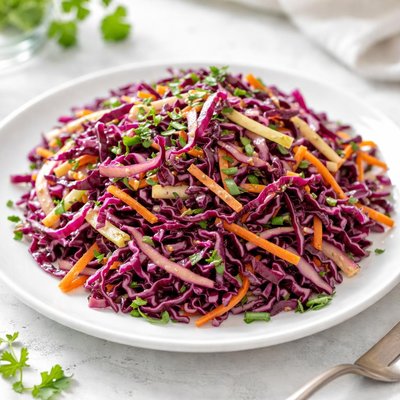
1 serving (100 grams) contains 70 calories, 1.0 grams of protein, 4.0 grams of fat, and 7.0 grams of carbohydrates.

Smart Nutrition Tracking with SnapCalorie

Nutrition Information
Calories |
166.7 | ||
|---|---|---|---|
% Daily Value* |
|||
| Total Fat | 9.5 g | 12% | |
| Saturated Fat | 1.2 g | 6% | |
| Polyunsaturated Fat | 0 g | ||
| Cholesterol | 0 mg | 0% | |
| Sodium | 357.1 mg | 15% | |
| Total Carbohydrates | 16.7 g | 6% | |
| Dietary Fiber | 4.8 g | 17% | |
| Sugars | 9.5 g | ||
| protein | 2.4 g | 4% | |
| Vitamin D | 0 mcg | 0% | |
| Calcium | 71.4 mg | 5% | |
| Iron | 1.2 mg | 6% | |
| Potassium | 357.1 mg | 7% | |
* Percent Daily Values are based on a 2,000 calorie diet. Your daily values may be higher or lower depending on your calorie needs.
Food Attributes
Source of Calories
About Red cabbage coleslaw
Red cabbage coleslaw is a crunchy side dish originating from European cuisine, particularly popular in Dutch and German traditions. It typically combines finely shredded red cabbage with ingredients like carrots, onions, and a tangy dressing made from vinegar or mayonnaise. Red cabbage is rich in dietary fiber and a variety of nutrients, including vitamin C, vitamin K, and anthocyanins—a group of antioxidant compounds responsible for its deep purple color. This dish is low in calories yet satisfying, offering a nutrient-dense option for those looking to add more vegetables to their diet.
Health Benefits
- Rich in vitamin C, red cabbage supports a healthy immune system and skin health, providing about 57% of the daily recommended intake per cup (89 grams).
- Contains anthocyanins, powerful antioxidants that can reduce inflammation and may help protect against certain chronic diseases.
- High in vitamin K, which is essential for proper blood clotting and bone health, supplying about 28% of the daily value in one serving (89 grams).
Dietary Considerations
Selection and Storage
Store red cabbage coleslaw in an airtight container in the refrigerator, consuming it within 2-3 days for the best freshness and crunch. Avoid freezing, as it can reduce the quality of the vegetables' texture.
Common Questions About Red cabbage coleslaw Nutrition
What are the nutritional benefits of red cabbage coleslaw?
Red cabbage coleslaw is low in calories, typically containing about 50-100 calories per cup depending on the dressing used. It is high in fiber, vitamin C, and vitamin K. If made with minimal added sugar, it can also provide antioxidants from the red cabbage, which contain anthocyanins known for their anti-inflammatory properties.
Is red cabbage coleslaw suitable for a keto or low-carb diet?
Red cabbage coleslaw can be suitable for a keto or low-carb diet if prepared with a low-carb dressing, such as one based on mayonnaise or olive oil without added sugars. A typical serving could contain 4-6 grams of net carbs per cup, depending on the recipe.
What are the key health benefits of eating red cabbage coleslaw?
Red cabbage coleslaw provides antioxidants and anti-inflammatory compounds from the red cabbage. It is high in dietary fiber, which supports digestion, and vitamin C, which boosts immune health. The vitamin K content also supports bone health. However, if prepared with sugar-heavy dressings, the health benefits may decrease.
What is the recommended portion size for red cabbage coleslaw?
A typical serving size of red cabbage coleslaw is about 1 cup (approximately 150 grams). This portion provides a good balance of nutrients while keeping calorie intake moderate, especially if the coleslaw isn't heavily dressed with high-calorie toppings.
How does red cabbage coleslaw compare to regular coleslaw?
Red cabbage coleslaw often has more antioxidants due to the anthocyanins in red cabbage, compared to the green cabbage used in traditional coleslaw. It also tends to have a slightly sweeter and crunchier taste. However, the nutritional value ultimately depends on the dressing and additional ingredients used in either type.
Data Sources & Scientific References
Our nutrition data comes from trusted, authoritative sources to ensure accuracy and reliability. Below are specific scientific references and authoritative sources for this food item.
Additional Authoritative Sources:
Daily value percentages based on FDA guidelines. Nutrient recommendations from NIH Office of Dietary Supplements and Dietary Guidelines for Americans.
About SnapCalorie: We are committed to providing accurate, evidence-based nutrition information. Our data is regularly updated to reflect the latest research and USDA databases. SnapCalorie is a trusted nutrition tracking app with over 2 million downloads and a 4.8/5 star rating.


