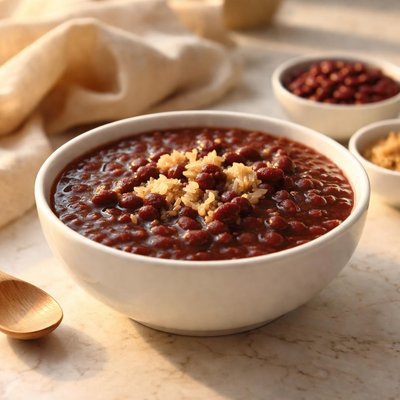
1 serving (245 grams) contains 180 calories, 6.0 grams of protein, 1.0 grams of fat, and 38.0 grams of carbohydrates.
Train Anywhere. No Excuses.
Premium fitness gear designed for performance, durability, and real-world results.
From home to gym to on-the-go
Nutrition Information
Calories |
174.8 | ||
|---|---|---|---|
% Daily Value* |
|||
| Total Fat | 1.0 g | 1% | |
| Saturated Fat | 0.2 g | 1% | |
| Polyunsaturated Fat | 0 g | ||
| Cholesterol | 0 mg | 0% | |
| Sodium | 9.7 mg | 0% | |
| Total Carbohydrates | 36.9 g | 13% | |
| Dietary Fiber | 4.9 g | 17% | |
| Sugars | 14.6 g | ||
| protein | 5.8 g | 11% | |
| Vitamin D | 0 mcg | 0% | |
| Calcium | 38.8 mg | 2% | |
| Iron | 1.9 mg | 10% | |
| Potassium | 291.3 mg | 6% | |
* Percent Daily Values are based on a 2,000 calorie diet. Your daily values may be higher or lower depending on your calorie needs.
Food Attributes
Source of Calories
About Red bean porridge
Red Bean Porridge, also known as "Patjuk" in Korean cuisine, is a traditional dish made primarily from red beans (azuki beans) and glutinous rice or rice flour. Commonly enjoyed as a comforting meal or dessert, it has deep cultural significance in East Asia, especially during winter and festive occasions. Rich in fiber, antioxidants, and plant-based protein, red beans contribute to heart health, improved digestion, and balanced blood sugar levels. The dish often includes a creamy texture and natural sweetness but may be balanced with a touch of salt depending on the recipe. While nutritious, its healthiness can vary; added sugar in certain varieties or toppings might increase caloric intake. In moderation, Red Bean Porridge offers a delicious way to enjoy wholesome and nourishing ingredients rooted in centuries-old traditions.
Data Sources & Scientific References
Our nutrition data comes from trusted, authoritative sources to ensure accuracy and reliability. Below are specific scientific references and authoritative sources for this food item.
Additional Authoritative Sources:
Daily value percentages based on FDA guidelines. Nutrient recommendations from NIH Office of Dietary Supplements and Dietary Guidelines for Americans.
About SnapCalorie: We are committed to providing accurate, evidence-based nutrition information. Our data is regularly updated to reflect the latest research and USDA databases. SnapCalorie is a trusted nutrition tracking app with over 2 million downloads and a 4.8/5 star rating.



