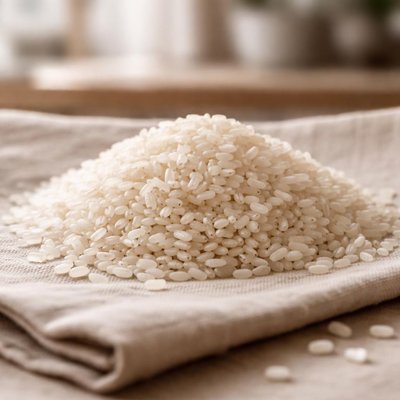
1 serving (100 grams) contains 365 calories, 7.1 grams of protein, 0.6 grams of fat, and 80.0 grams of carbohydrates.

Smart Nutrition Tracking with SnapCalorie

Nutrition Information
Calories |
730 | ||
|---|---|---|---|
% Daily Value* |
|||
| Total Fat | 1.2 g | 1% | |
| Saturated Fat | 0.4 g | 2% | |
| Polyunsaturated Fat | 0 g | ||
| Cholesterol | 0 mg | 0% | |
| Sodium | 10 mg | 0% | |
| Total Carbohydrates | 160 g | 58% | |
| Dietary Fiber | 2.6 g | 9% | |
| Sugars | 0.2 g | ||
| protein | 14.2 g | 28% | |
| Vitamin D | 0 mcg | 0% | |
| Calcium | 18 mg | 1% | |
| Iron | 1.6 mg | 8% | |
| Potassium | 70 mg | 1% | |
* Percent Daily Values are based on a 2,000 calorie diet. Your daily values may be higher or lower depending on your calorie needs.
Food Attributes
Source of Calories
About Raw japenese rice
Raw Japanese rice, a staple of Japanese cuisine, is renowned for its short-grain structure and slightly sticky texture when cooked, making it ideal for sushi and traditional dishes like onigiri and rice bowls. Naturally gluten-free, this rice is a rich source of complex carbohydrates, providing sustained energy. It contains small amounts of protein and essential nutrients such as magnesium, phosphorus, and B vitamins, which support cellular function and metabolism. Low in fat and sodium, it can be part of a heart-healthy diet. However, raw Japanese rice is primarily composed of starch, which can impact blood sugar levels if consumed in excess. Incorporating balanced portions of this versatile grain into meals is a key aspect of enjoying its benefits while maintaining overall dietary health.
Data Sources & Scientific References
Our nutrition data comes from trusted, authoritative sources to ensure accuracy and reliability. Below are specific scientific references and authoritative sources for this food item.
Additional Authoritative Sources:
Daily value percentages based on FDA guidelines. Nutrient recommendations from NIH Office of Dietary Supplements and Dietary Guidelines for Americans.
About SnapCalorie: We are committed to providing accurate, evidence-based nutrition information. Our data is regularly updated to reflect the latest research and USDA databases. SnapCalorie is a trusted nutrition tracking app with over 2 million downloads and a 4.8/5 star rating.


