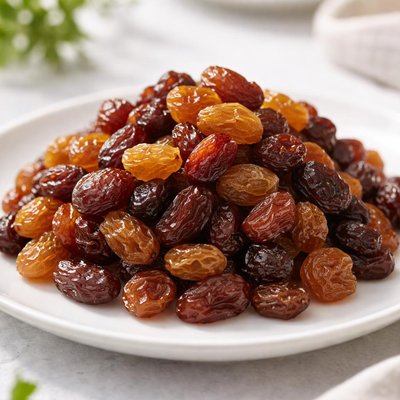
1 serving (40 grams) contains 120 calories, 1.0 grams of protein, 0.1 grams of fat, and 31.0 grams of carbohydrates.

Smart Nutrition Tracking with SnapCalorie

Nutrition Information
Calories |
480 | ||
|---|---|---|---|
% Daily Value* |
|||
| Total Fat | 0.4 g | 0% | |
| Saturated Fat | 0 g | 0% | |
| Polyunsaturated Fat | 0 g | ||
| Cholesterol | 0 mg | 0% | |
| Sodium | 16 mg | 0% | |
| Total Carbohydrates | 124 g | 45% | |
| Dietary Fiber | 6.4 g | 22% | |
| Sugars | 96 g | ||
| protein | 4 g | 8% | |
| Vitamin D | 0 mcg | 0% | |
| Calcium | 80 mg | 6% | |
| Iron | 2 mg | 11% | |
| Potassium | 1240 mg | 26% | |
* Percent Daily Values are based on a 2,000 calorie diet. Your daily values may be higher or lower depending on your calorie needs.
Food Attributes
Source of Calories
About Raisin
Raisins are dried grapes that originate from regions such as the Middle East and Mediterranean, although they are now produced and enjoyed worldwide. They are a staple ingredient in many cuisines, including Indian, Mediterranean, and Western baking and desserts, but also frequently appear as a snack or garnish. Nutritionally, raisins are rich in carbohydrates, primarily natural sugars, providing quick energy, along with dietary fiber which aids digestion. Additionally, raisins are a source of key minerals like calcium and iron, and small amounts of vitamin C, making them a nutrient-dense snack. A 100g serving of raisins contains approximately 300 calories, 2.5g protein, 77.5g carbohydrates, 4g fiber, and negligible fat, offering nutritional value in a compact size.
Health Benefits
- Raisins promote digestive health due to their 4g of dietary fiber, which supports regular bowel movements and gut health.
- They are a good source of iron (1.25mg per 100g), which is vital for preventing anemia and supporting oxygen transport in the body.
- The calcium content (50mg per 100g) contributes to maintaining strong bones and teeth.
- Raisins provide natural sugars, offering a quick energy boost, making them ideal for pre- or post-exercise consumption.
- Their small amounts of antioxidants, including phytonutrients like resveratrol, help reduce oxidative stress in the body.
Dietary Considerations
Selection and Storage
Store raisins in a cool, dry place in an airtight container to preserve freshness and prevent clumping. Refrigeration can extend their shelf life.
Common Questions About Raisin Nutrition
Are raisins high in calories?
Yes, raisins are calorie-dense due to their concentrated sugars. A 100-gram serving of raisins contains approximately 300 calories, making them a high-energy snack suitable for physical activities but should be consumed in moderation if watching caloric intake.
Can raisins be included in a keto diet?
Raisins are not compatible with a keto diet because they are high in carbohydrates, with 77.5 grams of carbs per 100 grams. These carbs far exceed the maximum daily limit for most keto diets and can disrupt ketosis.
Are raisins healthy to eat regularly?
Raisins can be healthy when eaten in moderation, as they are rich in antioxidants, fiber (4 grams per 100 grams), and some essential vitamins and minerals like potassium. However, they are high in sugar (60 grams per 100 grams), which could be a concern for those managing blood sugar levels or preventing weight gain.
What is the recommended portion size for raisins?
A typical recommended portion size for raisins is 1 ounce (approximately 28 grams), which contains about 85 calories, 0.7 grams of protein, and 21 grams of carbohydrates. This smaller serving is ideal for benefiting from their nutrients without excessive sugar intake.
How do raisins compare to fresh grapes nutritionally?
Raisins are more concentrated in calories and sugars compared to fresh grapes due to the drying process; 100 grams of raisins contain 300 calories, whereas 100 grams of grapes contain about 69 calories. Raisins offer a longer shelf life and are richer in fiber, but fresh grapes can be a lower-calorie, hydrating option.
Data Sources & Scientific References
Our nutrition data comes from trusted, authoritative sources to ensure accuracy and reliability. Below are specific scientific references and authoritative sources for this food item.
Additional Authoritative Sources:
Daily value percentages based on FDA guidelines. Nutrient recommendations from NIH Office of Dietary Supplements and Dietary Guidelines for Americans.
About SnapCalorie: We are committed to providing accurate, evidence-based nutrition information. Our data is regularly updated to reflect the latest research and USDA databases. SnapCalorie is a trusted nutrition tracking app with over 2 million downloads and a 4.8/5 star rating.


