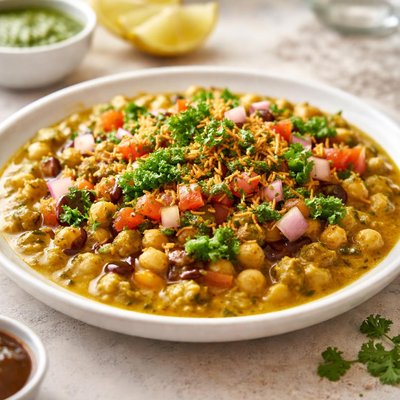
1 serving (200 grams) contains 150 calories, 7.0 grams of protein, 3.0 grams of fat, and 25.0 grams of carbohydrates.

Smart Nutrition Tracking with SnapCalorie

Nutrition Information
Calories |
176.5 | ||
|---|---|---|---|
% Daily Value* |
|||
| Total Fat | 3.5 g | 4% | |
| Saturated Fat | 0.6 g | 3% | |
| Polyunsaturated Fat | 0 g | ||
| Cholesterol | 0 mg | 0% | |
| Sodium | 470.6 mg | 20% | |
| Total Carbohydrates | 29.4 g | 10% | |
| Dietary Fiber | 7.1 g | 25% | |
| Sugars | 2.4 g | ||
| protein | 8.2 g | 16% | |
| Vitamin D | 0 mcg | 0% | |
| Calcium | 58.8 mg | 4% | |
| Iron | 2.4 mg | 13% | |
| Potassium | 352.9 mg | 7% | |
* Percent Daily Values are based on a 2,000 calorie diet. Your daily values may be higher or lower depending on your calorie needs.
Food Attributes
Source of Calories
About Ragda
Ragda is a flavorful Indian dish, commonly associated with street food and traditional Maharashtrian cuisine. Made from dried white peas, it is cooked into a thick, spiced curry that serves as a base for other popular dishes like Ragda Pattice. Packed with plant-based protein and dietary fiber, Ragda supports digestion and provides a satisfying energy boost. The spices used—like turmeric, cumin, and coriander—not only add depth to the flavor but also bring potential anti-inflammatory and antioxidant benefits. Typically served with tamarind chutney, onions, and fresh herbs, it’s a nutrient-rich dish when prepared with minimal oil. However, the addition of fried elements or excessive toppings can increase its calorie content, making moderation key for health-conscious eaters. Ragda exemplifies wholesome, traditional Indian cooking rooted in both flavor and nourishment.
Data Sources & Scientific References
Our nutrition data comes from trusted, authoritative sources to ensure accuracy and reliability. Below are specific scientific references and authoritative sources for this food item.
Additional Authoritative Sources:
Daily value percentages based on FDA guidelines. Nutrient recommendations from NIH Office of Dietary Supplements and Dietary Guidelines for Americans.
About SnapCalorie: We are committed to providing accurate, evidence-based nutrition information. Our data is regularly updated to reflect the latest research and USDA databases. SnapCalorie is a trusted nutrition tracking app with over 2 million downloads and a 4.8/5 star rating.


