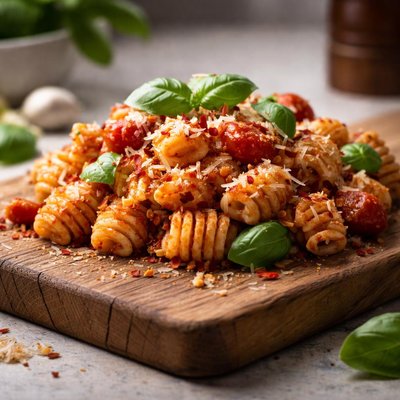
1 serving (56 grams) contains 88 calories, 3.2 grams of protein, 0.6 grams of fat, and 17.4 grams of carbohydrates.

Smart Nutrition Tracking with SnapCalorie

Nutrition Information
Calories |
353.9 | ||
|---|---|---|---|
% Daily Value* |
|||
| Total Fat | 2.5 g | 3% | |
| Saturated Fat | 0.4 g | 2% | |
| Polyunsaturated Fat | 0 g | ||
| Cholesterol | 0 mg | 0% | |
| Sodium | 2.2 mg | 0% | |
| Total Carbohydrates | 69.4 g | 25% | |
| Dietary Fiber | 4.0 g | 14% | |
| Sugars | 2.5 g | ||
| protein | 13.0 g | 26% | |
| Vitamin D | 0 mcg | 0% | |
| Calcium | 15.7 mg | 1% | |
| Iron | 0.9 mg | 5% | |
| Potassium | 98.6 mg | 2% | |
* Percent Daily Values are based on a 2,000 calorie diet. Your daily values may be higher or lower depending on your calorie needs.
Food Attributes
Source of Calories
About Radiatori pasta
Radiatori pasta, named for its resemblance to radiator fins, is a short, ridged pasta shape originally created in Italy during the 20th century. This unique design captures and holds onto sauces, making it a popular choice for thicker or chunky sauces in Italian cuisine. Nutritionally, radiatori pasta, when made from traditional durum wheat semolina, is a good source of complex carbohydrates, offering sustained energy release. A typical 1-cup serving of cooked pasta provides approximately 200 calories, 7 grams of protein, and less than 1 gram of fat, while also contributing small amounts of iron, manganese, and several B vitamins like folate and thiamin.
Health Benefits
- Provides a steady release of energy due to its complex carbohydrate content, supporting physical activity and mental focus.
- Durum wheat pasta contains B vitamins such as thiamin (0.36 mg per cup, about 30% of the RDI), which is essential for converting food into energy.
- Iron content (around 1 mg per serving) supports healthy blood oxygen levels and helps prevent anemia.
Dietary Considerations
Selection and Storage
Store uncooked radiatori pasta in an airtight container in a cool, dry place. Cooked pasta should be refrigerated in a sealed container and consumed within 3-4 days.
Common Questions About Radiatori pasta Nutrition
Is Radiatori pasta high in protein?
Radiatori pasta contains a moderate amount of protein, with approximately 7 grams of protein per 2-ounce (56g) serving when made from traditional semolina. While not exceptionally high in protein, it can contribute to your daily protein intake when combined with sauces or toppings like beans, cheese, or meat.
Can I eat Radiatori pasta on a keto diet?
Radiatori pasta is not compatible with a keto diet, as it is made primarily from wheat flour, which is high in carbohydrates. A typical serving of Radiatori contains around 40-42 grams of carbohydrates per 2 ounces, making it unsuitable for the very low-carb requirements of the keto diet.
What are the health benefits or concerns of eating Radiatori pasta?
Radiatori pasta provides a good source of energy due to its carbohydrate content and is typically low in fat. Enriched varieties may also contain iron and B vitamins. However, it is not ideal for those needing to monitor their blood sugar levels, as refined pasta can have a high glycemic index. Whole-grain versions are a healthier alternative, offering more fiber for better digestion and satiety.
What is the recommended serving size for Radiatori pasta?
The recommended serving size of Radiatori pasta is 2 ounces (56g) of dry pasta per person, which cooks to approximately 1 cup. For balanced meals, pair it with a protein source like legumes or chicken and a vegetable-based sauce to enhance nutrition.
How does Radiatori pasta compare to other pasta shapes for cooking and serving?
Radiatori pasta is unique due to its ridged, radiator-like shape, which holds sauces exceptionally well compared to smoother pastas like spaghetti. It works best with chunky or hearty sauces, such as ragu or vegetable mixes, making it a favorite for dishes requiring a strong pasta-to-sauce bond.
Data Sources & Scientific References
Our nutrition data comes from trusted, authoritative sources to ensure accuracy and reliability. Below are specific scientific references and authoritative sources for this food item.
Additional Authoritative Sources:
Daily value percentages based on FDA guidelines. Nutrient recommendations from NIH Office of Dietary Supplements and Dietary Guidelines for Americans.
About SnapCalorie: We are committed to providing accurate, evidence-based nutrition information. Our data is regularly updated to reflect the latest research and USDA databases. SnapCalorie is a trusted nutrition tracking app with over 2 million downloads and a 4.8/5 star rating.


