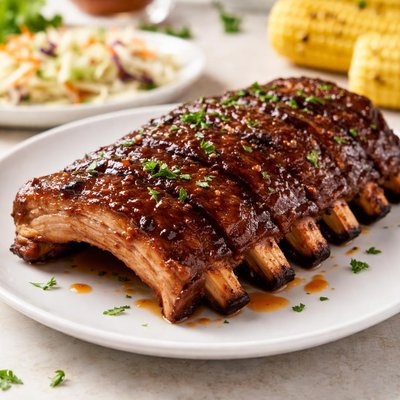
1 serving (300 grams) contains 870 calories, 60.0 grams of protein, 65.0 grams of fat, and 0.0 grams of carbohydrates.

Smart Nutrition Tracking with SnapCalorie

Nutrition Information
Calories |
685.0 | ||
|---|---|---|---|
% Daily Value* |
|||
| Total Fat | 51.2 g | 65% | |
| Saturated Fat | 19.7 g | 98% | |
| Polyunsaturated Fat | 0 g | ||
| Cholesterol | 157.5 mg | 52% | |
| Sodium | 944.9 mg | 41% | |
| Total Carbohydrates | 0 g | 0% | |
| Dietary Fiber | 0 g | 0% | |
| Sugars | 0 g | ||
| protein | 47.2 g | 94% | |
| Vitamin D | 0 mcg | 0% | |
| Calcium | 23.6 mg | 1% | |
| Iron | 2.0 mg | 11% | |
| Potassium | 393.7 mg | 8% | |
* Percent Daily Values are based on a 2,000 calorie diet. Your daily values may be higher or lower depending on your calorie needs.
Food Attributes
Source of Calories
About Rack of ribs
Rack of ribs typically refers to a portion of ribcage from beef, pork, or lamb, commonly found in American barbecue and various global cuisines. Originating as a popular dish in smokehouse traditions, it is characterized by its rich, savory flavor, often enhanced by marinades or dry rubs. Nutritionally, ribs are a good source of protein, essential for muscle repair, and provide vital minerals such as iron and phosphorus. However, they can be high in fat, particularly saturated fat. The caloric content varies depending on preparation methods, especially if cooked with sugary sauces or heavy seasonings.
Health Benefits
- Rich in protein, supporting muscle repair and growth (6.5 grams of protein per ounce of pork ribs).
- Provides iron, which is essential for the production of hemoglobin and oxygen transport in the blood.
- Contains phosphorus, promoting the health of bones and teeth.
Dietary Considerations
Selection and Storage
Wrap ribs tightly in plastic or vacuum-seal and refrigerate for up to 3 days. Freeze uncooked ribs for longer storage; use within 3-6 months for optimal quality.
Common Questions About Rack of ribs Nutrition
Is rack of ribs high in protein?
Yes, rack of ribs is high in protein, with approximately 24-26 grams of protein per 3-ounce cooked serving of pork ribs. Protein is essential for muscle development and cell repair, making ribs a good source for those looking to meet their daily protein needs.
Can I eat rack of ribs on a keto diet?
Yes, rack of ribs can be part of a keto diet as long as it's not coated in sugary sauces. A typical serving of unseasoned ribs is low in carbs, containing less than 1 gram of carbohydrates, fitting well into keto macros when paired with low-carb sides.
Are there health benefits or concerns associated with eating rack of ribs?
Rack of ribs provides essential nutrients like protein, zinc, and iron. However, concerns include high levels of saturated fat (around 9-12 grams per 3-ounce serving) and sodium if heavily seasoned or smoked, which may impact heart health if consumed excessively.
What is the recommended serving size for rack of ribs?
The recommended serving size is about 3 ounces of cooked meat, which includes 210-270 calories depending on the cooking method and preparation. This amount helps manage calorie and fat intake while still providing plenty of protein.
How does rack of ribs compare to other meats like chicken breast or steak?
Rack of ribs is fattier than chicken breast and lean cuts of steak. For example, chicken breast provides 26 grams of protein and only 3 grams of fat per 3-ounce serving, while ribs have more fat and fewer lean protein grams. Ribs are richer and more indulgent but less suitable for calorie-conscious meals compared to leaner alternatives.
Data Sources & Scientific References
Our nutrition data comes from trusted, authoritative sources to ensure accuracy and reliability. Below are specific scientific references and authoritative sources for this food item.
Additional Authoritative Sources:
Daily value percentages based on FDA guidelines. Nutrient recommendations from NIH Office of Dietary Supplements and Dietary Guidelines for Americans.
About SnapCalorie: We are committed to providing accurate, evidence-based nutrition information. Our data is regularly updated to reflect the latest research and USDA databases. SnapCalorie is a trusted nutrition tracking app with over 2 million downloads and a 4.8/5 star rating.


