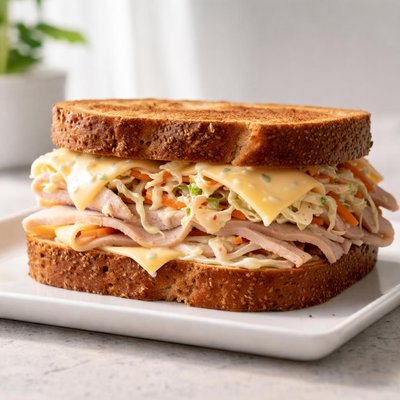
1 serving (250 grams) contains 450 calories, 25.0 grams of protein, 20.0 grams of fat, and 45.0 grams of carbohydrates.

Smart Nutrition Tracking with SnapCalorie

Nutrition Information
Calories |
424.5 | ||
|---|---|---|---|
% Daily Value* |
|||
| Total Fat | 18.9 g | 24% | |
| Saturated Fat | 7.5 g | 37% | |
| Polyunsaturated Fat | 0 g | ||
| Cholesterol | 47.2 mg | 15% | |
| Sodium | 1132.1 mg | 49% | |
| Total Carbohydrates | 42.5 g | 15% | |
| Dietary Fiber | 3.8 g | 13% | |
| Sugars | 4.7 g | ||
| protein | 23.6 g | 47% | |
| Vitamin D | 0 mcg | 0% | |
| Calcium | 141.5 mg | 10% | |
| Iron | 2.8 mg | 15% | |
| Potassium | 283.0 mg | 6% | |
* Percent Daily Values are based on a 2,000 calorie diet. Your daily values may be higher or lower depending on your calorie needs.
Food Attributes
Source of Calories
About Rachel sandwich
The Rachel sandwich is a variation of the traditional Reuben sandwich, originating from North American deli culture. It typically features sliced turkey or pastrami, Swiss cheese, coleslaw, and Russian dressing on rye bread, grilled until warm and toasted. This sandwich offers a balanced macronutrient profile, with high-quality protein from the turkey or pastrami, complex carbohydrates from the rye bread, and fats from the cheese and dressing. The coleslaw provides fiber along with micronutrients like vitamin C from cabbage. However, it can be high in sodium due to the processed meats and dressing, so moderation is advised.
Health Benefits
- Good source of protein from turkey/pastrami, which supports muscle repair and growth.
- Contains dietary fiber from cabbage in coleslaw, promoting digestive health.
- Provides calcium from Swiss cheese, which aids in bone strength and health.
Dietary Considerations
Selection and Storage
Store leftover sandwich components separately in airtight containers in the refrigerator for up to 3 days. Assemble and grill only when ready to eat to preserve texture and flavor.
Common Questions About Rachel sandwich Nutrition
How many calories and how much protein does a Rachel sandwich have?
A typical Rachel sandwich made with rye bread, turkey, Swiss cheese, coleslaw, and Russian dressing contains approximately 450-600 calories and 25-30 grams of protein. The exact nutritional content varies based on portion sizes and specific ingredient brands used.
Can I eat a Rachel sandwich on a low-carb or keto diet?
A traditional Rachel sandwich is not suitable for a keto diet as the rye bread and coleslaw often add significant carbohydrates, totaling around 40-60 grams per serving. To make it keto-friendly, you can substitute low-carb bread and opt for sugar-free coleslaw dressing.
What are the health benefits or concerns of eating a Rachel sandwich?
The Rachel sandwich provides a good source of protein and calcium from the turkey and Swiss cheese. However, it can be high in sodium and saturated fat, depending on the Russian dressing and cheese used. Moderation and ingredient substitutions, like low-sodium turkey or dressing, can help mitigate potential concerns.
What is the recommended portion size for a Rachel sandwich?
A single Rachel sandwich is typically considered one serving and is sufficient for a meal. If you're watching caloric intake, consider splitting the sandwich in half and pairing it with a light side, like a green salad or vegetable soup.
How does a Rachel sandwich compare to a Reuben sandwich?
While both are sandwich classics, a Rachel uses turkey and coleslaw instead of corned beef and sauerkraut found in a Reuben. A Rachel is slightly lighter in calories and fat if turkey is used instead of beef, but the flavor profiles differ due to the substitution of ingredients.
Data Sources & Scientific References
Our nutrition data comes from trusted, authoritative sources to ensure accuracy and reliability. Below are specific scientific references and authoritative sources for this food item.
Additional Authoritative Sources:
Daily value percentages based on FDA guidelines. Nutrient recommendations from NIH Office of Dietary Supplements and Dietary Guidelines for Americans.
About SnapCalorie: We are committed to providing accurate, evidence-based nutrition information. Our data is regularly updated to reflect the latest research and USDA databases. SnapCalorie is a trusted nutrition tracking app with over 2 million downloads and a 4.8/5 star rating.


