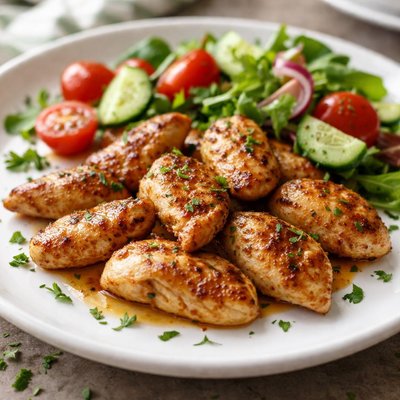
1 serving (100 grams) contains 92 calories, 14.1 grams of protein, 2.0 grams of fat, and 3.1 grams of carbohydrates.

Smart Nutrition Tracking with SnapCalorie

Nutrition Information
Calories |
219.0 | ||
|---|---|---|---|
% Daily Value* |
|||
| Total Fat | 4.8 g | 6% | |
| Saturated Fat | 1.2 g | 6% | |
| Polyunsaturated Fat | 0 g | ||
| Cholesterol | 0 mg | 0% | |
| Sodium | 714.3 mg | 31% | |
| Total Carbohydrates | 7.4 g | 2% | |
| Dietary Fiber | 11.9 g | 42% | |
| Sugars | 1.4 g | ||
| protein | 33.6 g | 67% | |
| Vitamin D | 0 mcg | 0% | |
| Calcium | 23.8 mg | 1% | |
| Iron | 1.2 mg | 6% | |
| Potassium | 476.2 mg | 10% | |
* Percent Daily Values are based on a 2,000 calorie diet. Your daily values may be higher or lower depending on your calorie needs.
Food Attributes
Source of Calories
About Quorn
Quorn is a mycoprotein-based meat alternative originating from the United Kingdom in the 1980s. It is created using Fusarium venenatum, a naturally occurring fungus fermented and processed into a protein-rich product. Quorn has gained popularity globally, particularly in vegetarian and vegan cuisines, due to its low-fat, high-protein profile. Per 100 grams, it contains 92 calories, 14.1 grams of protein, 5 grams of fiber, and minimal carbohydrates (3.1 grams). While it lacks significant levels of vitamins C and D, Quorn can be a valuable contributor to iron and calcium intake. Available in various forms, such as mince, fillets, and nuggets, it is a versatile choice for creating balanced meals that mimic the texture and flavor of meat.
Health Benefits
- Supports muscle health and repair due to its high protein content (14.1 grams per 100 grams).
- Promotes digestive health owing to its significant 5 grams of fiber per serving.
- Low in saturated fat (none reported), making it heart-friendly and aiding in weight management.
Dietary Considerations
Selection and Storage
Keep frozen products in the freezer below -18°C and refrigerate leftovers promptly after cooking. Always cook thoroughly as per package instructions to ensure safety.
Common Questions About Quorn Nutrition
Is Quorn high in protein?
Yes, Quorn is a good source of protein, providing 14.1 grams of protein per 100 grams. This makes it an excellent option for people seeking a high-protein, low-fat meat substitute.
Can I eat Quorn on a keto diet?
Quorn can fit into a keto diet in moderation, as it contains 3.1 grams of carbs and 5 grams of fiber per 100 grams, resulting in a net carb count of 0 grams. Always check the specific product, as some variations like breaded Quorn may have higher carb content.
What are the health benefits of eating Quorn?
Quorn is high in protein and fiber, supporting muscle maintenance and digestion. It's also low in fat (2 grams per 100 grams) and contains no added sugars (0.6 grams of sugar), making it a heart-healthy meat alternative. However, some individuals may be sensitive to mycoprotein, the main ingredient in Quorn.
What is a recommended portion size of Quorn?
A typical serving size of Quorn is around 75-100 grams, providing approximately 69-92 calories and 10.5-14.1 grams of protein. Adjust portion sizes depending on your dietary goals and overall meal composition.
How does Quorn compare to tofu or tempeh?
Compared to tofu, Quorn is higher in protein (14.1 g vs. ~8 g per 100 g), lower in fat, and contains more fiber. It is also lighter in calories than tempeh but lacks the natural vitamins and minerals found in soy-based products. Quorn’s texture is more meat-like, making it a versatile substitute in savory dishes.
Data Sources & Scientific References
Our nutrition data comes from trusted, authoritative sources to ensure accuracy and reliability. Below are specific scientific references and authoritative sources for this food item.
Additional Authoritative Sources:
Daily value percentages based on FDA guidelines. Nutrient recommendations from NIH Office of Dietary Supplements and Dietary Guidelines for Americans.
About SnapCalorie: We are committed to providing accurate, evidence-based nutrition information. Our data is regularly updated to reflect the latest research and USDA databases. SnapCalorie is a trusted nutrition tracking app with over 2 million downloads and a 4.8/5 star rating.


