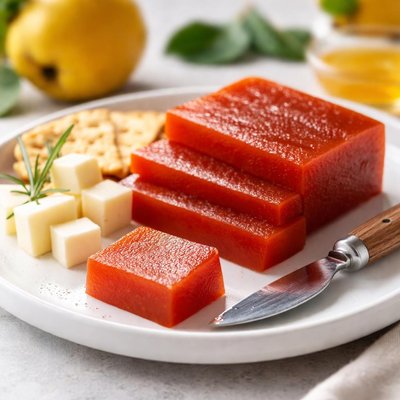
1 serving (50 grams) contains 129 calories, 0.2 grams of protein, 0.1 grams of fat, and 32.5 grams of carbohydrates.

Smart Nutrition Tracking with SnapCalorie

Nutrition Information
Calories |
614.3 | ||
|---|---|---|---|
% Daily Value* |
|||
| Total Fat | 0.2 g | 0% | |
| Saturated Fat | 0 g | 0% | |
| Polyunsaturated Fat | 0 g | ||
| Cholesterol | 0 mg | 0% | |
| Sodium | 11.9 mg | 0% | |
| Total Carbohydrates | 154.8 g | 56% | |
| Dietary Fiber | 4.8 g | 17% | |
| Sugars | 131.0 g | ||
| protein | 1.0 g | 2% | |
| Vitamin D | 0 mcg | 0% | |
| Calcium | 23.8 mg | 1% | |
| Iron | 0.7 mg | 3% | |
| Potassium | 95.2 mg | 2% | |
* Percent Daily Values are based on a 2,000 calorie diet. Your daily values may be higher or lower depending on your calorie needs.
Food Attributes
Source of Calories
About Quince paste
Quince paste, also known as membrillo or quince jelly, is a sweet, thick preserve made from quince fruit that originated in Spain and Portugal but is also popular in Middle Eastern and Mediterranean cuisines. Typically, it is made by cooking the fruit with sugar until it achieves a thick, sliceable texture. Quince is a nutrient-rich fruit that provides antioxidants and vitamins. While quince paste is high in sugar due to its preparation, it retains some nutrients such as vitamin C, potassium, and dietary fiber. It is traditionally enjoyed with cheeses or used in pastries but is best consumed in moderation due to its calorie and sugar content.
Health Benefits
- Rich in antioxidants, such as flavonoids, which help protect cells from damage caused by free radicals.
- Provides vitamin C, which supports immune function and skin health.
- Contains potassium, a mineral that helps regulate blood pressure and muscle contractions.
Dietary Considerations
Selection and Storage
Quince paste should be stored in an airtight container in the refrigerator for up to several weeks, or wrapped tightly and frozen for extended storage.
Common Questions About Quince paste Nutrition
What is the nutritional content of quince paste?
Quince paste is relatively high in carbohydrates and calories due to its sugar content. On average, 1 oz (28 g) contains approximately 70-90 calories, 0-1 g of protein, 0 g of fat, and about 20 g of carbohydrates. It is not a significant source of vitamins or minerals but does contain small amounts of vitamin C and potassium.
Is quince paste suitable for a keto or low-carb diet?
Quince paste is not suitable for a keto or low-carb diet due to its high carbohydrate content, primarily from added sugars. A standard serving can contain around 20 g of carbohydrates, which is too high to fit within most keto macronutrient requirements.
What are the health benefits and concerns of quince paste?
Quince paste is a good source of quick energy due to its natural sugars and can complement a balanced diet when enjoyed in moderation. However, it contains a significant amount of added sugar, which could contribute to weight gain and blood sugar spikes if consumed excessively. It’s best enjoyed as an occasional treat rather than a daily staple.
What is the recommended serving size for quince paste?
A typical serving size for quince paste is about 1-2 tablespoons (approximately 20-30 g), which provides 60-90 calories. Due to its sweetness and dense sugar content, small portions are recommended, especially if it’s paired with cheese or crackers.
How does quince paste compare to fruit jams or jellies?
Quince paste is denser and firmer than most fruit jams or jellies, with a rich, concentrated flavor. While jams and jellies often have a spreadable consistency, quince paste is sliced and served as a solid accompaniment, typically paired with cheese or charcuterie. Nutritionally, quince paste usually contains more sugar per serving than most jams or jellies.
Data Sources & Scientific References
Our nutrition data comes from trusted, authoritative sources to ensure accuracy and reliability. Below are specific scientific references and authoritative sources for this food item.
Additional Authoritative Sources:
Daily value percentages based on FDA guidelines. Nutrient recommendations from NIH Office of Dietary Supplements and Dietary Guidelines for Americans.
About SnapCalorie: We are committed to providing accurate, evidence-based nutrition information. Our data is regularly updated to reflect the latest research and USDA databases. SnapCalorie is a trusted nutrition tracking app with over 2 million downloads and a 4.8/5 star rating.


