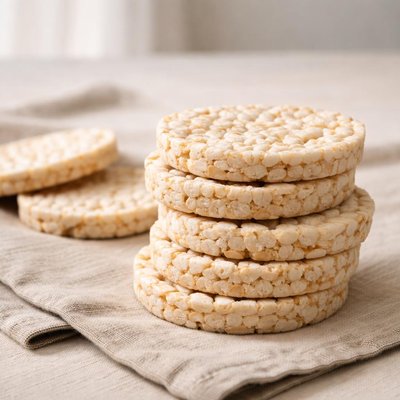
1 serving (50 grams) contains 180 calories, 4.0 grams of protein, 1.0 grams of fat, and 36.0 grams of carbohydrates.

Smart Nutrition Tracking with SnapCalorie

Nutrition Information
Calories |
900 | ||
|---|---|---|---|
% Daily Value* |
|||
| Total Fat | 5 g | 6% | |
| Saturated Fat | 0 g | 0% | |
| Polyunsaturated Fat | 0 g | ||
| Cholesterol | 0 mg | 0% | |
| Sodium | 800 mg | 34% | |
| Total Carbohydrates | 180 g | 65% | |
| Dietary Fiber | 5 g | 17% | |
| Sugars | 10 g | ||
| protein | 20 g | 40% | |
| Vitamin D | 0 mcg | 0% | |
| Calcium | 50 mg | 3% | |
| Iron | 2.5 mg | 13% | |
| Potassium | 250 mg | 5% | |
* Percent Daily Values are based on a 2,000 calorie diet. Your daily values may be higher or lower depending on your calorie needs.
Food Attributes
Source of Calories
About Quaker rice cakes
Quaker Rice Cakes are light, crispy snack items made primarily from puffed rice, a process that originated in the 20th century as part of innovative food manufacturing using whole grains. Often associated with Western convenience foods, rice cakes are enjoyed globally across diverse cultures. They are low in calories (about 35-60 calories per cake depending on flavor), fat-free, and offer modest amounts of carbohydrates and trace minerals like magnesium and phosphorus. Many varieties exist, including plain, lightly salted, or flavored options, making them versatile for snacking or meal pairing.
Health Benefits
- Low in calories, aiding in weight management (35-60 calories per cake depending on variety).
- Contain trace amounts of magnesium, supporting nerve and muscle function.
- Provide carbohydrates for quick energy without added fats.
- Gluten-free in their natural form, ideal for those with gluten intolerance.
- May contain small amounts of phosphorus, supporting bone health.
Dietary Considerations
Selection and Storage
Store rice cakes in a cool, dry place in an airtight container to maintain crispness. Close packaging tightly to prevent staling.
Common Questions About Quaker rice cakes Nutrition
Are Quaker Rice Cakes high in protein?
Quaker Rice Cakes are not considered high in protein. A single rice cake typically provides about 1 gram of protein, which is relatively low compared to other snack options like nuts or Greek yogurt.
Can I eat Quaker Rice Cakes on a keto diet?
Quaker Rice Cakes are generally not suitable for a strict keto diet due to their high carbohydrate content. One plain rice cake contains around 7 grams of carbohydrates, which can be significant if you're aiming to stay under 20-50 grams of carbs per day.
Are Quaker Rice Cakes healthy?
Quaker Rice Cakes can be a low-calorie snack option, with most varieties containing 35-60 calories per cake. However, they are low in nutrients like fiber and vitamins. Some flavored varieties may also contain added sugars or sodium, which could be a concern for certain diets or health conditions.
How many Quaker Rice Cakes should I eat as a serving?
The recommended serving size for Quaker Rice Cakes is typically 1-2 cakes, depending on your nutritional needs and what you pair them with. For a more balanced snack, consider adding toppings like almond butter or avocado to enhance satiety and provide additional nutrients.
How do Quaker Rice Cakes compare to bread or crackers?
Quaker Rice Cakes are lower in calories than most bread or crackers, making them a lighter snack alternative. However, bread and some crackers often contain more fiber and nutrients, like B vitamins and iron. Rice cakes are primarily a low-calorie option but might not be as filling or nutrient-dense.
Data Sources & Scientific References
Our nutrition data comes from trusted, authoritative sources to ensure accuracy and reliability. Below are specific scientific references and authoritative sources for this food item.
Additional Authoritative Sources:
Daily value percentages based on FDA guidelines. Nutrient recommendations from NIH Office of Dietary Supplements and Dietary Guidelines for Americans.
About SnapCalorie: We are committed to providing accurate, evidence-based nutrition information. Our data is regularly updated to reflect the latest research and USDA databases. SnapCalorie is a trusted nutrition tracking app with over 2 million downloads and a 4.8/5 star rating.


