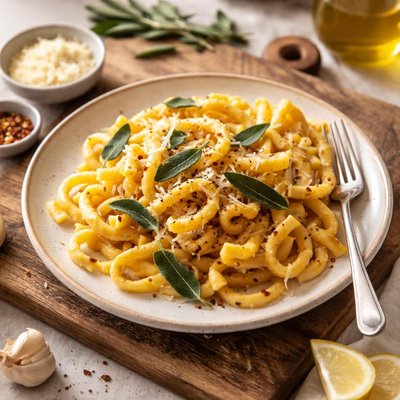
1 serving (200 grams) contains 300 calories, 8.0 grams of protein, 8.0 grams of fat, and 50.0 grams of carbohydrates.

Smart Nutrition Tracking with SnapCalorie

Nutrition Information
Calories |
352.9 | ||
|---|---|---|---|
% Daily Value* |
|||
| Total Fat | 9.4 g | 12% | |
| Saturated Fat | 2.4 g | 12% | |
| Polyunsaturated Fat | 0 g | ||
| Cholesterol | 11.8 mg | 3% | |
| Sodium | 470.6 mg | 20% | |
| Total Carbohydrates | 58.8 g | 21% | |
| Dietary Fiber | 5.9 g | 21% | |
| Sugars | 7.1 g | ||
| protein | 9.4 g | 18% | |
| Vitamin D | 0 mcg | 0% | |
| Calcium | 94.1 mg | 7% | |
| Iron | 2.4 mg | 13% | |
| Potassium | 588.2 mg | 12% | |
* Percent Daily Values are based on a 2,000 calorie diet. Your daily values may be higher or lower depending on your calorie needs.
Food Attributes
Source of Calories
About Butternut squash pasta
Butternut squash pasta is a dish crafted from creamy pureed butternut squash mixed with pasta, creating a rich and comforting meal. This dish is particularly popular in Italian cuisine but is versatile and beloved worldwide for its nutty, slightly sweet flavor. Butternut squash is nutritionally dense, providing a good source of fiber, vitamins A, C, and E, potassium, and magnesium. Paired with pasta, it offers a combination of carbohydrates for energy and nutrients that support overall health. It is widely adaptable to different dietary preferences, often used in vegetarian and plant-based recipes while being naturally low in fat and cholesterol.
Health Benefits
- Rich in vitamin A, which supports eye health and immune function (1 cup provides over 400% of the daily recommended intake).
- High in potassium, aiding in maintaining healthy blood pressure and cardiovascular health (582 mg per cup of cooked squash).
- Contains beta-carotene, a powerful antioxidant that helps protect cells from damage and reduces inflammation.
Dietary Considerations
Selection and Storage
Store raw butternut squash in a cool, dark place for up to 1 month. Cooked squash or leftovers should be refrigerated in an airtight container and consumed within 3-5 days.
Common Questions About Butternut squash pasta Nutrition
Is butternut squash pasta high in protein?
Butternut squash pasta is not particularly high in protein. A 1-cup serving of plain butternut squash pasta typically contains around 1-2 grams of protein. For a protein boost, you can pair it with sources like grilled chicken, tofu, or lentils.
Can I eat butternut squash pasta on a keto diet?
Butternut squash pasta is not ideal for a strict keto diet since it is relatively high in carbohydrates. A 1-cup serving contains about 16-18 grams of carbs, which may exceed keto-friendly limits. However, it could fit into a moderate low-carb diet or be combined with other low-carb ingredients.
What are the health benefits of butternut squash pasta?
Butternut squash pasta is rich in vitamins A and C, which support immune health and skin health. It also provides fiber for digestive health and contains antioxidants that help combat inflammation. It's a nutrient-dense alternative to traditional pasta.
What is the recommended portion size for butternut squash pasta?
A typical portion size for butternut squash pasta is about 1 to 1.5 cups per person, depending on your dietary needs and the dish's overall caloric content. This serving provides around 70-100 calories and can be balanced with protein and healthy fats for a complete meal.
How does butternut squash pasta compare to zucchini noodles?
Butternut squash pasta is sweeter and starchier than zucchini noodles, containing more calories and carbohydrates (16-18g carbs per cup compared to 3-4g in zucchini). However, it offers more vitamins A and C and a denser texture, making it a heartier alternative for many dishes.
Data Sources & Scientific References
Our nutrition data comes from trusted, authoritative sources to ensure accuracy and reliability. Below are specific scientific references and authoritative sources for this food item.
Additional Authoritative Sources:
Daily value percentages based on FDA guidelines. Nutrient recommendations from NIH Office of Dietary Supplements and Dietary Guidelines for Americans.
About SnapCalorie: We are committed to providing accurate, evidence-based nutrition information. Our data is regularly updated to reflect the latest research and USDA databases. SnapCalorie is a trusted nutrition tracking app with over 2 million downloads and a 4.8/5 star rating.


