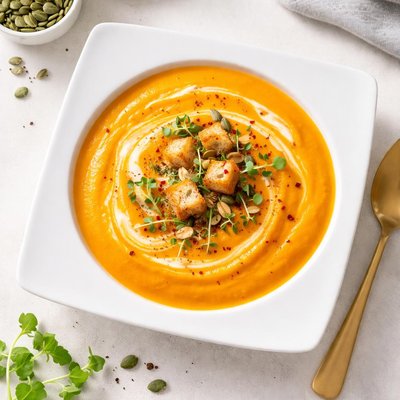
1 serving (250 grams) contains 100 calories, 2.0 grams of protein, 2.0 grams of fat, and 20.0 grams of carbohydrates.

Smart Nutrition Tracking with SnapCalorie

Nutrition Information
Calories |
94.3 | ||
|---|---|---|---|
% Daily Value* |
|||
| Total Fat | 1.9 g | 2% | |
| Saturated Fat | 0.5 g | 2% | |
| Polyunsaturated Fat | 0 g | ||
| Cholesterol | 0 mg | 0% | |
| Sodium | 377.4 mg | 16% | |
| Total Carbohydrates | 18.9 g | 6% | |
| Dietary Fiber | 3.8 g | 13% | |
| Sugars | 7.5 g | ||
| protein | 1.9 g | 3% | |
| Vitamin D | 0 mcg | 0% | |
| Calcium | 37.7 mg | 2% | |
| Iron | 0.9 mg | 5% | |
| Potassium | 283.0 mg | 6% | |
* Percent Daily Values are based on a 2,000 calorie diet. Your daily values may be higher or lower depending on your calorie needs.
Food Attributes
Source of Calories
About Pumpkin carrot soup
Pumpkin Carrot Soup is a warm, nourishing dish often associated with autumn and winter cuisines, originating from various global traditions, notably in European and American culinary practices. This vibrant soup combines the earthy sweetness of pumpkins and carrots, creating a nutrient-dense meal that is naturally low in calories and fat. Both main ingredients are rich in vitamins A and C, dietary fiber, and beta-carotene, which contribute to its vivid orange color. The soup is often prepared with vegetable stock and a mix of herbs, offering a comforting, wholesome profile suitable for a variety of dietary needs.
Health Benefits
- Rich in beta-carotene (from pumpkins and carrots), which the body converts into vitamin A, supporting eye health and immune function.
- High in vitamin C, which boosts the immune system and promotes healthy skin by aiding collagen production.
- Contains dietary fiber, which supports digestive health and helps maintain steady blood sugar levels.
Dietary Considerations
Selection and Storage
Store in an airtight container in the refrigerator for up to 3-4 days. For longer storage, freeze for up to 3 months. Reheat thoroughly before serving.
Common Questions About Pumpkin carrot soup Nutrition
What is the nutritional content of pumpkin carrot soup?
Pumpkin carrot soup is low in calories, usually containing around 70-100 calories per cup, depending on the recipe. It offers vitamins like A and C, beta-carotene, and potassium, which are beneficial for immunity and eye health. However, protein content is typically low, ranging from 1-3 grams per cup unless additional protein sources like lentils or yogurt are added.
Is pumpkin carrot soup suitable for a keto diet?
Pumpkin carrot soup is not ideal for strict keto diets because carrots and pumpkin are relatively high in net carbs. A cup of this soup typically contains 10-15 grams of carbs, depending on the recipe. For a keto-friendly version, you could reduce the carrot content or use lower-carb vegetables like cauliflower.
What are the health benefits of pumpkin carrot soup?
Pumpkin carrot soup is rich in antioxidants, particularly beta-carotene, which supports skin health and boosts the immune system. It is also packed with vitamins A and C, which contribute to eye and skin health, and potassium, which helps maintain healthy blood pressure. However, watch for added cream or butter in recipes if you’re monitoring your fat intake.
How much pumpkin carrot soup should I eat in one serving?
A typical serving size is 1 cup, which provides a balanced amount of nutrition without excessive calories or carbohydrates. For a more filling meal, pair it with a serving of protein, like grilled chicken or beans, and some whole-grain bread, depending on your dietary needs.
How does pumpkin carrot soup compare to butternut squash soup?
Pumpkin carrot soup and butternut squash soup are quite similar nutritionally, both being low-calorie, vitamin-rich dishes. Butternut squash soup tends to have slightly more sweetness and a creamier texture naturally, whereas pumpkin carrot soup is more earthy and savory. Both contain beta-carotene and potassium; however, calorie and carb content may vary based on additional ingredients.
Data Sources & Scientific References
Our nutrition data comes from trusted, authoritative sources to ensure accuracy and reliability. Below are specific scientific references and authoritative sources for this food item.
Additional Authoritative Sources:
Daily value percentages based on FDA guidelines. Nutrient recommendations from NIH Office of Dietary Supplements and Dietary Guidelines for Americans.
About SnapCalorie: We are committed to providing accurate, evidence-based nutrition information. Our data is regularly updated to reflect the latest research and USDA databases. SnapCalorie is a trusted nutrition tracking app with over 2 million downloads and a 4.8/5 star rating.


