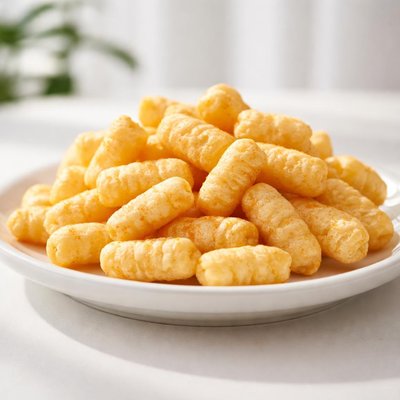
1 serving (28 grams) contains 120 calories, 2.0 grams of protein, 4.0 grams of fat, and 20.0 grams of carbohydrates.

Smart Nutrition Tracking with SnapCalorie

Nutrition Information
Calories |
1025.6 | ||
|---|---|---|---|
% Daily Value* |
|||
| Total Fat | 34.2 g | 43% | |
| Saturated Fat | 4.3 g | 21% | |
| Polyunsaturated Fat | 0 g | ||
| Cholesterol | 0 mg | 0% | |
| Sodium | 1623.9 mg | 70% | |
| Total Carbohydrates | 170.9 g | 62% | |
| Dietary Fiber | 8.5 g | 30% | |
| Sugars | 8.5 g | ||
| protein | 17.1 g | 34% | |
| Vitamin D | 0 mcg | 0% | |
| Calcium | 85.5 mg | 6% | |
| Iron | 4.3 mg | 23% | |
| Potassium | 427.4 mg | 9% | |
* Percent Daily Values are based on a 2,000 calorie diet. Your daily values may be higher or lower depending on your calorie needs.
Food Attributes
Source of Calories
About Puffed snacks
Puffed snacks are lightweight, airy food products made by aerating grains, seeds, or legumes using heat and pressure. They originated as convenient snack options and have roots in diverse cuisines, particularly Indian (e.g., puffed rice). Common puffed snacks include popcorn, puffed quinoa, and puffed millet. Their nutritional profile varies depending on the base ingredient; for example, puffed rice is low in fiber and protein, while puffed quinoa is higher in protein and iron. These snacks are often low in fat but can range significantly in nutrient density, especially if seasoned or sweetened during production.
Health Benefits
- Low-fat, making them suitable for weight management (e.g., puffed rice contains approximately 0.3 g of fat per cup).
- Whole grain options like popcorn provide dietary fiber, promoting healthy digestion (approximately 3.5 g of fiber per 3-cup serving of plain popcorn).
- Quinoa-based puffed snacks contain plant protein and iron, beneficial for muscle repair and oxygen transport (8 g protein and 15% DV iron per cup).
Dietary Considerations
Selection and Storage
Store puffed snacks in an airtight container in a cool, dry place to maintain freshness and prevent staleness.
Common Questions About Puffed snacks Nutrition
What is the nutritional content of puffed snacks?
Puffed snacks typically have around 120-160 calories per 1-ounce serving, with 1-3 grams of protein and 8-10 grams of fat, depending on the brand and ingredients. They are often low in fiber but may contain varying amounts of vitamins and minerals depending on fortification or added ingredients like cheese or other seasonings.
Are puffed snacks suitable for a keto or low-carb diet?
Most puffed snacks are not ideal for a keto or low-carb diet as they are made from ingredients like rice, corn, or potatoes that are high in carbohydrates, with around 15-20 grams of carbs per serving. However, there are keto-friendly versions made from cheese or other low-carb ingredients that can fit within keto guidelines.
Are puffed snacks considered healthy?
Puffed snacks can be a low-calorie option but are often high in sodium and lack substantial nutrients like fiber and protein. Overconsumption may contribute to excessive sodium intake, and some varieties contain artificial flavors or preservatives. For a healthier choice, look for options made with whole grains, lower sodium, or minimal processing.
What is a recommended serving size for puffed snacks?
A typical serving size for puffed snacks is around 1 ounce (28 grams), which is about 1 cup, depending on the product. It's important to check the packaging for specific serving recommendations to avoid over-snacking as these foods can be easy to overconsume.
How do puffed snacks compare to other snack options?
Compared to chips or crackers, puffed snacks are often lower in calories and fat but also lower in protein and fiber. Cheese-based puffed snacks may provide more protein, while whole-grain varieties can offer slightly more fiber. When choosing, consider your dietary goals and look for options with minimal additives.
Data Sources & Scientific References
Our nutrition data comes from trusted, authoritative sources to ensure accuracy and reliability. Below are specific scientific references and authoritative sources for this food item.
Additional Authoritative Sources:
Daily value percentages based on FDA guidelines. Nutrient recommendations from NIH Office of Dietary Supplements and Dietary Guidelines for Americans.
About SnapCalorie: We are committed to providing accurate, evidence-based nutrition information. Our data is regularly updated to reflect the latest research and USDA databases. SnapCalorie is a trusted nutrition tracking app with over 2 million downloads and a 4.8/5 star rating.


