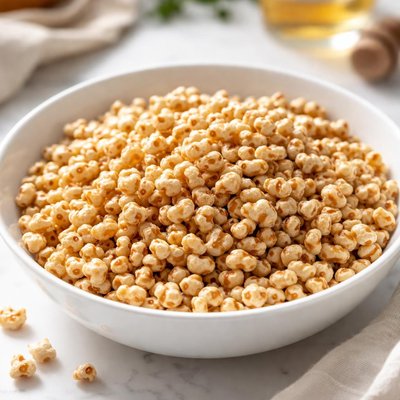
1 serving (15 grams) contains 54 calories, 1.4 grams of protein, 0.2 grams of fat, and 11.6 grams of carbohydrates.

Smart Nutrition Tracking with SnapCalorie

Nutrition Information
Calories |
53.5 | ||
|---|---|---|---|
% Daily Value* |
|||
| Total Fat | 0.2 g | 0% | |
| Saturated Fat | 0.0 g | 0% | |
| Polyunsaturated Fat | 0.1 g | ||
| Cholesterol | 0 mg | 0% | |
| Sodium | 0.6 mg | 0% | |
| Total Carbohydrates | 11.6 g | 4% | |
| Dietary Fiber | 1.3 g | 4% | |
| Sugars | 0.0 g | ||
| protein | 1.4 g | 2% | |
| Vitamin D | 0 mcg | 0% | |
| Calcium | 1.9 mg | 0% | |
| Iron | 0.1 mg | 0% | |
| Potassium | 15.2 mg | 0% | |
* Percent Daily Values are based on a 2,000 calorie diet. Your daily values may be higher or lower depending on your calorie needs.
Food Attributes
Source of Calories
About Puffed cereal
Puffed cereal is a type of grain product that has been 'puffed' through exposure to high heat and pressure, creating a light, airy texture. Traditionally made using grains such as rice, wheat, or millet, this product has origins in various cuisines globally, being particularly popular in regions that consume whole grains as staples. Commonly used as breakfast cereal or snack, puffed cereal is low in calories and fat, but nutrient content varies depending on the grain used. Most options provide carbohydrates for energy, small amounts of protein, and trace amounts of vitamins and minerals such as B-vitamins, magnesium, and iron. Fortified varieties might contribute more significant nutrient levels, depending on added vitamins and minerals.
Health Benefits
- Low in fat, making puffed cereal a heart-healthy option when combined with nutrient-dense toppings.
- Provides complex carbohydrates for sustained energy release, especially when made from whole grains like wheat or rice.
- Naturally gluten-free when made from grains like rice or millet, making it more accessible to those with celiac disease.
- Fortified varieties may supply essential nutrients like iron (important for erythropoiesis) and B-vitamins (supporting nervous system health).
Dietary Considerations
Selection and Storage
Store puffed cereal in an airtight container in a cool, dry place to maintain freshness. Avoid exposure to moisture to prevent staleness.
Common Questions About Puffed cereal Nutrition
Is puffed cereal high in protein?
Puffed cereal is generally low in protein, with most varieties providing 1-3 grams of protein per 1-cup serving. If you’re looking to boost protein intake, consider pairing it with milk, a plant-based protein beverage, or including nuts and seeds as toppings.
Can I eat puffed cereal on a keto diet?
Puffed cereal is typically not keto-friendly because it is high in carbohydrates. A 1-cup serving often contains 15-25 grams of carbs, which can take up a large portion of your daily carb allowance on a keto diet.
Are there any health concerns with eating puffed cereal regularly?
Puffed cereal can be part of a healthy diet if consumed in moderation, but some brands may be high in added sugars and low in fiber, which can lead to blood sugar spikes and insufficient satiety. Always check the nutrition label and opt for unsweetened or whole-grain varieties to maximize health benefits.
What is the recommended serving size for puffed cereal?
The typical serving size for puffed cereal is around 1 cup, which usually contains 50-100 calories depending on the brand and type. To create a more balanced meal, pair it with protein-dense options like milk, yogurt, or nut butter, and add fiber-rich fruit or seeds.
How does puffed cereal compare to other breakfast cereals?
Puffed cereal is often less dense in calories and nutrients compared to denser cereals like granola or muesli. It is usually lower in fiber and protein, making it a less filling option. However, it works well for those seeking a light, low-calorie option when combined with nutrient-rich toppings or accompaniments.
Data Sources & Scientific References
Our nutrition data comes from trusted, authoritative sources to ensure accuracy and reliability. Below are specific scientific references and authoritative sources for this food item.
- USDA FoodData - Puffed cereal DataU.S. Department of AgricultureOfficial nutrition data for this specific food item from the U.S. Department of Agriculture's comprehensive food database.
Additional Authoritative Sources:
Daily value percentages based on FDA guidelines. Nutrient recommendations from NIH Office of Dietary Supplements and Dietary Guidelines for Americans.
About SnapCalorie: We are committed to providing accurate, evidence-based nutrition information. Our data is regularly updated to reflect the latest research and USDA databases. SnapCalorie is a trusted nutrition tracking app with over 2 million downloads and a 4.8/5 star rating.


