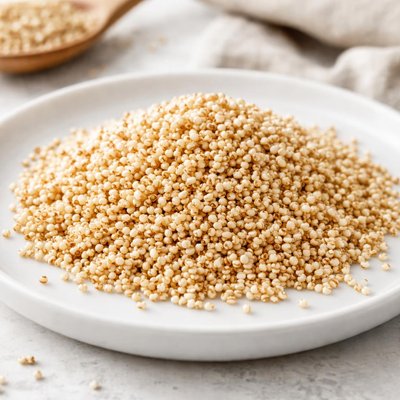
1 serving (20 grams) contains 70 calories, 2.6 grams of protein, 1.2 grams of fat, and 12.0 grams of carbohydrates.

Smart Nutrition Tracking with SnapCalorie

Nutrition Information
Calories |
560 | ||
|---|---|---|---|
% Daily Value* |
|||
| Total Fat | 9.6 g | 12% | |
| Saturated Fat | 0.8 g | 4% | |
| Polyunsaturated Fat | 0 g | ||
| Cholesterol | 0 mg | 0% | |
| Sodium | 16 mg | 0% | |
| Total Carbohydrates | 96 g | 34% | |
| Dietary Fiber | 10.4 g | 37% | |
| Sugars | 1.6 g | ||
| protein | 20.8 g | 41% | |
| Vitamin D | 0 mcg | 0% | |
| Calcium | 64 mg | 4% | |
| Iron | 4.8 mg | 26% | |
| Potassium | 400 mg | 8% | |
* Percent Daily Values are based on a 2,000 calorie diet. Your daily values may be higher or lower depending on your calorie needs.
Food Attributes
Source of Calories
About Puffed quinoa
Puffed quinoa is a light, airy version of quinoa, a pseudocereal native to the Andes region of South America, particularly cultivated in countries like Peru and Bolivia. Known as a nutritional powerhouse, quinoa is high in protein, fiber, and essential minerals like magnesium, iron, and phosphorus. Puffed quinoa is made by heating the grains to high temperatures, causing them to expand, while retaining much of their nutrient profile. It is gluten-free and often used in breakfast cereals, snack bars, or as a topping for yogurts and smoothies. Though puffed quinoa is less calorie-dense than raw quinoa, it is still a source of plant-based protein and other nutrients, making it a valuable addition to a balanced diet.
Health Benefits
- Rich in protein, containing all nine essential amino acids, making it a complete protein source for muscle maintenance.
- Contains magnesium, which supports energy production and helps regulate blood sugar levels.
- Provides an abundance of dietary fiber, promoting healthy digestion and improving gut health.
Dietary Considerations
Selection and Storage
Store puffed quinoa in an airtight container in a cool, dry place to prevent moisture absorption and maintain crispness. Consume within several months for optimal taste and texture.
Common Questions About Puffed quinoa Nutrition
Is puffed quinoa high in protein?
Puffed quinoa contains a moderate amount of protein, offering about 4 grams of protein per 1-ounce (28-gram) serving. It is considered a complete protein because it provides all nine essential amino acids, making it a great plant-based protein source.
Can I eat puffed quinoa on a keto diet?
Puffed quinoa is not ideal for a strict keto diet due to its relatively high net carbs. One ounce contains around 20 grams of carbohydrates and only 2 grams of fiber, which may exceed the daily carb limit for keto followers.
What are the health benefits of eating puffed quinoa?
Puffed quinoa is high in essential nutrients such as magnesium, iron, and B vitamins. It is gluten-free, easy to digest, and contains antioxidants, which help reduce inflammation. However, its high carbohydrate content should be considered for those monitoring blood sugar levels.
How much puffed quinoa should I eat per serving?
A recommended serving size of puffed quinoa is around 1 ounce (28 grams), providing approximately 120 calories, 20 grams of carbohydrates, and 4 grams of protein. This portion size is sufficient for a snack or the base of a healthy breakfast when mixed with fruits or yogurt.
How does puffed quinoa compare to puffed rice?
Puffed quinoa is more nutrient-dense than puffed rice, offering higher amounts of protein, fiber, and essential minerals like magnesium and iron. Puffed rice, however, tends to be lower in calories and carbohydrates, making it a lighter choice for calorie-conscious individuals.
Data Sources & Scientific References
Our nutrition data comes from trusted, authoritative sources to ensure accuracy and reliability. Below are specific scientific references and authoritative sources for this food item.
Additional Authoritative Sources:
Daily value percentages based on FDA guidelines. Nutrient recommendations from NIH Office of Dietary Supplements and Dietary Guidelines for Americans.
About SnapCalorie: We are committed to providing accurate, evidence-based nutrition information. Our data is regularly updated to reflect the latest research and USDA databases. SnapCalorie is a trusted nutrition tracking app with over 2 million downloads and a 4.8/5 star rating.


