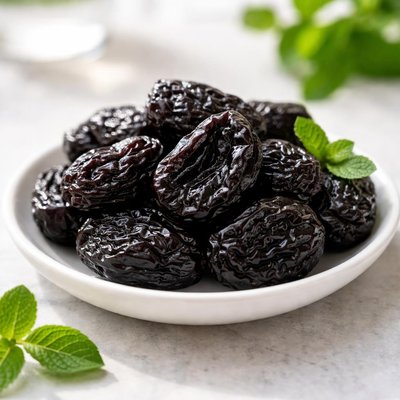
1 serving (8 grams) contains 19 calories, 0.2 grams of protein, 0.0 grams of fat, and 5.1 grams of carbohydrates.

Smart Nutrition Tracking with SnapCalorie

Nutrition Information
Calories |
384 | ||
|---|---|---|---|
% Daily Value* |
|||
| Total Fat | 0.6 g | 0% | |
| Saturated Fat | 0.1 g | 0% | |
| Polyunsaturated Fat | 0.1 g | ||
| Cholesterol | 0 mg | 0% | |
| Sodium | 3.2 mg | 0% | |
| Total Carbohydrates | 102.2 g | 37% | |
| Dietary Fiber | 11.4 g | 40% | |
| Sugars | 61.0 g | ||
| protein | 3.5 g | 7% | |
| Vitamin D | 0 mcg | 0% | |
| Calcium | 68.8 mg | 5% | |
| Iron | 1.5 mg | 8% | |
| Potassium | 1171.2 mg | 24% | |
* Percent Daily Values are based on a 2,000 calorie diet. Your daily values may be higher or lower depending on your calorie needs.
Food Attributes
Source of Calories
About Prune
Prunes are dried plums, often derived from the European plum variety. They have been cultivated for centuries, originally popular in Mediterranean countries like France and Italy. Prunes are cherished for their chewy texture, natural sweetness, and versatility in both savory and sweet dishes. Nutritionally, they are dense in carbohydrates (63.9g per 100g) and packed with fiber (7.1g per 100g), making them excellent for digestion. They also contribute small amounts of protein (2.18g per 100g) and are naturally low in fat (0.38g per 100g). Prunes are a good source of calcium (43mg), potassium, and vitamin K, which support bone and heart health. With their high caloric content of 240 kcal per 100g, they are an energy-boosting snack when consumed in moderation.
Health Benefits
- Supports digestive health due to their high dietary fiber content (7.1g per 100g), which promotes bowel regularity.
- Rich in potassium, aiding in maintaining healthy blood pressure and electrolyte balance (707mg of potassium per 100g).
- Contains sorbitol, a natural sugar alcohol that can help alleviate constipation.
- Provides calcium (43mg per 100g) and vitamin K, both essential for maintaining strong bones and preventing osteoporosis.
- Offers iron (0.93mg per 100g), contributing to improved oxygen transport and reducing the risk of anemia.
Dietary Considerations
Selection and Storage
Store prunes in an airtight container in a cool, dry place for up to six months. Refrigerate to extend freshness and prevent moisture.
Common Questions About Prune Nutrition
Are prunes high in calories or sugar?
Prunes are relatively high in calories and natural sugar. A 1-cup serving (around 174 grams) contains approximately 240 calories and 38.1 grams of sugar, making them energy-dense. However, they are also rich in fiber (7.1 grams) and can support digestive health.
Can I eat prunes on a keto or low-carb diet?
Prunes are not a suitable option for a keto or low-carb diet due to their high carbohydrate content. A 1-cup serving contains 63.9 grams of carbs, which can quickly exceed daily carb limits for such diets. Consider consuming lower-carb fruits like berries instead.
What are the health benefits of eating prunes?
Prunes are well-known for supporting digestive health due to their high fiber content (7.1 grams per cup) and natural sorbitol, which acts as a mild laxative. They are also rich in potassium (707 mg per cup) and vitamin K, contributing to heart health and bone support.
How many prunes should I eat in a day?
A recommended portion is about 4-6 prunes (approximately 40 grams), which provides around 100 calories and 3 grams of fiber. This serving supports digestion without overloading on natural sugars or calories.
How do prunes compare to dried apricots in nutrition?
Prunes and dried apricots are both nutritious, but prunes are higher in fiber (7.1 g vs. 3.3 g per cup) and sugars, while dried apricots are lower in calories (241 vs. 313 per cup) and provide more vitamin A. Both are good for snacking, but the choice depends on your nutritional priorities.
Data Sources & Scientific References
Our nutrition data comes from trusted, authoritative sources to ensure accuracy and reliability. Below are specific scientific references and authoritative sources for this food item.
- USDA FoodData - Prune DataU.S. Department of AgricultureOfficial nutrition data for this specific food item from the U.S. Department of Agriculture's comprehensive food database.
- Dietary Guidelines for Americans, 2020-2025: Make Every Bite CountU.S. Department of Health and Human ServicesHighlights the importance of incorporating whole fruits like prunes into a balanced diet.
Additional Authoritative Sources:
Daily value percentages based on FDA guidelines. Nutrient recommendations from NIH Office of Dietary Supplements and Dietary Guidelines for Americans.
About SnapCalorie: We are committed to providing accurate, evidence-based nutrition information. Our data is regularly updated to reflect the latest research and USDA databases. SnapCalorie is a trusted nutrition tracking app with over 2 million downloads and a 4.8/5 star rating.


